News
Peter Lang’s 3D Printed ‘Silent Orchestra’
Sound absorbers, as the name suggests, are used primarily to silence certain noises in a room, helping to ultimately improve the acoustics by reducing unwanted sound. They are used by many different interested parties, but especially musicians. At the same…
- 3 min read
- News
- Six more stories

Sound absorbers, as the name suggests, are used primarily to silence certain noises in a room, helping to ultimately improve the acoustics by reducing unwanted sound. They are used by many different interested parties, but especially musicians. At the same time, these sound absorbers, which are usually attached to the walls or ceiling, are intended to stylistically beautify the room. This is exactly where the artist Peter Lang comes in: He was able to create a room sculpture as a sound absorber called “Silent Orchestra” with the help of 3D printing. This unusual art object with a sound-absorbing function consists of tubes of different sizes arranged in a honeycomb pattern.
The painter and graphic designer was inspired by wasps’ and hornets’ nests for his art design. Finally, he was able to refine and develop his basic idea in collaboration with acoustics experts from the Rosenheim University of Applied Sciences. For the final implementation of his project, the Bavarian joined forces with additive tectonics. This company is a subsidiary of the FIT Additive Manufacturing Group, a leading international industry partner for additive manufacturing that has been producing prototypes, production aids, 3D-printed spare parts or additively manufactured final components for a wide range of customers for over 25 years.
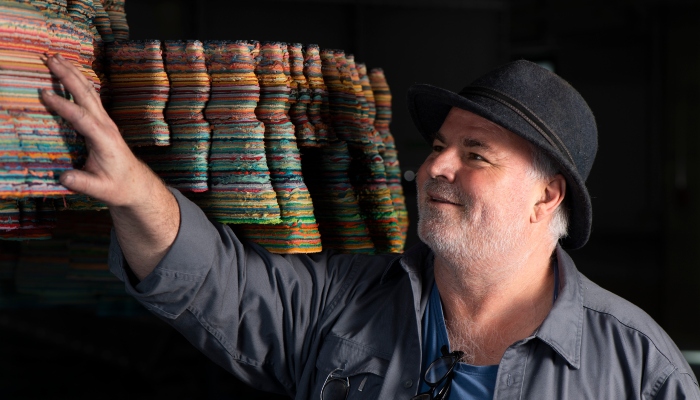
Peter Lang poses next to his artwork “Silent Orchestra.” (Photo credit: FIT AG/Martin Hangen)
The manufacturing process
In fact, it took a whole 10 months from the basic idea to the start of production. During this time, Peter Lang decided to produce his unique art object using a mixture of conventional and innovative processes. That is, he wanted to work with both analog and digital. The first thing he did was to break down the model into 43 layers and draw the object outline of each layer by hand on 3 x 6 meter fleece sheets. After these analog steps, digitization came into play: the drawings were hung, arranged, photographed and then edited online. This made it possible to create a three-dimensional digital data model that is the basis of any 3D print.
More from the desk
Six other notes from the rest of the bench.
 NewsHP Presents New Solutions For Process Optimization, Cost Efficiency and Sustainability at Formnext 2024HP is known for innovative systems and solutions that support users at every stage of their 3D printing journey. This is thanks to a commitment to cost reduction, automation, efficiency, quality and sustainability, values that are also reflected in the…
 MaterialsExtrudr, the New Manufacturer of 100% Biodegradable FilamentsCreated in 2014 by Johannes Früh, Extrudr is a new player in the field of filament manufacturers for 3D printers. Despite its young age, the Austrian company already offers an extensive range of materials including PLA, TPU, PETG as well as…
 ApplicationsConcrete 3D Printing Will Be Used for the UK’s New High Speed Rail Network, HS2In January 2012, it was announced that a national high speed rail network would be built in the United Kingdom, the HS2. Currently, construction is underway on the first phase of the rail, covering 140 miles between London and Birmingham.…
 Guides#Startup3D: Tesseract Brings Linear Motors to 3D PrintersAlmost every 3D printer moves its printhead with belts and pulleys, an affordable solution that comes with certain limits. The belt stretches, vibrates, and loses rigidity over time. For years, the industry has had a faster and more precise alternative…
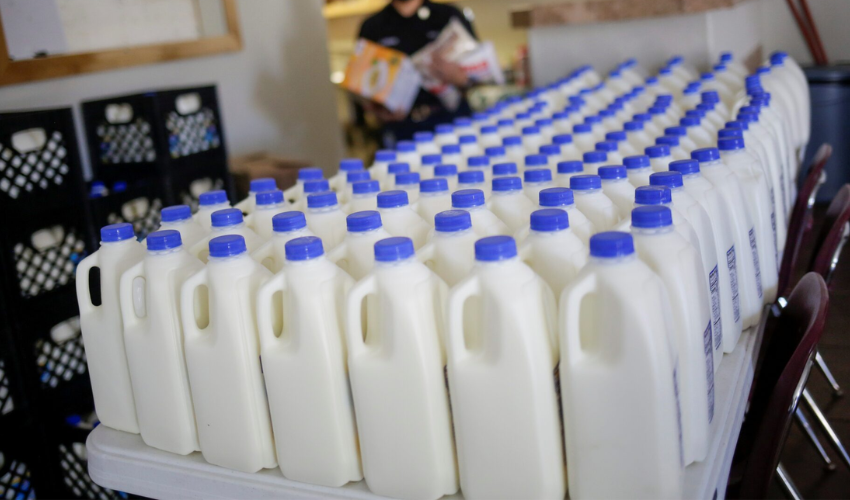 NewsWisconsin Researchers Transform Dairy Waste for 3D PrintingTwo professors at the University of Wisconsin-Platteville have unveiled a new breakthrough that combines agriculture with additive manufacturing. The researchers have developed a new technique to turn spoiled milk into an eco-friendly 3D printing material. The method was recently
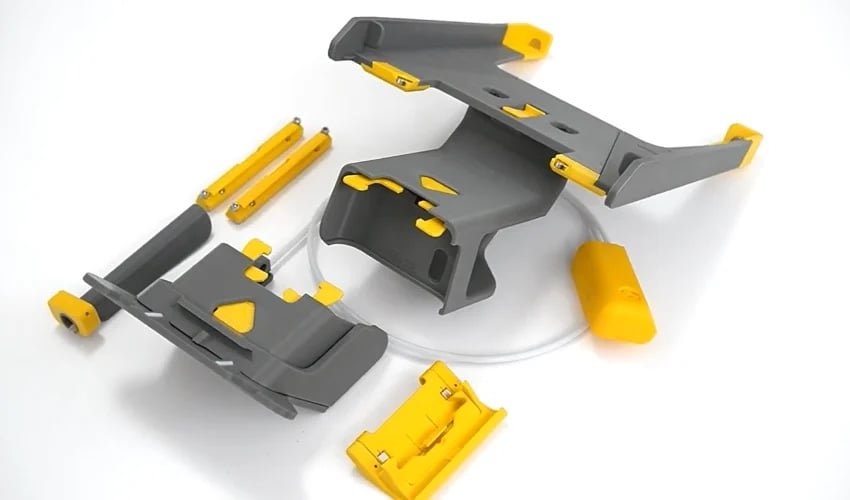 PrintersAnother Successful Kickstarter Campaign: The Swapmod Kit for Bambu Lab’s A1 Mini 3D PrinterThe Kickstarter campaign for Swapmod, an automation kit for the Bambu Lab A1 Mini 3D printer, has come to a successful close, raising $51,785 from 661 backers, well above its initial $5,391 goal. The aim of this ambitious project is…