Guides
#Startup3D: Tesseract Brings Linear Motors to 3D Printers
Almost every 3D printer moves its printhead with belts and pulleys, an affordable solution that comes with certain limits. The belt stretches, vibrates, and loses rigidity over time. For years, the industry has had a faster and more precise alternative…
- 3 min read
- Guides
- Six more stories
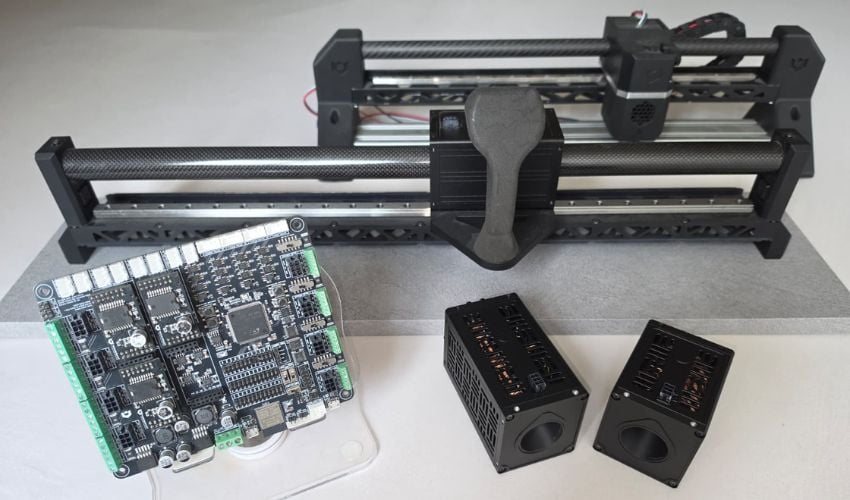
Almost every 3D printer moves its printhead with belts and pulleys, an affordable solution that comes with certain limits. The belt stretches, vibrates, and loses rigidity over time. For years, the industry has had a faster and more precise alternative in linear motors, but their price has kept them out of reach for many machine builders. Dutch startup Tesseract Technologies wants to change that with a linear motor developed from the ground up, from hardware to firmware, which the company says is two to five times more cost-effective than other products with similar performance.
The project began as the thesis of its founder, Timothy Kramer, and is already running on actual machines such as the FELIX Pro XXL from FELIXprinters. With a commercial launch planned for the first quarter of 2027, we spoke with the founder to understand what changes when you remove the belt, how closed-loop control continuously corrects the printhead’s position, and why multiple toolheads working simultaneously on the same axis could lead to entirely new machines. Don’t miss it!
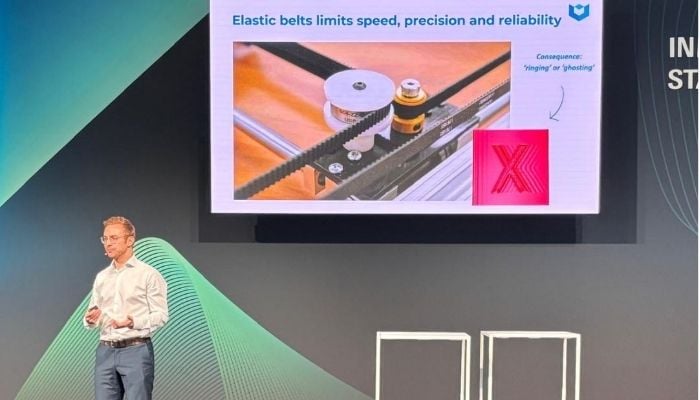
Timothy Kramer, founder of Tesseract, during his presentation at Formnext 2025. The startup was a finalist for the Rookie Award.
3DN: Could you introduce yourself and tell us what led you to found Tesseract Technologies?
My name is Timothy Kramer, and I’m the founder of Tesseract Technologies. As a student in the 2010s, I was fascinated by 3D printing. Being able to design something on a computer and then watch the part being manufactured right in front of you felt very empowering. What bothered me, however, was the print speed.
More from the desk
Six other notes from the rest of the bench.
 ApplicationsA Customizable Concept Car Made With 3D PrintingAt the Japan Mobility Show held at the end of last year, carmaker Daihatsu Motor Co presented several new vehicles. One of these was a concept car called me:MO, featuring several 3D-printed parts. The small electric car is said to…
 PrintersThe Top Low-Cost 3D Scanners on the Market in 20243D scanning is often used in the additive manufacturing (AM) sector to design a 3D model more easily than via modeling software. It captures data that is then transformed into a 3D model that can then be 3D printed. 3D…
 SoftwareideaMaker: The Free Slicer from Raise3DAs you probably know, slicers are a critical step when 3D printing a part. As an intermediary between the 3D model and the 3D printer, slicers allow the machine to understand the information in the 3D model thanks to a…
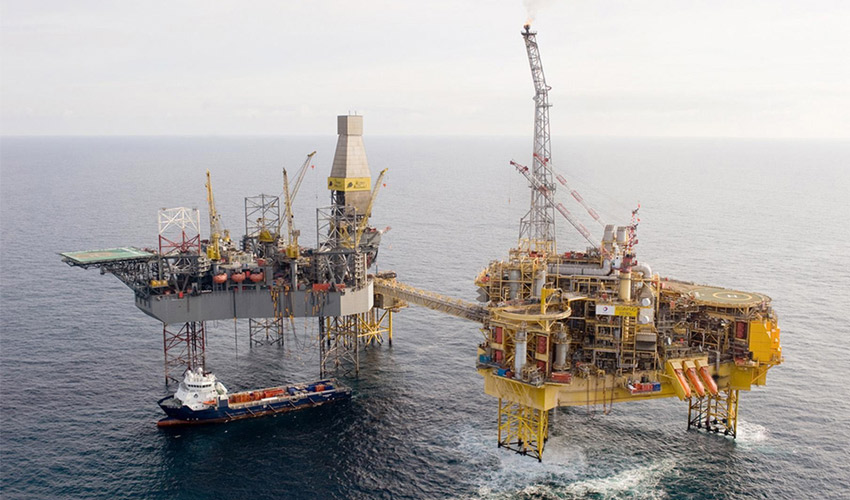 NewsVallourec and Total Made the First 3D-Printed Safety Critical Component in the Oil & Gas IndustryA few months ago, after a year of collaboration, Vallourec and Total announced that they had successfully installed the first ever 3D printed waterbushing in the North Sea. For those who might not know, waterbushings are safety-critical components in the…
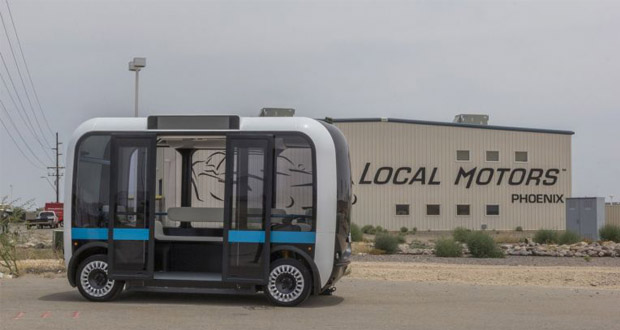 ApplicationsLocal Motors creates the first 3D printed shuttle in Knoxville, TennesseeManufacturing company Local Motors is creating quite the buzz in the additive manufacturing world, after successfully producing the first autonomous shuttle bus ‘Ollie’ in their micro-factory located in Knoxville, Tennessee. In 2016, Local Motors began manufacturing t
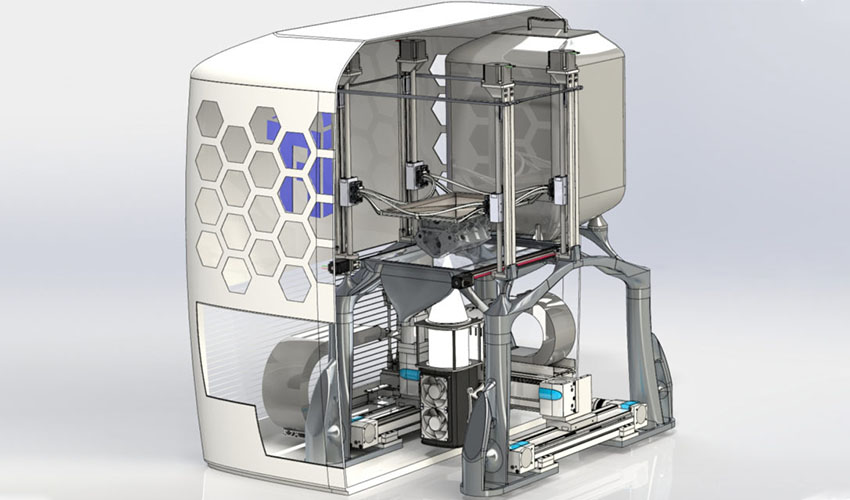 PrintersMetal 3D printer uses LED instead of laser or electron beamDue to the COVID-19 crisis, both staff and students have been in the home office at Graz University of Technology since mid-March. However, this has not prevented the research department of the Austrian university from presenting a newly developed powder…