Materials
PEEK vs PEKK: Which High Performance Material Should You Choose?
PEEK and PEKK are high performance polymers, known for their strength and thermal properties, that are increasingly used in additive manufacturing industry. PEEK and PEKK demonstrate sufficient mechanical strength at temperatures over 250°C, and can resist deformation well above
- 3 min read
- Materials
- Six more stories
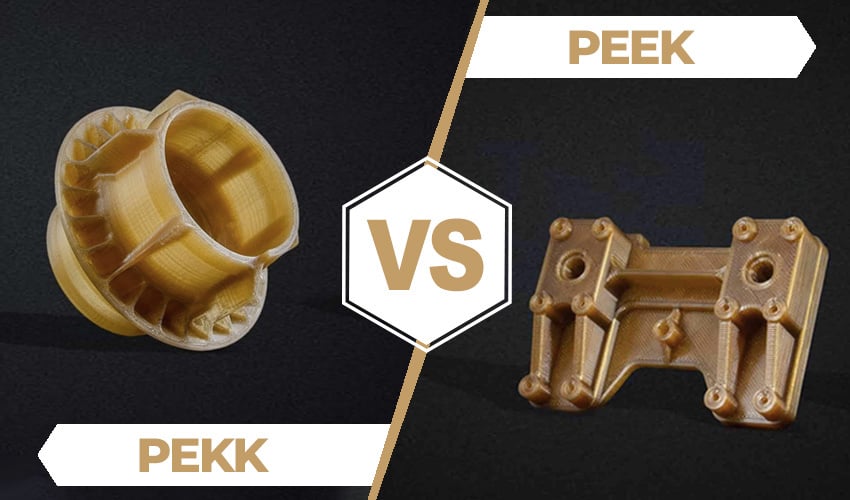
PEEK and PEKK are high performance polymers, known for their strength and thermal properties, that are increasingly used in additive manufacturing industry. PEEK and PEKK demonstrate sufficient mechanical strength at temperatures over 250°C, and can resist deformation well above the limits of common plastics such as nylon, ABS, or PC. Because of this, these tough materials are often used in place of metal, when users want to reduce waste, prevent corrosion, and allow for more complex designs. When it comes to AM, PEEK and PEKK are compatible with material extrusion (FDM) and selective laser sintering. But what are the differences between these two high-performance thermoplastics? Which one should you choose?
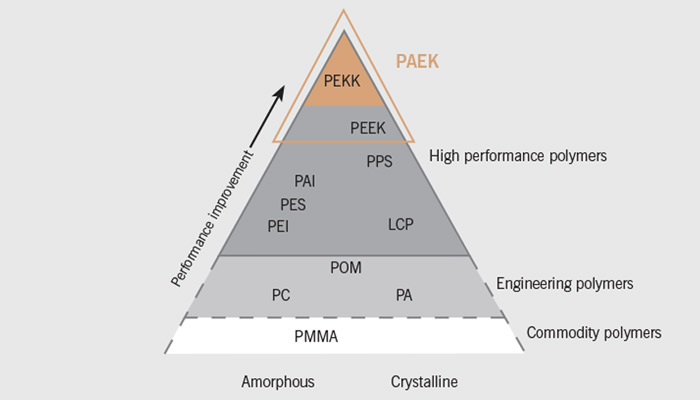
PEEK and PEKK are considered high performance polymers
Composition and Characteristics
When comparing two high performance polymers, it is important to start with their composition and properties. This will help you understand how they will perform during the manufacturing process, which can be a determining factor in your choice. These two materials belong to the PAEK family, a group of high-performance semi-crystalline and amorphous thermoplastics. In this family, the most commonly used polymer is PEEK, which is formed by a molecular structure of 1 ketone and 2 ethers.
PEKK, on the other hand has an inverse molecular structure: it has 2 ketones and 1 ether. The ketone bonds are more flexible, which increases the flexibility of the polymer in question. This means that the glass transition temperature (the temperature at which the polymer starts to soften) and the melting temperature are higher with PEKK.
More from the desk
Six other notes from the rest of the bench.
 News10 Reasons to Attend FormnextFormnext is an annual trade show dedicated to additive manufacturing. For several years now, it has brought together thousands of players and participants in Frankfurt over four days. Last year, for example, the show attracted 31,851 visitors and 148 conferences…
 ApplicationsUsing Cancer Cells And Computer Modeling, Researchers Have Optimized 3D BioprintingResearchers in a multi-university collaboration between the University of Waterloo, Canada, University of Swansea, and University of St Andrews, both UK, have conducted experiments on 3D bioprinted cancer cells over a period of 11 days, to compare to results from…
 SoftwareLATTE3D, the AI Creating 3D Models in SecondsArtificial intelligence (AI) is a fast-growing technology that is increasingly being adopted in many aspects of our daily lives. AI algorithms are used in a number of sectors, including medical, automotive and 3D printing. In this context, NVIDIA recently unveiled…
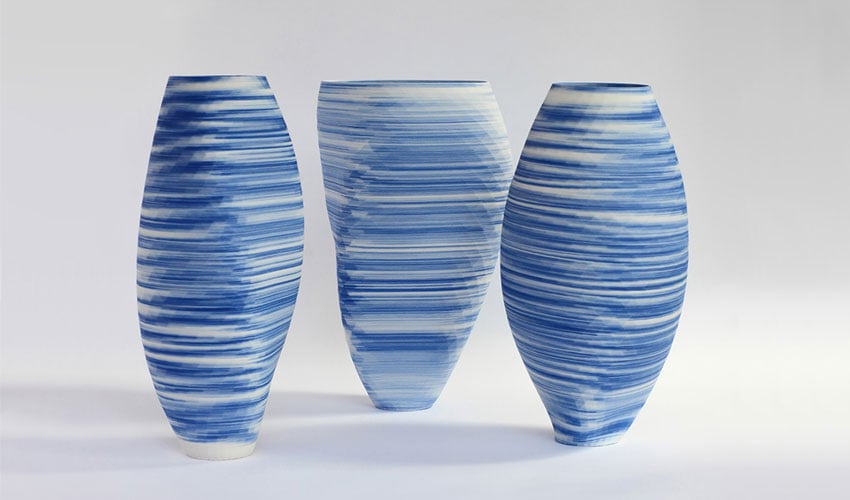 NewsOlivier van Herpt prints in 3D Delft BlueFor centuries Delft pottery, also known as Delft Blue, has gained worldwide renown; these Dutch pieces are particularly known for their finesse and quality. So when we combine 3D printing with this tradition of the seventeenth century, we can only…
 ApplicationsBentley Combines 3D Printing With Sustainable Rose Gold With “The Black Rose”Bentley is known for designing and building exceptional vehicles using the finest materials. As early as 2022, the company showcased its applications of 3D printing precious metals with a range of 18-karat yellow gold parts for the Batur, which was…
 News3D Printing to Maintain Cornell’s Eco-Friendly Lake Source Cooling SystemMaintaining sustainability on a large campus can be a complex challenge, as balancing environmental responsibility with efficient operations requires innovative solutions. Last week, Cornell University’s Lake Source Cooling (LSC) system underwent essential maintenance to combat t