News
Parametric Design and Concrete 3D Printing: A Winning Combination to Build a Bridge
Launched in 2019 by Rijkswaterstaat, the Netherlands, and Studio michiel van der kley, in collaboration with the Technical University Eindhoven, The Bridge Project is starting its installation. Measuring 29 meters (around 31.7 yards), it is one of the longest 3D…
- 3 min read
- News
- Six more stories
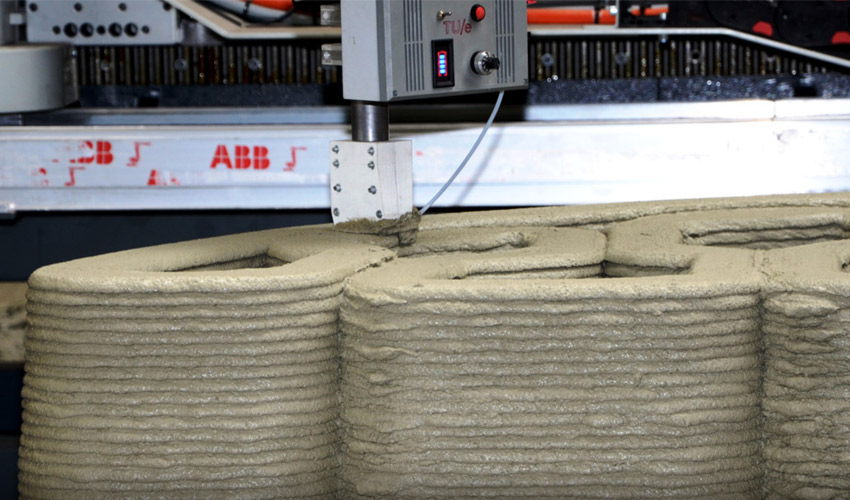
Launched in 2019 by Rijkswaterstaat, the Netherlands, and Studio michiel van der kley, in collaboration with the Technical University Eindhoven, The Bridge Project is starting its installation. Measuring 29 meters (around 31.7 yards), it is one of the longest 3D printed concrete bridges ever built for pedestrians and bicycles. The bridge can be found in Nijmegen, a choice that is not entirely insignificant as the Dutch city was elected the Green Capital of Europe in 2018. Beyond the architectural aspect, the project stakeholders also hope to develop innovative, new techniques in the building sector, concrete 3D printing and new modes of collaboration.
This is probably not the first time you have heard about a 3D printed bridge, and certainly not in the Netherlands. The country has developed quite a lot of initiatives combining 3D technologies, construction and architecture. The company MX3D, for example, was one of the first to present a 3D-printed steel bridge that connected the two banks of one of Amsterdam’s canals. More recently, in Rotterdam, three partners presented a 3D printed pedestrian bridge made from composite materials. Michiel van der Kley, the designer behind the Bridge Project, explains the choice of additive manufacturing: “For a few years, here at the studio we keep wondering what you could do with a 3D printer that you could not do any other way. We are looking at and researching what we could do with a concrete 3D printer that hasn’t been done yet…What we did is, choosing a shape that would be almost impossible to make with a regular method. A shape that has its equivalent in Nature. The legs seem to merge into the deck, the way a branch would grow out of a tree. Only material where it is needed. Just the way any shape would evolve in nature over time.“
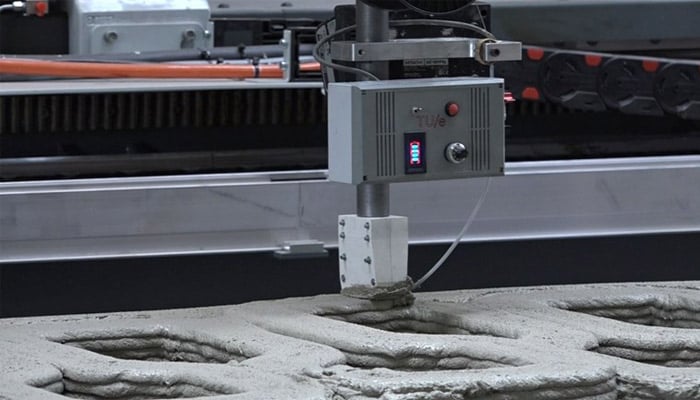
First impressions of the bridge (photo credits: Omroep Gelderland)
Design, a crucial step in the construction project
So it is both the design phase that is particularly interesting in this project, as well as using a cheaper and more environmentally friendly method. A parametric design software is planned to be used, taking into account all aspects that will influence the bridge – the applied loads, the resistance, the number of cars or pedestrians crossing it, etc. All calculations can be done on the same 3D model. The parametric modeling was done by Summum Engineering, a structural design, engineering and optimization consultancy also based in the Netherlands. Their previous projects have been based around architectural, construction and engineering projects that have been optimized to reduce the materials used including lightweight structures, sustainable buildings and art installations. Witteveen+Bos, also worked on the project to translate the 3D model from Van der Kley to a 3D printable, structurally feasible geometry, that would meet building regulations, an important consideration especially when it comes to 3D printing construction projects. The teams have imagined a 29-meter (31.7-yard) bridge for cyclists, but they will be able to adapt it for cars – it will have different dimensions, larger and perhaps more piers, but the principle is there: it will only be necessary to adjust the values and another structure can be created.
More from the desk
Six other notes from the rest of the bench.
 MaterialsMulti Material Jetting system combines different materials into a single AM partAt the Fraunhofer Institute for Ceramic Technologies and Systems (IKTS) in Germany, researchers have developed a Multi Material Jetting system that is capable of additively manufacturing parts that integrate multiple materials, including high-performance materials such as ceramic
 NewsFord and HP Use Recycled 3D Printing Materials to 3D Print New Auto PartsAfter the decision to once again turn to 3D printing for its manufacturing processes, Ford has joined forces with HP. The pair are set for an industry first, turning used 3D printed parts and powders into injection molded auto parts.…
 NewsA Medieval Castle Was Restored Using 3D TechnologiesIn Italy, additive manufacturing has already been used several times to decorate spaces. And the number of projects is growing steadily. Take for example the city of Lucca, with its 3D printed plastic benches, or Riso Paradiso, a Sicilian ice…
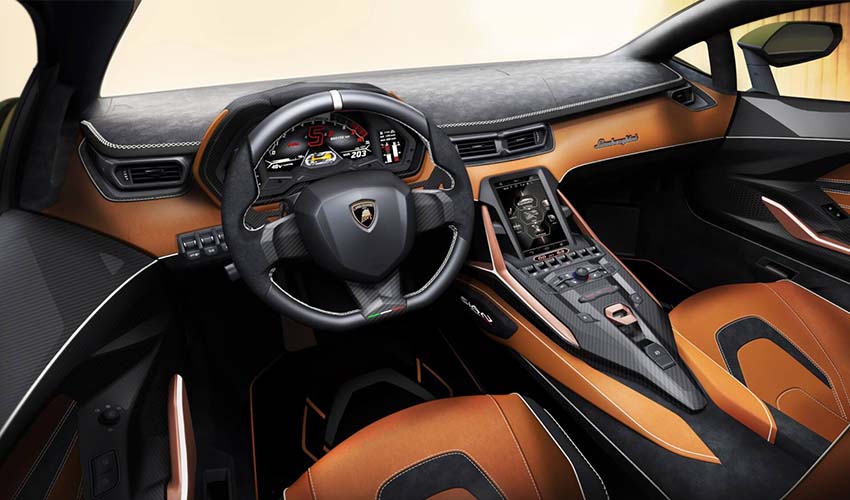 ApplicationsCarbon and Lamborghini expand partnership to manufacture parts for the Sián FKP 37The collaboration between Carbon and Lamborghini made quite a bit of noise in the industry when it was announced in February. Carbon had created some parts for Urus, Lamborghini’s first SUV model. Since, the companies have been working on how…
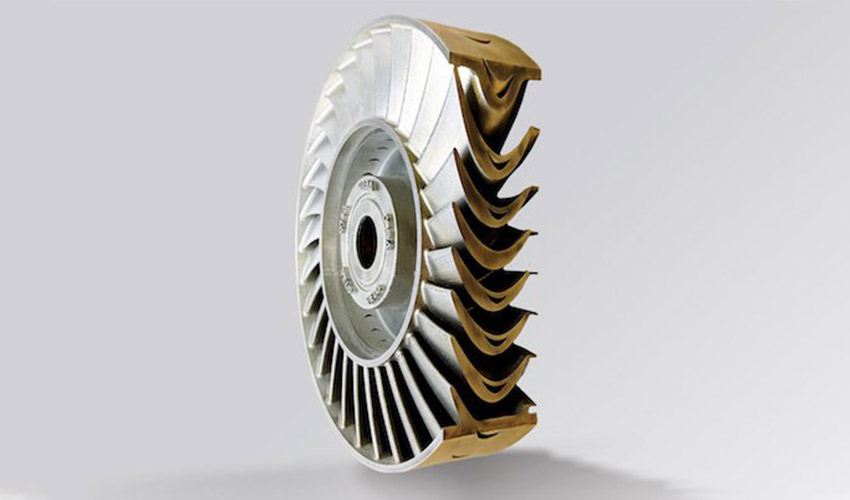 PrintersVELO3D raises $28 million to expand its product portfolioMetal additive manufacturing solution provider, VELO3D, announced that it has raised $28 million in a Series D funding round. New investors Piva and TNSC joined the round, along with existing investors Bessemer Venture Partners, Playground, and Khosla Ventures. This brings&hellip
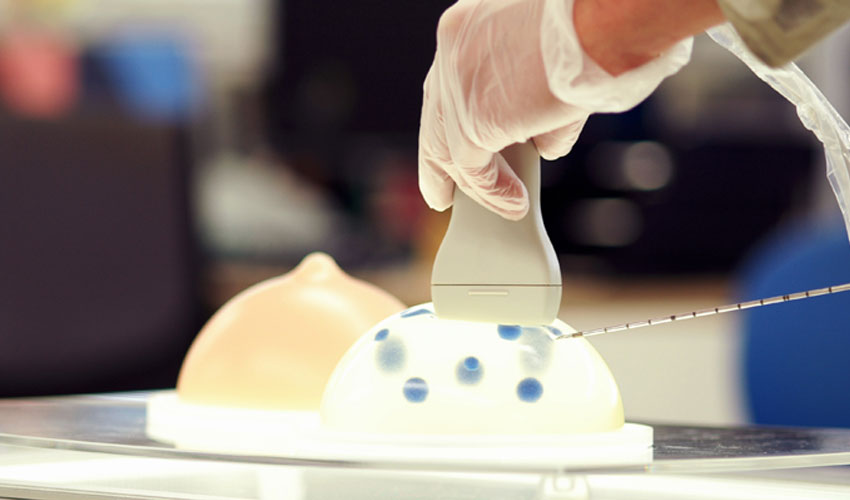 ApplicationsDiagnose breast cancer with 3D printed breast phantomsA team of researchers from the Food and Drug Administration (FDA) of Maryland in the United States announced the development of a new 3D printing software tool. A tool that can help in the creation of 3D printed breast phantoms. These…