News
ORNL Develops Novel Extrusion System for Single-Stream, Multi-Material 3D Printing
We’ve been talking a lot about multi-material printing lately, and for good reason. The technology is advancing rapidly on both the maker and professional sides, from Bambu Lab’s and Prusa’s latest multi-material desktop systems to more experimental approaches. Now, researchers&h
- 3 min read
- News
- Six more stories
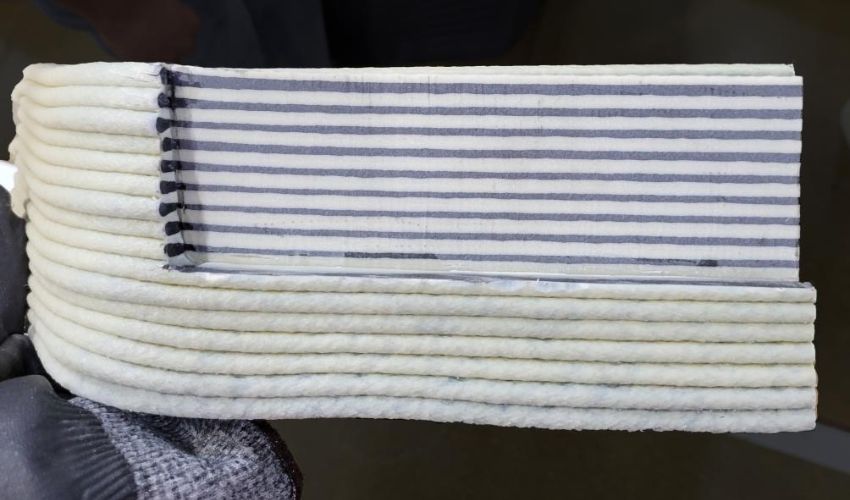
We’ve been talking a lot about multi-material printing lately, and for good reason. The technology is advancing rapidly on both the maker and professional sides, from Bambu Lab’s and Prusa’s latest multi-material desktop systems to more experimental approaches. Now, researchers from the Oak Ridge National Laboratory have unveiled a novel, multi-material 3D printing system. The structure involves multiple extruders combined into a single, high-output stream via a specialized nozzle. According to ORNL, the system matches the speed of larger extruders while providing more flexibility and precision.
The project was developed out of the need to improve large extruder performance. First, large extruders are heavy, which means they need stronger and more expensive gantries or robots to carry them. When output increases, precision can decrease, causing flow inconsistencies. This causes problems for small parts and large tapered designs. To accommodate this, the printing speed has to slow down, which prevents heat buildup that can cause warping. ORNL is presenting a more efficient solution: it allows users to add or deactivate smaller extruders without compromising quality. Critically, it allows for the simultaneous printing of multiple materials within a single bead without the need to swap equipment.
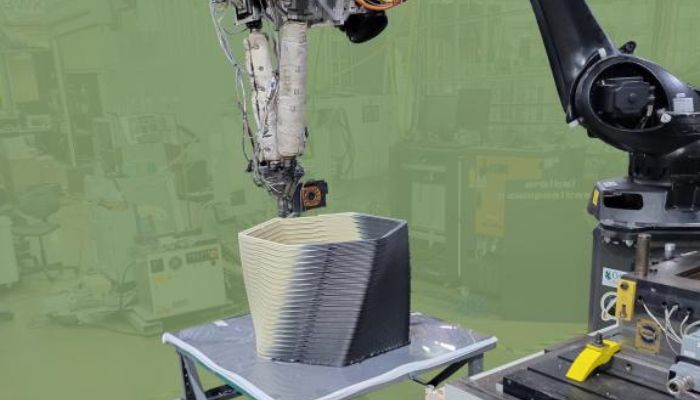
The method allows for multiple materials to be deposited in a single bead.
How Does It Work?
ORNL’s design hinges on patent-pending nozzle blocks. Made from aluminum bronze for strength and conductivity, these blocks have an internal design that merges two molten polymer streams from parallel extruders. This design lets the system process a wide range of large-scale pellet feedstocks across multiple configurations. Remarkably, ORNL reports that it consistently doubles flow rates, showing promise to triple, quadruple and so on. The multiplexing system streamlines the extrusion process and significantly reduces center porosity through the implementation of a Y-shaped nozzle.
More from the desk
Six other notes from the rest of the bench.
 News3D Printed Electronic Skin Could Open the Way for Human-Machine InteractionThe skin is the largest human organ and the largest sensory connection to the rest of the world due to its more than 1,000 nerve endings. This makes it not just incredibly important to humans as they interact with their…
 News#3DExpress: Trouble on the Horizon for Nano Dimension and Nexa3D?It may be the holiday season, but the additive manufacturing sector is not sleeping peacefully while waiting for Santa Claus. In this week’s 3DExpress, we start with some of the big news you might have missed this week from Nano…
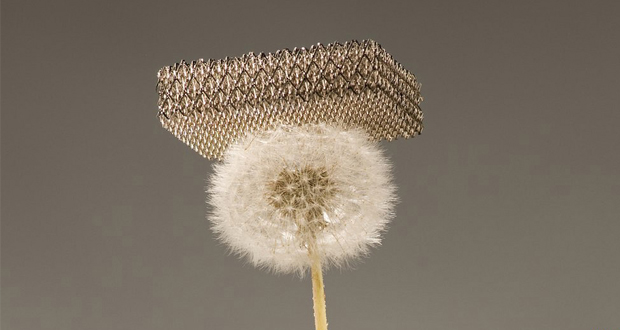 Materials3D printed graphene aerogel granted Guinness World RecordGraphene, which is a form of carbon, is known for its properties of strength and lightness, especially when used as a 3D printing material. Taking this lightness and strength further, three engineers decided to print the graphene with aerogel, creating…
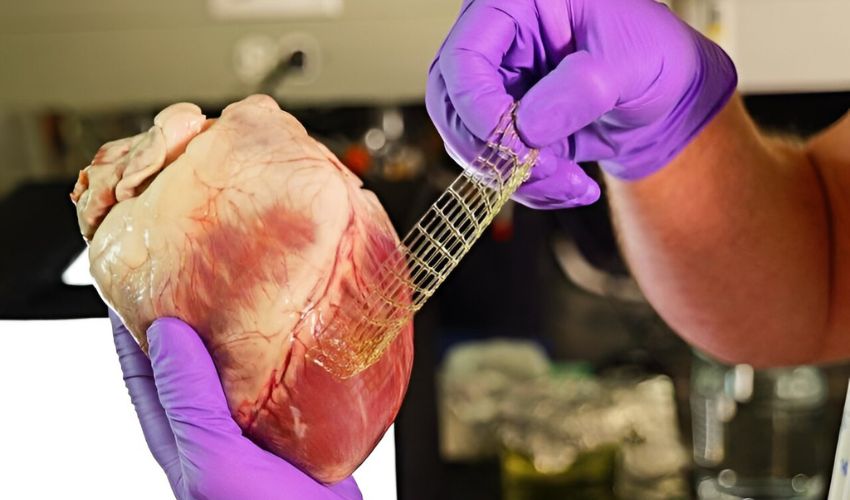 Applications3D Printed ‘Band-Aid’ for the Heart Could Help Heal Cardiac TissuesWhether as a result of a heart attack, a disease like diabetes, smoking, drugs or an accident, damage to the heart is slow to heal by itself and often requires surgical intervention to prolong lifespan. But what if it was…
 GuidesThe Most Impressive 3D-Printed Bridge ProjectsIn the construction industry, additive manufacturing is being widely used today. Whether it’s to build houses, schools, or even bridges, 3D technology offers great benefits. In terms of structures and walkways of urban architecture, 3D-printed bridge projects have multiplied in r
 NewsThe Best 3D Printing Videos of 2020As 2020 draws to a close, it’s time to remember the best 3D printing videos we’ve seen over the last 12 months. This year has been heavily impacted by the Covid-19 pandemic, which is why many of the videos are…