Guides
The Most Impressive 3D-Printed Bridge Projects
In the construction industry, additive manufacturing is being widely used today. Whether it’s to build houses, schools, or even bridges, 3D technology offers great benefits. In terms of structures and walkways of urban architecture, 3D-printed bridge projects have multiplied in r
- 3 min read
- Guides
- Six more stories
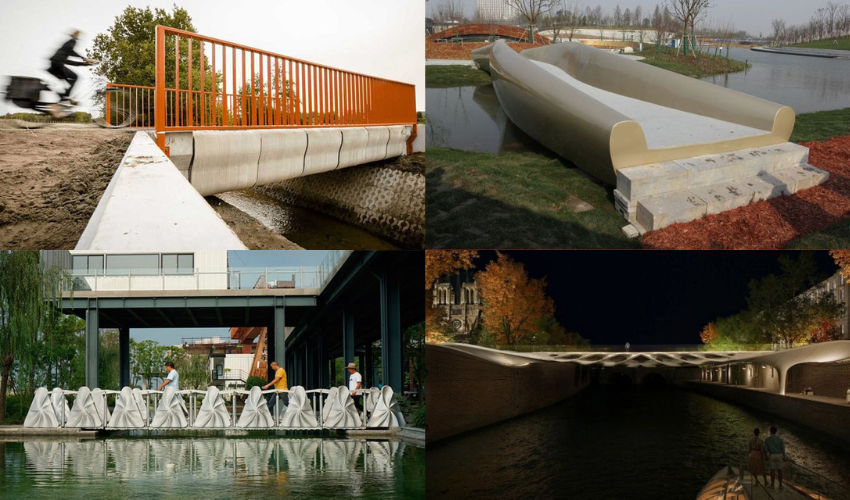
In the construction industry, additive manufacturing is being widely used today. Whether it’s to build houses, schools, or even bridges, 3D technology offers great benefits. In terms of structures and walkways of urban architecture, 3D-printed bridge projects have multiplied in recent years. Many countries are now using additive manufacturing to build these connecting structures, in part due to the low cost. To learn more about these sorts of projects and how additive manufacturing facilitates the construction of bridges, we have compiled a list of some of the most preeminent initiatives of recent years, whether they are completed or currently still under construction.
A Walkway Made With 60% Less Material
Although it seems difficult to believe, this project is a reality. Specifically, it was Ghent University that carried out the initiative to create a walkway through additive manufacturing that required less material and had a reduced environmental impact. On the project, Ghent University worked with Vertico and Technion – Israel Institute of Technology to design the pedestrian bridge, which is not very impressive for its size, but it is impressive in terms of aesthetics, and especially striking for being a bridge with optimized topology. For this, they used their concrete 3D printer that offers a printing volume of 4.5 x 2 x 2.5 m, with a material specially designed for this purpose. In this way, the company aims to reduce CO2 emissions and increase productivity in the construction sector.
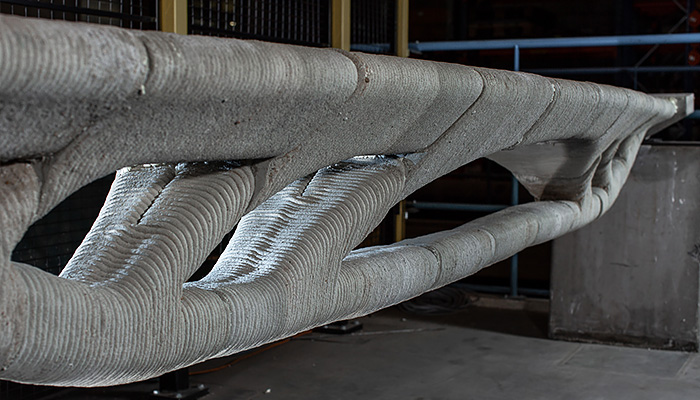
Photo Credit: Vertico
The Technological University of Eindhoven’s Collaboration
Acclaimed architect Michiel van der Kley, along with Summum Engineering and Witteveen+Bos collaborated with the Technological University of Eindhoven (TU/e) on the design of the 3D model for the longest 3D-printed bridges built for cyclists. The bridge was manufactured in the 3D printing center of Saint-Gobain Weber Beamix, which uses several BAM robotic arms. The 29-meter-long bridge was designed with round and natural shapes to blend in with its outdoor placement.
More from the desk
Six other notes from the rest of the bench.
 NewsSolo 8, an affordable robot dog?More often than not robotics and 3D printing are a combination that guarantees success. The capabilities provided by robotics together with the reduced production time and costs of additive manufacturing make it an efficient solution for many application areas. This…
 NewsResearchers mimic nature for colorful 3D printingResearchers from the University of Illinois are demonstrating how additive manufacturing technologies can be used to produce multiple colors from a single ink. More specifically, the research paper entitled “Tunable structural color of bottlebrush block copolymers through direct-
 PrintersAlpha Laser Talks Metal 3D Printing Safety With the AL3D-METAL PrinterAs the name suggests, the German company Alpha Laser specializes primarily in lasers, but additive manufacturing has also become increasingly important for the company in recent years. In keeping with the spirit of the times in the industry, Alpha Laser…
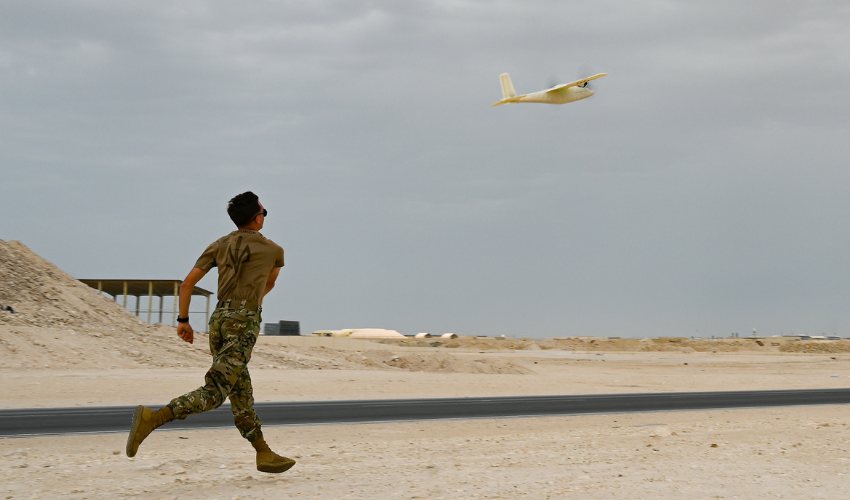 ApplicationsTask Force-99 Unveils 3D Printed Drone for Battlefield AidIn the rugged, harsh terrains of combat zones, traditional means of delivering aid often fall short, posing a significant risk of severe injury and death. Amidst this challenge, U.S. Air Forces Central engineers believe they have found a lifesaving solution…
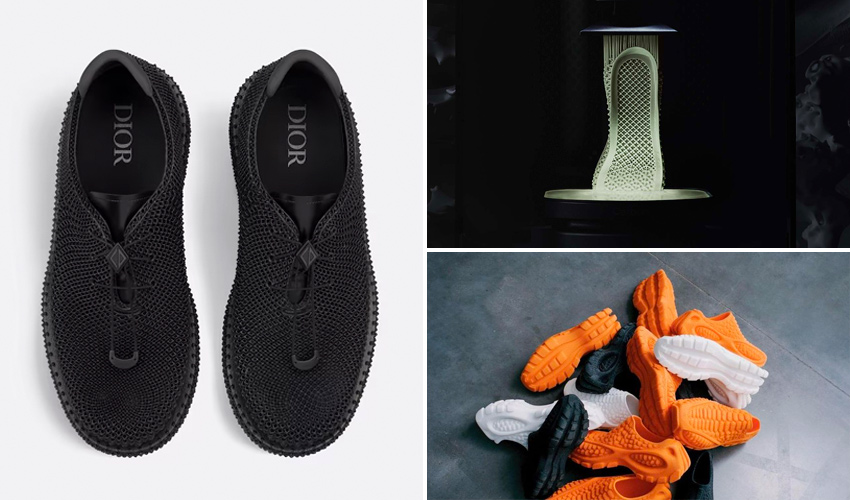 Guides3D Printed Shoes: What’s Available on the Market Today?Additive manufacturing is a technology that offers a multitude of advantages in footwear production, the most important being the possibility of customizing the final product. Due to this, the global 3D printed footwear market will reach a value of $1.97…
 NewsEssentium’s latest survey: what is the future of industrial 3D printing?The study from Dimensional Research, sponsored by Essentium looks into the practical experiences of stakeholders who have invested into 3D printing for manufacturing, beyond simple prototyping. Although the 3D technology has a tremendous potential, the industry has been rather sl