News
LONGER launches Orange 4K, an ultra-precise LCD 3D printer
Originally from Shenzhen, China, Longer launched its 3D printing business back in 2014. The company manufactures three distinct types of machines: desktop FDM 3D printers (known to manufacturers under the Alfawise brand), low-cost resin 3D printers and a range of…
- 3 min read
- News
- Six more stories
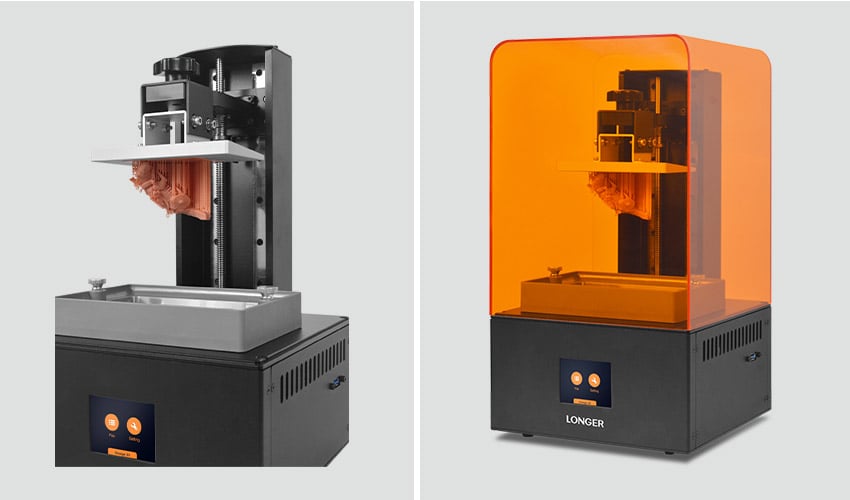
Originally from Shenzhen, China, Longer launched its 3D printing business back in 2014. The company manufactures three distinct types of machines: desktop FDM 3D printers (known to manufacturers under the Alfawise brand), low-cost resin 3D printers and a range of industrial machines (two models based on SLA and one model based on DMLS). At the beginning of 2019, the Chinese manufacturer launched a Kickstarter campaign to support the development of its Orange 30 machine. By the end of the campaign, they had managed to raise $150,000. Today, the company is kicking off a new Kickstarter campaign to fund Longer 4K. With a goal of $50,000, the company has already pledged more than $85,000 with 22 days to go! What are the features of the Longer 4K?
The Orange 4K from Longer, just like the Orange 30, is an LCD 3D printer, which means it relies on the process of photopolymerization to build parts. In fact, the photosensitive resin is cured by the LCD screen’s light source to produce solid layers, and eventually whole parts. The manufacturer explains that today, the majority of LCD 3D printers on the market are built in 5.5” 2K, and the conventional pixel size is 47.25 μm: two parameters that have a direct impact on the precision of prints. Therefore, Longer has developed a 3D printer with a resolution of 4K, and driven down the pixel size to 31.5 μm to provide more accurate and detailed prints.
One of the key improvements of the Orange 4K is the pixel size. Side to side, you can compare the 2K resolution and the 4K resolution | Image via Longer
Additionally, Longer 4K can be configured with mono screen or color screen: by choosing mono screen, the subpixels of each pixel can be controlled separately, therefore you will be able to reach 10.5 μm in the Y direction. The color screen can also achieve impressive prints with its 31.5 μm resolution in X and Y, and if needed you will be able to switch the LCD screen and update the firmware easily to obtain mono screen 3D printing.
More from the desk
Six other notes from the rest of the bench.
 MaterialsResearchers Create Polycatenated Architected Materials (PAMs) for 3D PrintingRecent advances in materials science have led to new solutions in architecture and design. In a recent example, a team of researchers in California has developed polycatenated architectural materials (PAMs), which are capable of interweaving to form unique 3D structures.…
 NewsUniversity of Alberta Researchers Improve 3D Printability of Pea Protein3D printing can be used to overcome some of the key challenges facing the food industry. For example, specific shapes, flavors and consistencies can create special foods for children or people with swallowing problems, or to achieve an individual nutrient…
 ApplicationsThe Lions’ Den—3D Artificial Intelligence Lab in Medical Innovation CompetitionThe Lion’s Den is an annual medical innovation competition with the aim of improving health care in the Canadian province of New Brunswick. This year, on September 10th, 3D technology is one of the innovations being pitched for the chance…
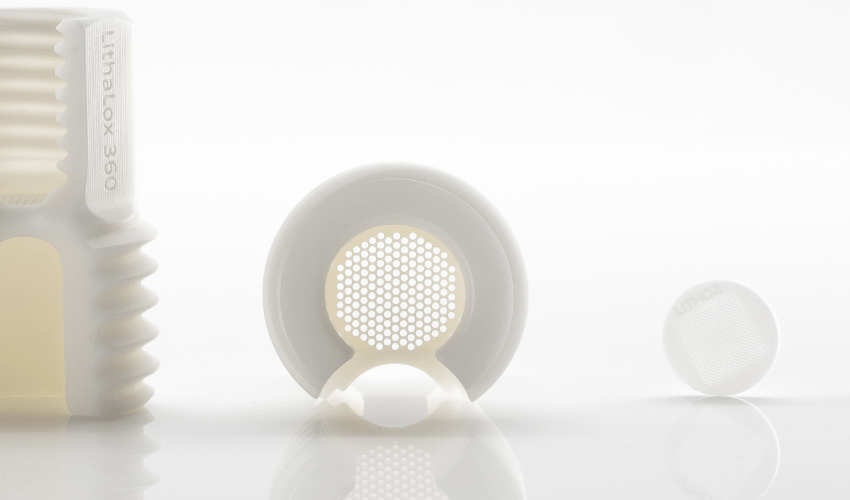 MaterialsUsing Ceramic 3D Printing to Achieve Complex Aerospace StructuresIndustries are increasingly searching for new and advanced materials and processes to improve their products, and the aerospace sector is no exception. The industry’s needs are evolving rapidly with the introduction of more stringent requirements. Thus, they demand new tech
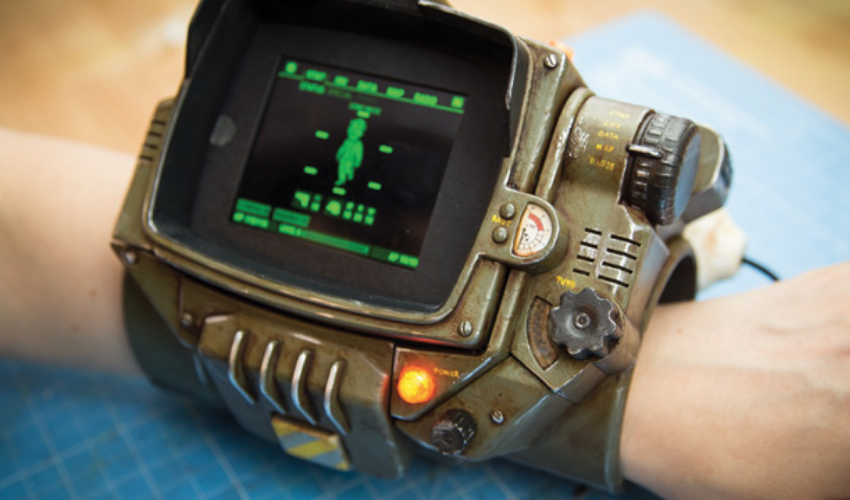 MaterialsKamui Cosplay 3D Prints A Fallout Pip-Boy DeviceAs a huge fan and avid player of the action role-playing game Fallout, Svetlana Quindt decided to recruit her design partner Benni Schwarz, and his brother Jacob, to help create a 3D printed replica of the video game’s most recognizable…
 MaterialsUBQ Materials and Plastics App Launch New Highly Sustainable 3D Printing MaterialUBQ Materials and Plastics App have joined forces to develop and launch a novel material in order to improve the functionality of sustainable 3D printing. The partnership derives from mutual recognition of the growing demand for zero waste supply chain…