News
University of Alberta Researchers Improve 3D Printability of Pea Protein
3D printing can be used to overcome some of the key challenges facing the food industry. For example, specific shapes, flavors and consistencies can create special foods for children or people with swallowing problems, or to achieve an individual nutrient…
- 3 min read
- News
- Six more stories
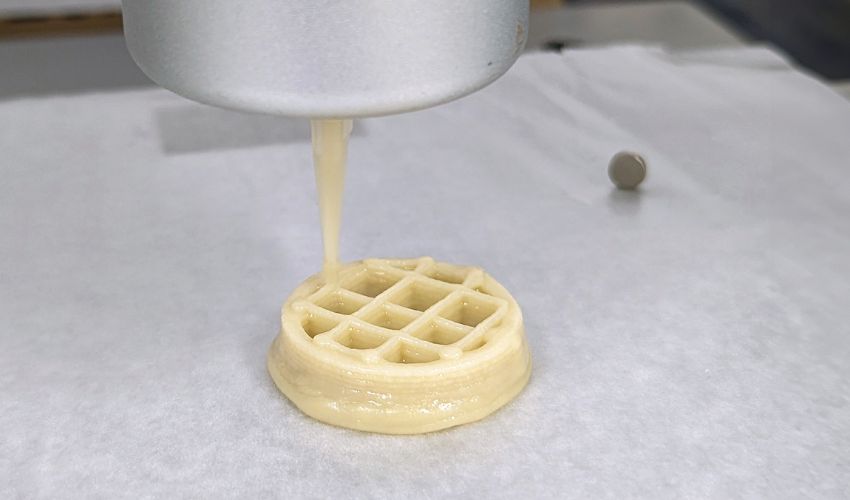
3D printing can be used to overcome some of the key challenges facing the food industry. For example, specific shapes, flavors and consistencies can create special foods for children or people with swallowing problems, or to achieve an individual nutrient content. Additionally, 3D printed meat or plant-based alternatives are on the rise, encouraging us to rethink our eating habits. However, 3D printing plant-based proteins comes with several obstacles, like establishing the stability of a printed product. Now, researchers at the University of Alberta have revealed how 3D printing pea protein using cold plasma treatment achieved a better structure.
Pea protein is one of the cheapest and most nutritious sources of protein. It is also hypoallergenic. The pea protein used by the researchers comes from legumes grown on the prairies in Canada and the protein source is already used in the production of bread, cereals, plant-based dairy substitutes and meat alternatives. This range of applications makes it a real alternative to animal-based foods and could contribute to more and more people opting for a plant-based diet, provided the products are convincing in terms of taste, texture and form. This can be achieved through 3D printing, as we have seen in other applications of 3D printed food. The catch? Pea protein barely retains its 3D-printed shape after extrusion, so it’s difficult to realize its full potential as a plant-based alternative to meat. At least it has been until now, since researchers at the University of Alberta have found a way to solve this structural problem.
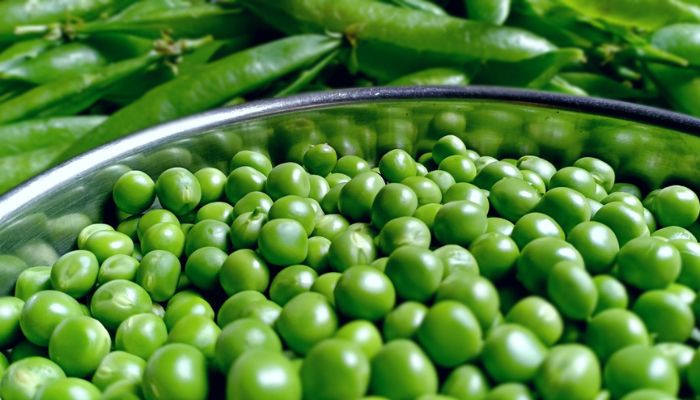
Pea protein is an inexpensive source of protein. Researchers at the University of Alberta have found a way for it to retain its shape after 3D printing, opening up new avenues for establishing plant-based protein sources.
3D Printing Gives Shape, Plasma Gives Stability
The researchers used cold plasma treatment to give the protein better structural properties. To do this, they mixed their pea protein “ink” with water activated with cold plasma. More specifically, they used plasma-activated microbubble water (PAMB) and mixed it with the protein to create a substance that was heated, then cooled and then printed. The goal was to create an appealing shape and texture that was also durable.
More from the desk
Six other notes from the rest of the bench.
 MaterialsHow to Choose a Polymer for Your 3D Printing Application? Experts Give Their Advice!Today, there are a wide variety of materials that are compatible with additive manufacturing technologies, from thermoplastics to metals, ceramics and photosensitive resins. The largest family of these materials is polymers, which can be found in different forms depending on&hell
 NewsWEBINAR: Overcoming AM Design Challenges in Critical SectorsDesigning custom 3D-printable parts – like jigs, fixtures, or product-specific tooling – often requires manual modeling by experienced CAD users. This is a time-consuming process and is difficult to scale, so it often becomes a bottleneck in additive manufacturing workflows.&hell
 ApplicationsThe 3D Printing Dental Market is BoomingSmarTech Publishing recently announced its latest report on the 3D printing dental market, including an expected increase in market size to $9.5bn by 2027. SmarTech’s findings explain that the dental industry has grown by over 35% year-on-year in 2016 and…
 ApplicationsRosotics Chosen to Advance Critical Naval Technologies Under Priority Federal ContractRosotics, a large-scale metal additive manufacturing company, announced last week that it has entered the fabrication and testing stage of a federal contract awarded by Fluor Marine Propulsion (FMP), LLC at the Bettis Atomic Power Laboratory, under the U.S. Department…
 SoftwareAllevi releases new software for step-by-step bioprintingAllevi was founded a little over five years ago in Philadelphia with a mission to make it easier to design and engineer 3D tissues. The team created their first desktop 3D bioprinter to be versatile, powerful and easy-to-use, a solution…
 NewsA material that change the shape and colour of 3D printed partsResearchers at Darmouth College have been successful in developing a unique new 3D printing material. They have created a smart ink that would allow 3D printed parts to change shape and colour over time. This research will interest and benefit sectors…