Materials
Using Ceramic 3D Printing to Achieve Complex Aerospace Structures
Industries are increasingly searching for new and advanced materials and processes to improve their products, and the aerospace sector is no exception. The industry’s needs are evolving rapidly with the introduction of more stringent requirements. Thus, they demand new tech
- 3 min read
- Materials
- Six more stories
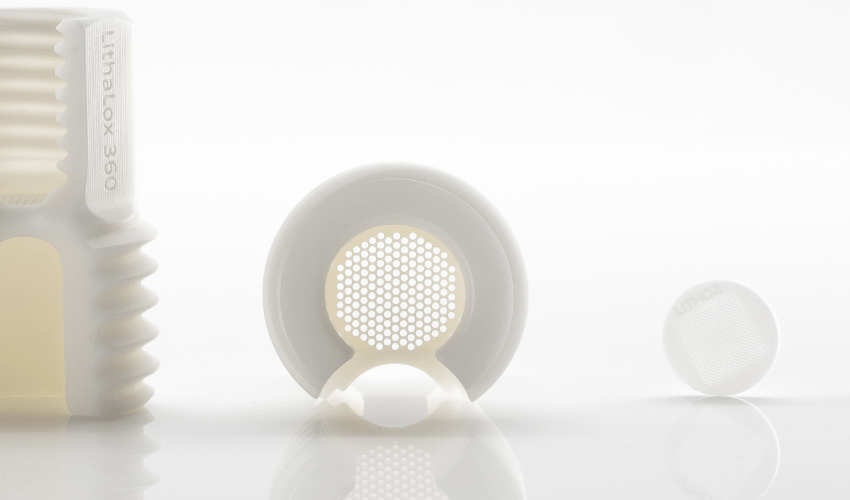
Industries are increasingly searching for new and advanced materials and processes to improve their products, and the aerospace sector is no exception. The industry’s needs are evolving rapidly with the introduction of more stringent requirements. Thus, they demand new technologies that can provide innovative and efficient solutions. Additive manufacturing is emerging as an ideal solution for aerospace applications. According to a report by Research and Markets, the aerospace and defense market’s value for 3D printing was estimated to be $1.9 billion in 2021, with an expected CAGR of over 24% from 2022 to 2027. Additive technologies are bringing significant changes and advantages to the aerospace industry, such as the production of lighter, stronger, and more complex parts, design freedom, the ability to combine multiple parts into a single unit, the reduction of waste of costly raw materials, and cost and resource efficiency.
If we look at the innovative materials that can be used through 3D printing, the one that is gaining most success is ceramics. This has proven to have the necessary properties to meet the needs of industry and the high standards required in aerospace applications. Among the companies that have focused on ceramic additive manufacturing is Austrian manufacturer Lithoz, which has developed Lithography-based Ceramic Manufacturing (LCM) technology for complex parts with high resolutions. The company doubled the sales of its ceramic 3D printing solutions and turnover in the year 2022, indicating market interest in this technology in multiple industries, including medical and aerospace.
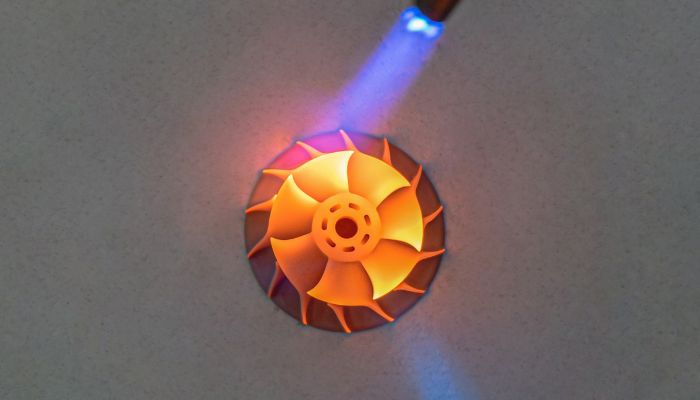
A 3D printed ceramic part
The Benefits of Using Ceramics in Aerospace Applications
The research report titled “3D Printing Ceramics 2022-2032: Technology and Market Outlook” highlights the significant growth in the value of the ceramic 3D printing market, estimated to reach $400 million by 2023. According to the report, the aerospace, defense, dental, and chemical engineering industries are the most interested in ceramic manufacturing for producing small-batch parts. Ceramics have captured the attention of the aerospace industry due to their exceptional properties, such as high resistance to heat, oxidation, and abrasion as well as mechanical and dimensional stability. This makes ceramics highly efficient and suitable for use in extreme conditions, making it an ideal material for next-generation spacecraft construction, especially for parts exposed to high stresses. We mainly refer to “advanced ceramic materials” or “technical ceramics” which possess remarkable properties such as high strength, corrosion resistance, and excellent thermal and electrical insulation. Some of the most noteworthy advanced ceramics are aluminum oxide (Al2O3), silicon nitride (Si3N4), silicon carbide (SiC), and zirconia (ZrO2). Via 3D printing, even ultra-high temperature ceramics (UHTCs) can be processed, the material properties of which are extremely sought-after in this industry.
More from the desk
Six other notes from the rest of the bench.
 GuidesHP on the Application and Scaling of MJF TechnologyWe are once again on the road to Frankfurt visiting Formnext in order to bring you the latest news from the additive manufacturing world. Of course, when visiting the halls of the expo, the HP booth is always an interesting…
 MaterialsGH Induction Has 3D Printed the Largest Pure Copper Induction CoilGH Induction has announced the creation of the largest 3D printed coil made of pure copper, made using electron beam melting (EBM). This is a key component used in electromagnetic induction technology to heat metal parts as efficiently as possible.…
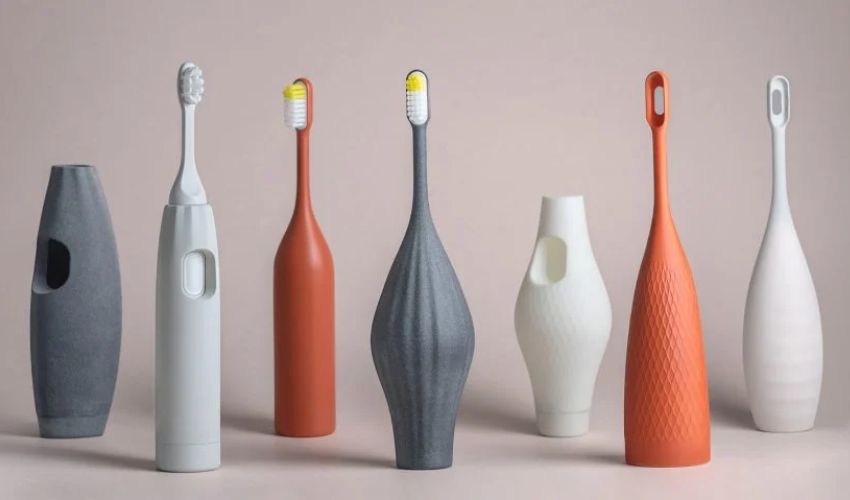 NewsLandor & Fitch’s 3D Printed Toothbrushes Help Those With Limited DexterityBrushing one’s teeth is a daily ritual, part of a personal hygiene routine instilled in us from the earliest ages. Yet the repetitive, minute brushing process can often be a painful or even impossible task for millions of people worldwide…
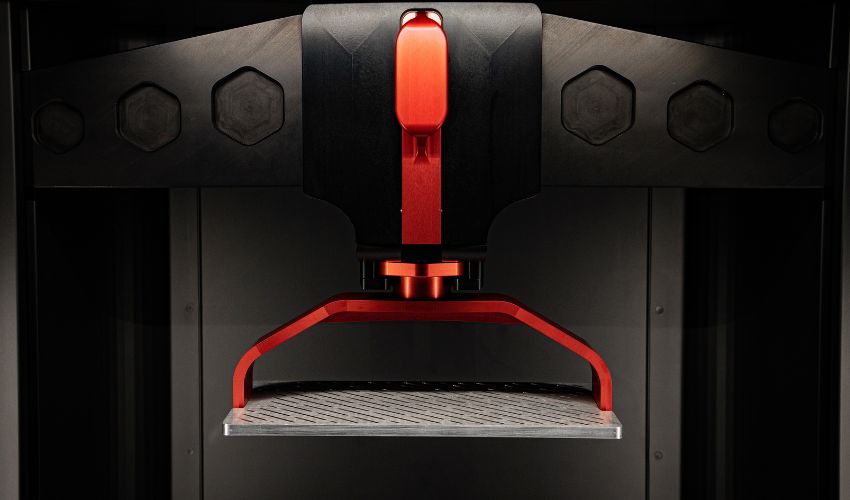 Guides#3DStartup: Axtra3D’s HPS Technology Combines SLA and DLP to Overcome Limitations in BothThe startup of the month for March is Axtra3D, a young company born from the mind of Gianni Zitelli, an experienced Italian inventor on the AM scene. Based in the US, in Charlotte, NC, the company has its R&D hub…
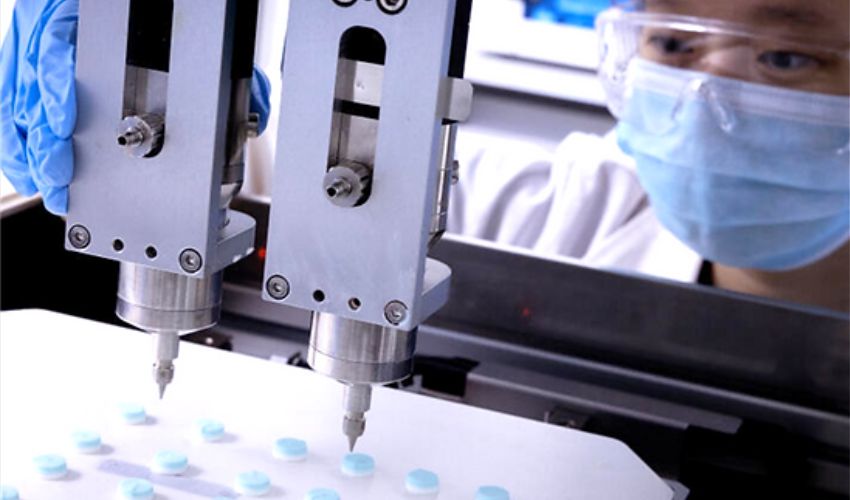 ApplicationsPharmaTher Partners with Craft Health to Personalize 3D Printed PeptidesThe Toronto-based PharmaTher Holdings Ltd. has launched Personaliz3D Peptides™, a division built to develop and commercialize personalized peptide products using 3D printing and artificial intelligence. Two days later, the specialty pharmaceutical company announced a collaboratio
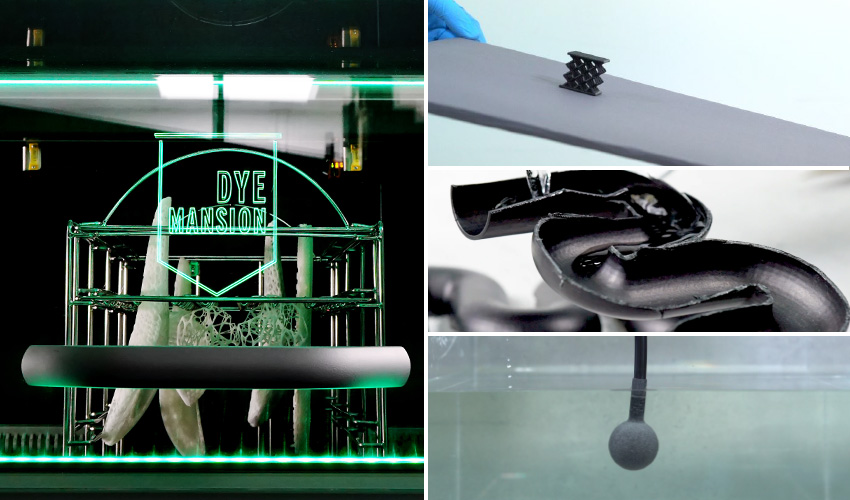 PrintersVaporFuse Surfacing, a green solution for improved part propertiesWhen it comes to the additive manufacturing workflow, we often discuss different printing technologies and modeling software, but it seems like post-processing is not being talked about enough. Yet the subsequent treatment of prints is a crucial step as it…