News
OECHSLER Rethinks Ski Mask Design with 3D printing
Increasingly, companies are seeing the benefits of using 3D printing in sports. Another company has entered the ring. German company OECHSLER, which specializes in the development and manufacture of high-tech products and systems, recently turned its attention to the design&helli
- 3 min read
- News
- Six more stories
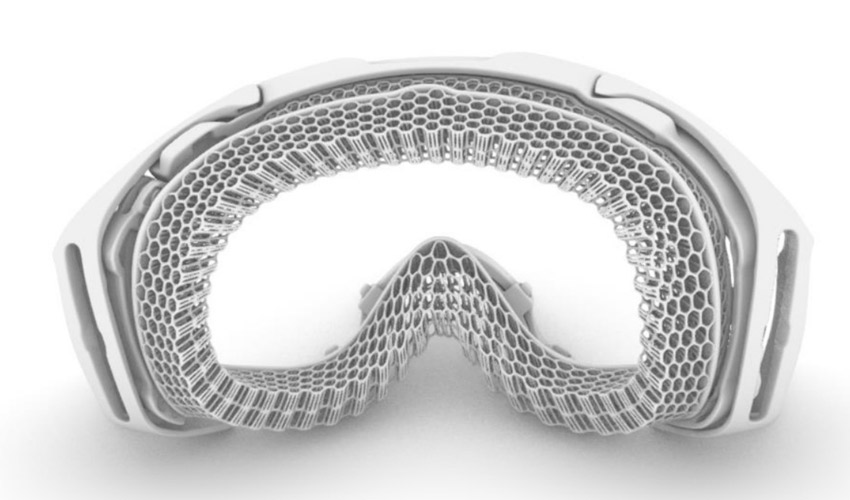
Increasingly, companies are seeing the benefits of using 3D printing in sports. Another company has entered the ring. German company OECHSLER, which specializes in the development and manufacture of high-tech products and systems, recently turned its attention to the design and production of ski masks using 3D printing. After realizing that the masks are designed with 13 different parts, the teams sought to manufacture a mask in one go, increasing its strength and durability. They turned to additive manufacturing to make this happen. They were able to produce a 3D printed ski mask from TPU.
Even if ski lifts are closed as we start moving into warmer weather, let’s not forget all the joys associated with the mountain, skiing, snowboarding … but also the possible difficulties. Who has never found himself with a missing glove, a too tight boot or an ill-fitting mask? Masks in particular can be difficult, most of us have experienced the foam of the mask that comes off with time, the fog that forms, the lack of visibility. It is to limit these types of problems that the German group has rethought the design of a ski mask to print it in 3D.
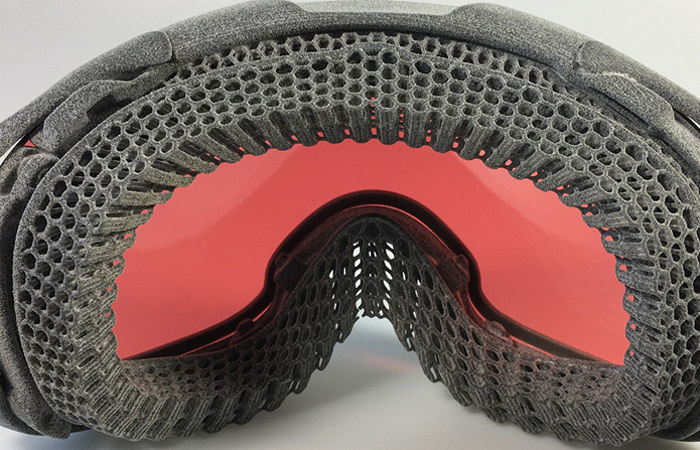
The number of mask parts has been considerably reduced (photo credits: OECHSLER)
The process of creating the ski mask
One of the benefits of additive manufacturing is that it can reduce the assembly phase of a product by creating the desired part in one go. The ski masks would be made up of 13 parts and according to OECHSLER, this “leads to a higher failure potential during production, higher risk of product failure, and ultimately higher costs.” In just one week, the company was able to come up with a completely different design, going from 13 components to one. To do this, it started by taking apart a traditional ski mask to understand how it was made. The outer frame, for example, incorporates layers of internal foam glued together. Soon, the teams wanted to eliminate this production step and replace the polyurethane foam with a 3D printed lattice structure.
More from the desk
Six other notes from the rest of the bench.
 NewsColumbia University Has 3D Printed a 7-Layer CheesecakeThough food 3D printing may not have yet convinced all food lovers, it certainly has raised its fair share of questions. For example, is a food 3D printer healthy? Or can it improve the way we eat and respond to…
 ApplicationsDoD Is Expected to Spend Even More on Additive Manufacturing for DefenseThe American Department of Defense (DoD) has been one of the biggest drivers of growth for additive manufacturing adoption for military applications. This has been shown through many different use cases in the American military in particular and it has…
 NewsTOP 5 videos of the week: Football, dresses and more!A new selection of the best 3D printing videos of the week, just for you! Find our TOP 5 videos of the week below and tell us what your favorite video is in a comment or on our Facebook and Twitter page. Don’t hesitate to…
 Applications3D Bioprinting Could Make Cancer Treatment More EffectiveCancer is one of the leading causes of death worldwide. Indeed, according to the World Health Organization (WHO), it accounted for about 10 million deaths worldwide in 2020 alone, or nearly one in six deaths. However, though research into treatment…
 NewsTop 5 Videos of the week: Rick & Morty, 3D printed walls & more!This week’s Top 5 videos of the week are an interesting one. Some very innovative companies have created videos articulating how their new printers, processes, or structures will revolutionise industries. In addition, these companies pledge to use these to do…
 News#TALK3D: An Interview with Kristin Mulherin, President of Women in 3D PrintingAccording to “The State of Women in 3D Printing” report, published by Sculpteo in 2020, the majority of women in the additive manufacturing sector are active in sales, marketing and R&D departments. In addition, there was a notable gap between…