News
Columbia University Has 3D Printed a 7-Layer Cheesecake
Though food 3D printing may not have yet convinced all food lovers, it certainly has raised its fair share of questions. For example, is a food 3D printer healthy? Or can it improve the way we eat and respond to…
- 3 min read
- News
- Six more stories
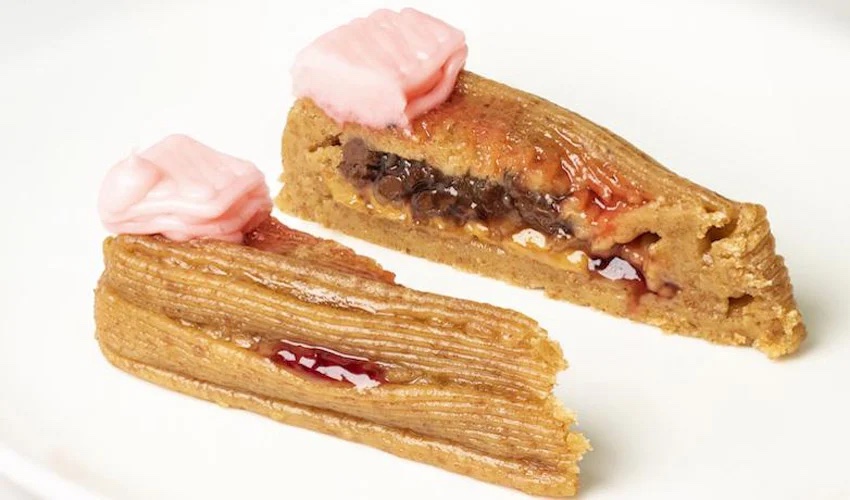
Though food 3D printing may not have yet convinced all food lovers, it certainly has raised its fair share of questions. For example, is a food 3D printer healthy? Or can it improve the way we eat and respond to the many diets and constraints of consumers? In order to answer all these questions, a team of mechanical engineers from Columbia has been conducting several tests and experiments in their Creative Machines Lab, led by Professor Hod Lipson. And their latest project is a 3D printed cheesecake, composed of multiple layers, 7 to be precise. This cheesecake was made in order to demonstrate the benefits of the technology, particularly in terms of food customization, but also food safety and tracking of ingested nutrients.
Jonathan Blutingler, a post-doctoral fellow in the lab and lead contributor to this new project, sought to demonstrate the benefits of food 3D printing, a process that remains controversial today. Many view 3D printed food as unappetizing and the technology as a gimmick that would have little effect. Discussing some obstacles the technology still faces as well as its clear benefits, he expanded, “Because 3D food printing is still a nascent technology, it needs an ecosystem of supporting industries such as food cartridge manufacturers, downloadable recipe files, and an environment in which to create and share these recipes. Its customizability makes it particularly practical for the plant-based meat market, where texture and flavor need to be carefully formulated to mimic real meats.”
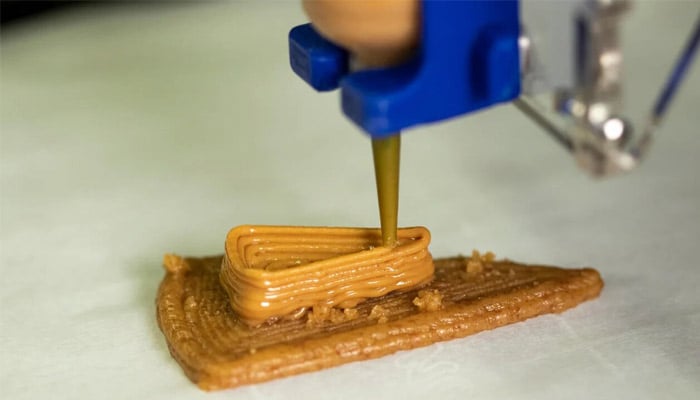
Peanut butter on the graham cracker (photo credits: Jonathan Blutinger/Columbia Engineering)
To design this 3D printed cheesecake, the team first had to turn all the ingredients into dough. They used graham cracker, peanut butter, Nutella, banana purée, strawberry jam, cherry drizzle, and frosting, all of which were purchased at a New York grocery store. Several print tests were conducted to determine which order was best to print which ingredient. For example, the graham cracker was the food that performed best as the first printed layer, probably due to its adhesion to the machine tray. Peanut butter and Nutella, on the other hand, are more suitable as intermediate layers to support softer materials such as jam. The team ultimately compared the design of this 3D printed cheesecake to that of a building, with structural elements supporting more fragile elements.
More from the desk
Six other notes from the rest of the bench.
 News3Dnatives’ Startup of the Year: The Choice is Yours!Each month, 3Dnatives spotlights a startup that is pushing the boundaries of 3D printing. As 2025 draws to a close, it’s time to choose which of these innovators will be crowned our official Startup of the Year. And the decision…
 GuidesHow to recruit and be recruited in the 3D printing sector: Experts give their advice!The supply and demand for jobs in the additive manufacturing sector is growing rapidly and both companies and candidates must prepare for the changes underway. According to the 2018 The Future of Jobs report, new jobs related to Industry 4.0…
 NewsTOP 5 videos of the week rockets, masks and more!A new selection of the best 3D printing videos of the week, just for you! Find our TOP 5 videos of the week below and tell us what your favorite video is in a comment or on our Facebook and Twitter page.…
 Applications3D Technology Helps Battle Against Childhood CancerAt the INCLIVA Health Research Institute of the Hospital Clínico de Valencia in Spain, a research team has used 3D technology to learn about the behavior of certain tumors that cause childhood cancers. Specifically, they analyzed the application of digital…
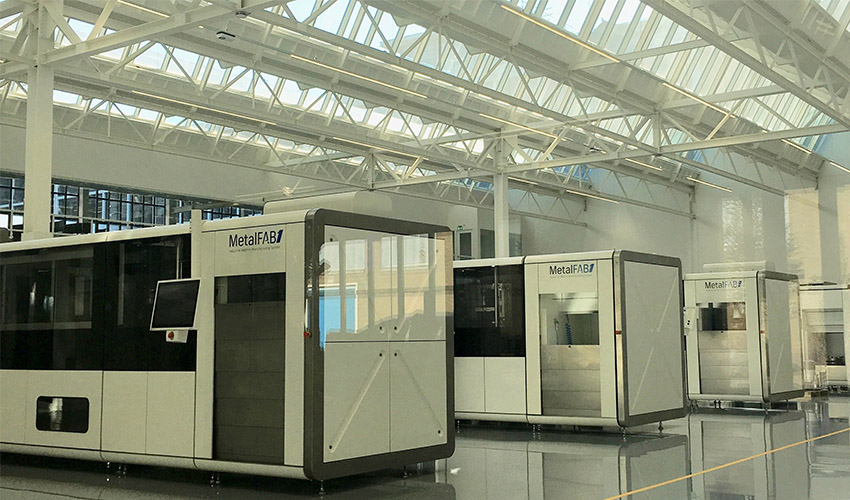 NewsAdditive Industries is accelerating adoption of its MetalFAB1 systemAdditive Industries, based in the Netherlands is accelerating industrial additive manufacturing of metal parts by offering a modular, end-to-end laser powder bed fusion system, the MetalFAB1 system. This system is seamlessly integrated with the manufacturer’s information platform
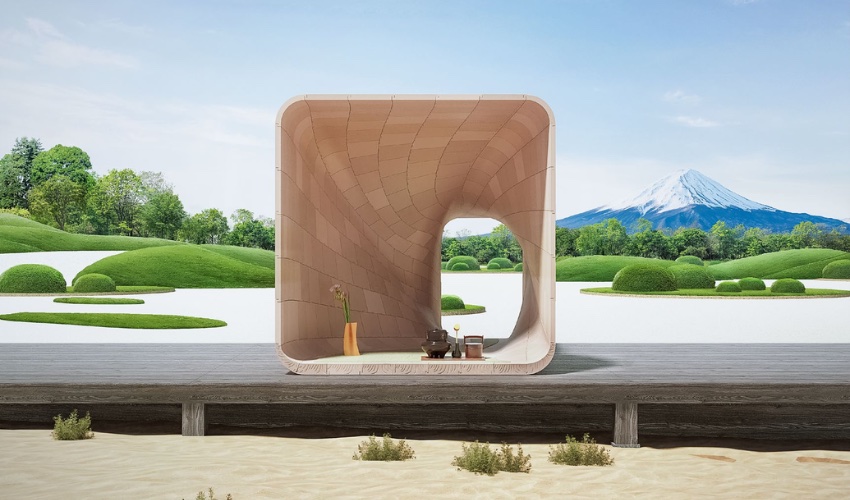 NewsThe Warp, a 3D-Printed Japanese Teahouse Made of Recycled WoodAt the latest edition of Dubai Design Week, Japanese architecture studio Mitsubishi Jisho Design unveiled The Warp, a new sort of tearoom. Made from recycled wood using an extrusion 3D printing technique, this installation showcases an innovative approach called “Regenerative&hel