Applications
New Research on 3D Printed Bioactive Bone Implants Reveals Promising Properties
Using 3D printing to create bone implants is beneficial in more ways than one. Beyond achieving geometries personalized to the patient’s anatomy, the technology is compatible with diverse materials that can achieve more desirable properties than traditional implants, often
- 3 min read
- Applications
- Six more stories
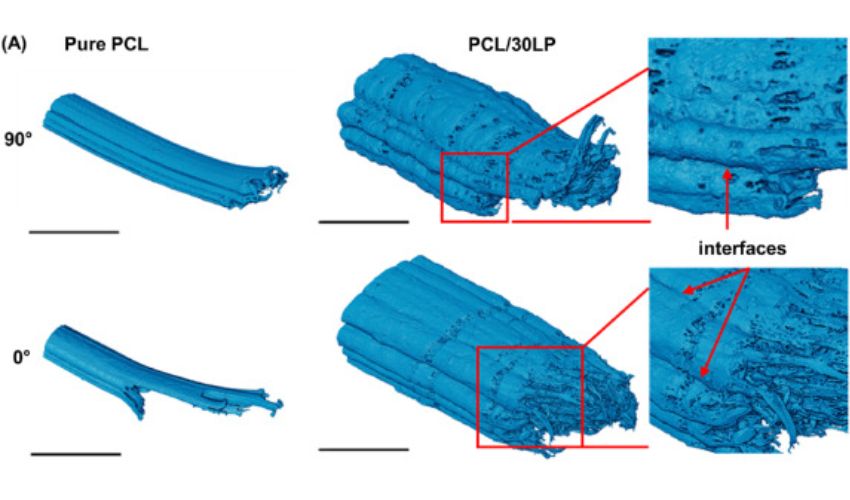
Using 3D printing to create bone implants is beneficial in more ways than one. Beyond achieving geometries personalized to the patient’s anatomy, the technology is compatible with diverse materials that can achieve more desirable properties than traditional implants, often made of titanium. Researchers at University College London published a study this month exploring how the interplay of ink composition and printing design shapes the structure, strength, and bioactivity of 3D printed bone implants. By utilizing a custom-made direct ink writing (DIW) printer, the team created implants that better guide bone cell growth while maintaining stability. This research builds on other studies done to improve personalized treatment for bone repair.
Published in Biomedical Technology, the study reveals how adjusting the printing ink and the way material is deposited can change the strength and healing potential of implants. DIW is an extrusion-based AM technology that works by printing with an ink at room temperature, unlike FDM, which relies on heating filament. According to the researchers, their 3D printed implants are mechanically stable while still encouraging bone cells to grow and form new tissue.
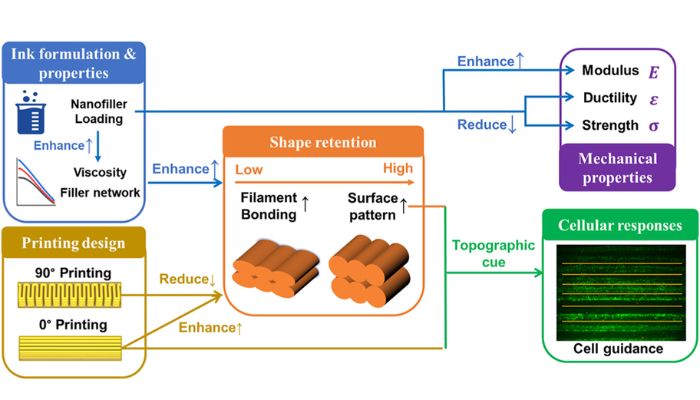
Graphical abstract of the study
Key Findings
Studies on 3D printed bone implants have been conducted before, so how does this research stand out? Well, the University College London researchers discovered that if they printed the implants at different angles, they behaved in surprising ways. “In fused deposition modeling, a common 3D printing method, printing filaments in the same direction as the applied force usually makes the implant stronger,” explains lead author Hongyi Chen from University College London. “But with our approach, we found the opposite—implants printed at 90 degrees actually had better strength because the filaments bonded more effectively.”
More from the desk
Six other notes from the rest of the bench.
 NewsLawrence Livermore’s AI Vision System Catches Direct Ink Writing Defects Mid-PrintDirect ink writing is one of those 3D printing technologies that has a process that can vary significantly. It’s not very commercialized, and mostly reserved for research labs. Now, a team of scientists and engineers at Lawrence Livermore National Laboratory…
 ApplicationsThe Growing Market of 3D Printed ImplantsResearch firm, Precedence Research, recently published a report on 3D printed medical implants. According to the report, 3D printed implants should generate more than 9 billion dollars in 2030 against 1.5 billion in 2020, an annual growth of 19%. Faced with increasingly complex&h
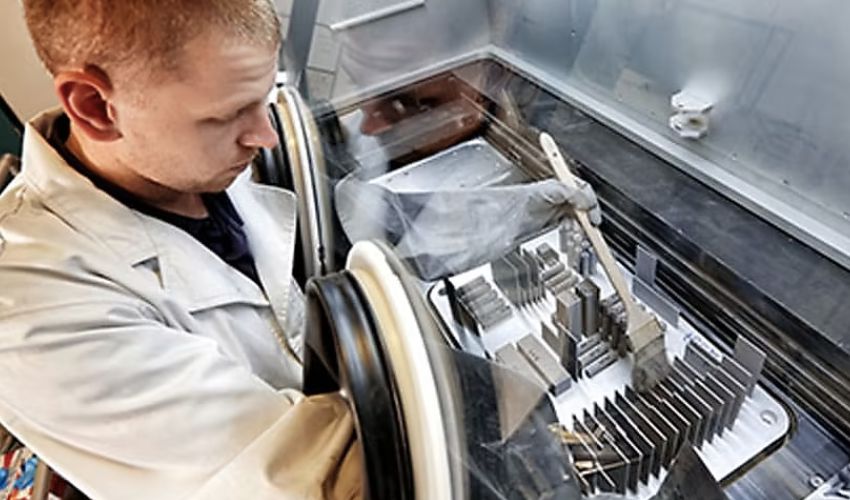 NewsJoint Venture Between Amaero And Abu Dhabi Firm Will Foster Metal Additive ManufacturingAdditive manufacturing is gaining momentum worldwide, but in certain parts of the world it is less established than in others. In a significant move towards the adoption of the technology in the Middle East, the Australian firm Amaero International Limited,…
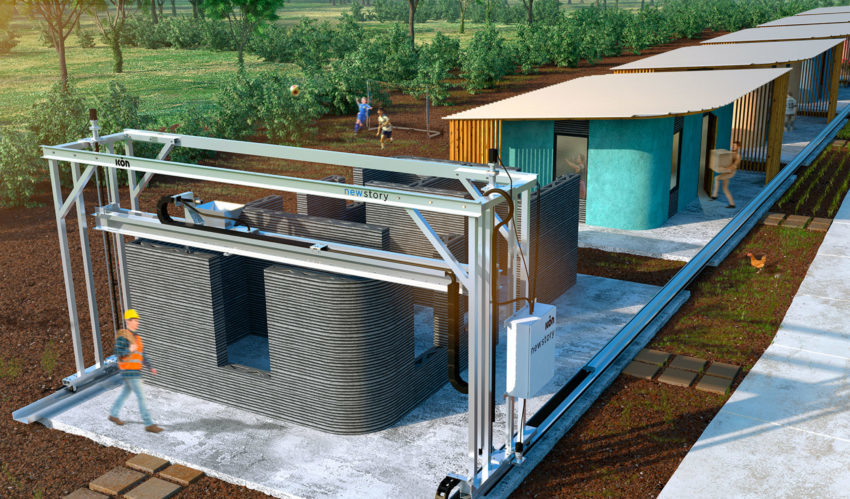 NewsHow does a concrete 3D printer work?In recent years the role of additive manufacturing in the construction industry has become increasingly important. In particular, concrete 3D printers have been continuously gaining popularity among architects and construction firms. After water, concrete is the most widely used
 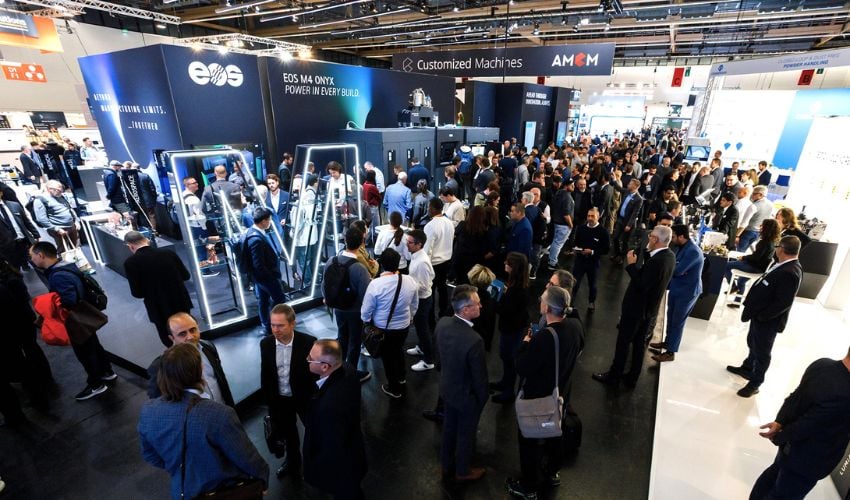 NewsFormnext 2025: The Industry Consolidates and Unveils Its Most Mature ApplicationsAnother edition of Formnext has just come to a close, and not just any edition, but the tenth anniversary of the trade show. It was a great opportunity to take stock of market developments, the direction the industry is taking,…
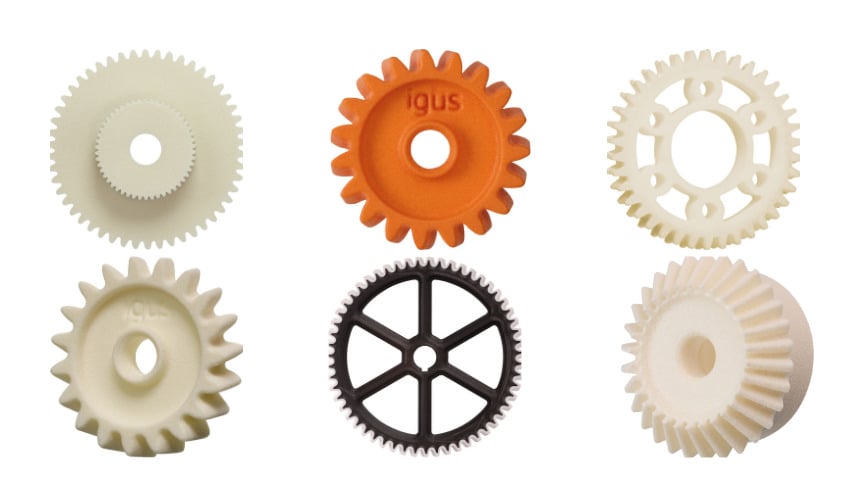 MaterialsMaking Extremely Wear-Resistant Plastic Gears with 3D PrintingFor centuries, gears have been used in a variety of everyday objects. However, they can be difficult to make. To ensure that as little friction loss as possible is generated during the transmission of power, special attention must be paid…