News
MUSE: The First Star Stellarator With A 3D Printed Casing
Technological progress in energy production, free from reliance on fossil fuels, is undergoing exponential growth, facilitated by the emergence of new energy sources and cleaner processes. Today, we showcase a prime example of such innovation: plasma, a field that has…
- 3 min read
- News
- Six more stories
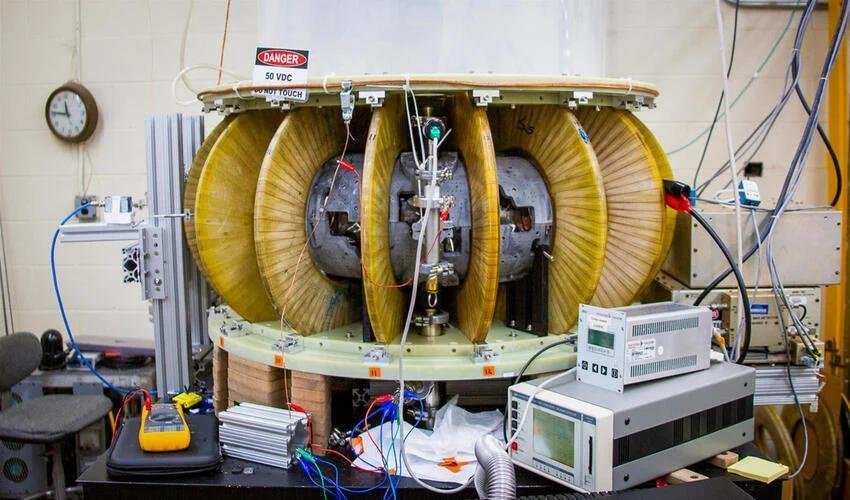
Technological progress in energy production, free from reliance on fossil fuels, is undergoing exponential growth, facilitated by the emergence of new energy sources and cleaner processes. Today, we showcase a prime example of such innovation: plasma, a field that has been under study for years and is now experiencing a surge in advancements, largely thanks to additive manufacturing. In essence, plasma represents the fourth state of matter, wielding immense strength yet characterized by instability. To harness and explore its potential, specialized devices like star generators or stellarators, such as the one we highlight today, have been meticulously engineered and constructed.
Researchers at the Princeton Plasma Physics Laboratory (PPPL) have pooled their expertise to create a new type of stellarator generator with permanent magnets and a novel 3D printed housing. MUSE, as this new stellarator is called, is based on a less complex and less expensive production technique that will open up new avenues of study in nuclear fusion power plants. Researchers have turned to the development of MUSE as an enhanced solution for two key reasons. Firstly, they have opted for magnets with simpler geometries, and secondly, 3D printing has enabled the creation of a flawlessly circular casing, perfectly suited for containing the plasma.
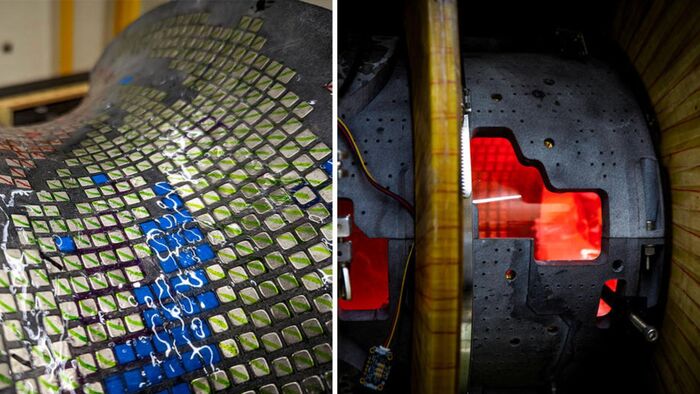
Permanent magnets from MUSE (left). The 3D printed housing (right).
The star generators that had been manufactured so far were very expensive because their structure was based on electromagnets with very complex geometries and which needed an additional flow of electricity to create their own magnetic field. However, recent PPPL research has shown that other magnets (permanent magnets), similar to “refrigerator magnets”, could also perform this function under optimal conditions. To support such magnets, a circular structure was needed that would be placed on the outside of the whole and would also be able to withstand the magnetic forces. This is where additive manufacturing came into play.
More from the desk
Six other notes from the rest of the bench.
 News3D printed corals could help energy production and coral conservation3D printing technologies can be used to create complex and intricate structures by enabling a new level of design freedom. This is one of the main benefits of additive manufacturing, and one of the aspects many scientists around the world…
 ApplicationsChina 3D Prints First PEEK Clavicle ImplantThe medical team at Kunming Medical University Hospital in China, in collaboration with the company IEMAI 3D successfully transplants the first clavicle printed in 3D with PEEK. What does this milestone mean for the medical sector? How important is the…
 NewsOver 900 3D Printed Tiles Used for Luxury Hotel in DubaiIf you follow news in additive manufacturing, you may have already heard of the Dutch architecture studio RAP. The firm has been using 3D printing for several years to create original, complex structures that often serve as decorative or ornamental…
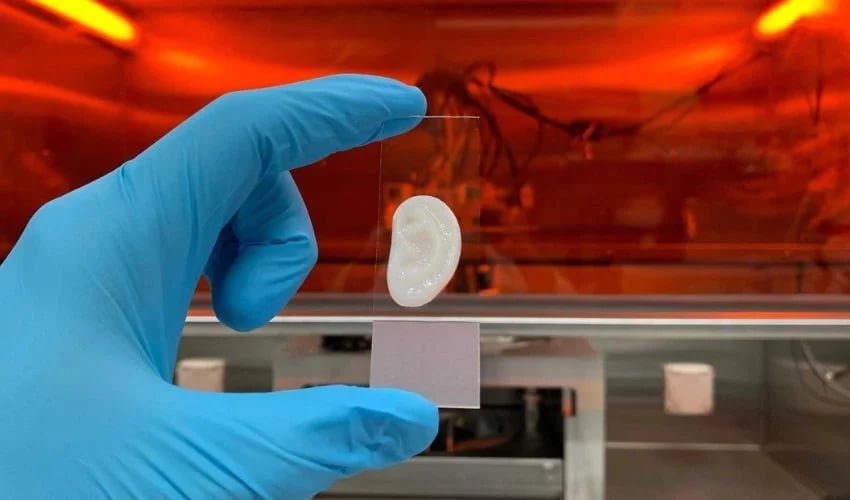 Applications3D Bioprinting of Elastic Ear CartilageThere is a widespread belief that we are on the verge of 3D printing functional organs, but the reality in the lab is far more complex. Although that goal remains distant, a team of researchers at ETH Zurich has reached…
 NewsTop 5 Videos: The Future of Bioprinting in MedicineIt’s the special time of the week again and you know what that means! Like every Sunday, we present you with what’s new and exciting throughout the world of 3D printing. We start off with a video that takes a…
 ApplicationsReplacing Metals With High-Performance Polymers in Industrial ApplicationsIn traditional manufacturing, metal is praised for its strength, corrosion resistance and durability, among other properties. And while that will never change, the rise of the use of additive manufacturing with high-performance polymers has brought about an astonishing developmen