News
3D printed corals could help energy production and coral conservation
3D printing technologies can be used to create complex and intricate structures by enabling a new level of design freedom. This is one of the main benefits of additive manufacturing, and one of the aspects many scientists around the world…
- 3 min read
- News
- Six more stories
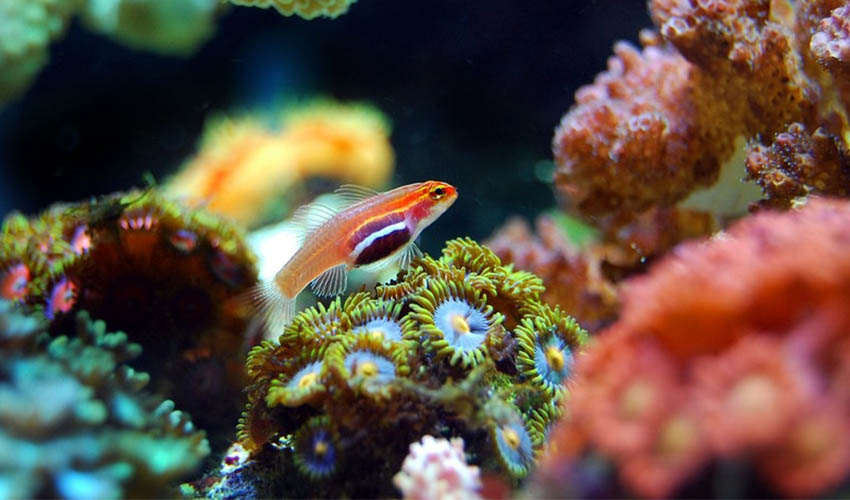
3D printing technologies can be used to create complex and intricate structures by enabling a new level of design freedom. This is one of the main benefits of additive manufacturing, and one of the aspects many scientists around the world have been exploring over the years. Creating more complex designs means delving into new applications. One of these applications is increasing biodiversity. At Cambridge University and the University of California San Diego, researchers have 3D printed coral-inspired structures that are capable of growing dense populations of microscopic algae. Their results, reported in the journal Nature Communications, open the door to new bio-inspired materials and their applications for coral conservation.
In the ocean, corals and algae have an intricate symbiotic relationship. The coral provides a host for the algae, while the algae produce sugars to the coral through photosynthesis. This relationship is responsible for one of the most diverse and productive ecosystems on Earth, the coral reef. Dr Daniel Wangpraseurt, a Marie Curie Fellow from Cambridge’s Department of Chemistry explains: “In our lab, we’re looking for methods to copy and mimic these strategies from nature for commercial applications.” In other words, by 3D printing coral structures, the researchers were able to promote algae growth, which in turn feed the coral.
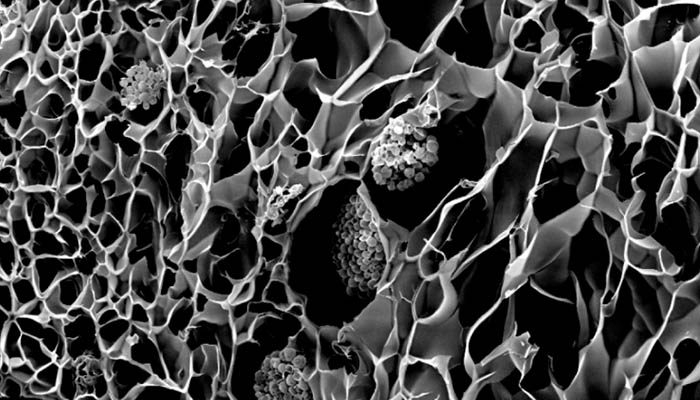
A close-up of a microalgal aggregate (scale bar = 10 µm) | Image via University of Cambridge
3D printed corals are made with bioprinting techniques
To create the coral, the team used bioprinting techniques capable of reproducing detailed structures that mimic the complex designs and functions of living tissues. Additionally to replicating the intricate structures of coral, the live cells had to be kept alive as the corals were being formed – far from being an easy task. The co-senior author Professor Shaochen Chen, from UC San Diego explains in more detail: “Most of these cells will die if we were to use traditional extrusion-based or inkjet processes because these methods take hours. It would be like keeping a fish out of the water; the cells that we work with won’t survive if kept too long out of their culture media. Our process is high throughput and offers really fast printing speeds, so it’s compatible with human cells, animal cells, and even algae cells in this case.”
More from the desk
Six other notes from the rest of the bench.
 Applications3D Printed Respiratory Masks May Be Able to Help Premature BabiesAccording to the World Health Organization, 15 million babies are born prematurely each year. A newborn is considered premature when it is born before 37 weeks of pregnancy. This abnormality can cause health complications for the baby, especially in terms…
 Guides#Working3D: Six Questions for a Pre-Sales EngineerIn the additive manufacturing market, the jobs and profiles are varied: CAD designers, 3D printing technicians, sales representatives, after-sales managers, etc. The 3D printing value chain includes many different links and each one requires specific skills and knowledge. That
 SoftwareBambu Lab Unveils MakerWorld 3D Model PlatformIn the world of FDM/FFF desktop printing, the importance of the 3D model and the platform it is stored on is almost as important as the printer itself. From CAD programs to slicer programs, software is key to a successful…
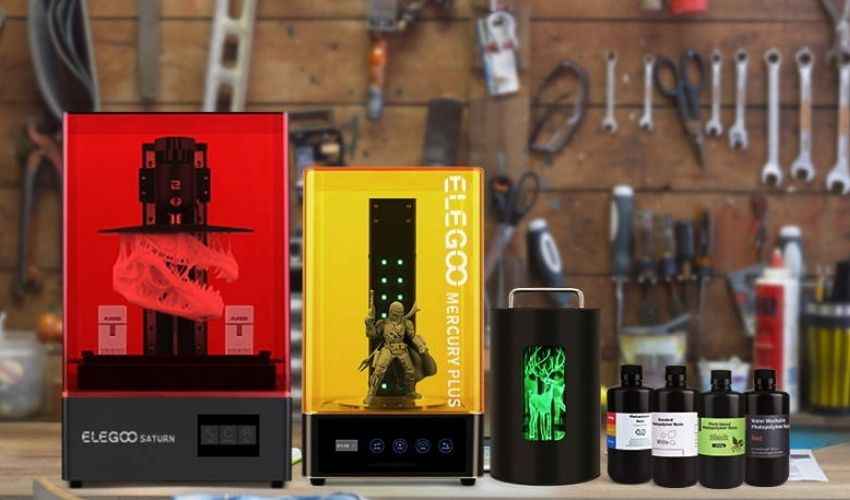 PrintersWhat Are the Current ELEGOO 3D Printers on the Market?As 3D printing gets more popular, so do cheaper desktop solutions which allow more and more access to the technology. One such company which has been gaining in popularity for its cheap but reliable printers is ELEGOO. Founded in 2015,…
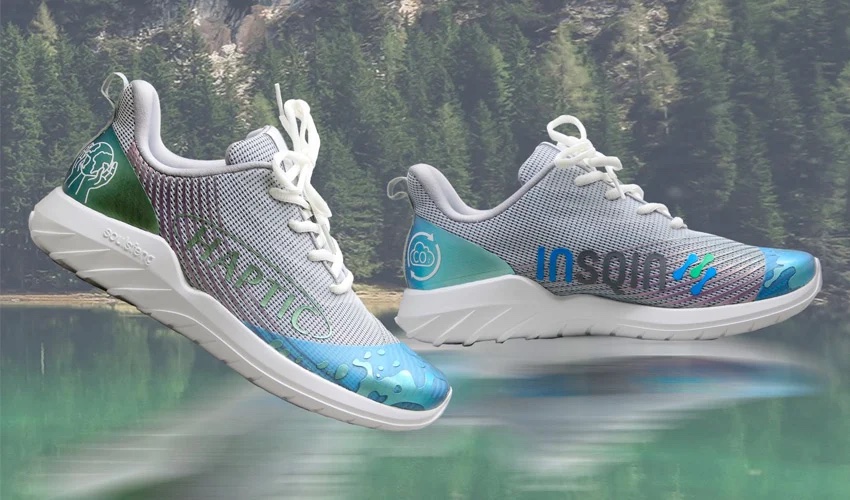 NewsCan 3D Printing Reduce the Carbon Footprint of Footwear Production?Did you know that 3D technologies could also be used to reduce the carbon footprint of sports footwear? The idea of doing just that was recently realized thanks to a collaboration between the companies Covestro, Huafeng and Cyclone. Specifically, they…
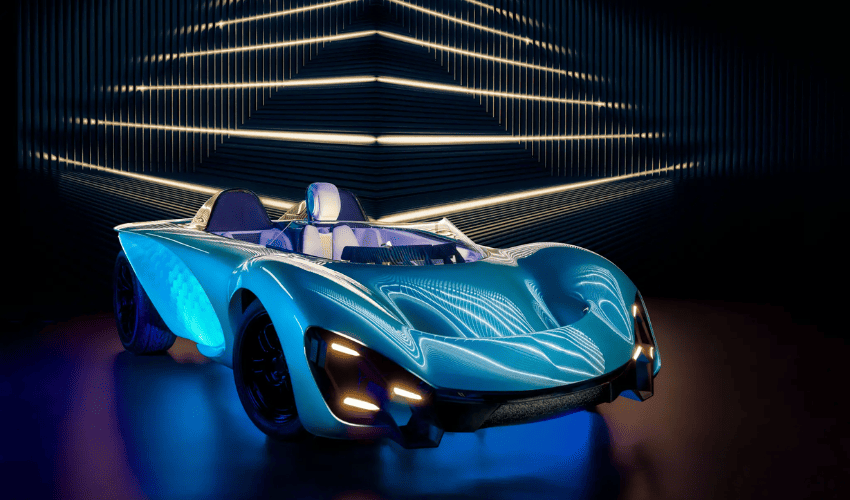 ApplicationsThe Aether Concept Car Pushes the Boundaries of Automotive Design With 3D PrintingThe automotive industry is increasingly moving towards sustainable solutions, with 3D printing playing a key role in this transition. The Aether concept car was created with this in mind. This next-generation electric vehicle incorporates advanced technologies, such as digital mo