News
MIT spinout launches the revolutionary AM System, Inkbit Vista
Inkbit, a spinout of the Computer Science and Artificial Intelligence Laboratory (CSAIL) at MIT, has developed a new additive manufacturing system that they claim will revolutionize 3D printing. Led by Professor Wojciech Matusik and Davide Marine, the company is known…
- 3 min read
- News
- Six more stories
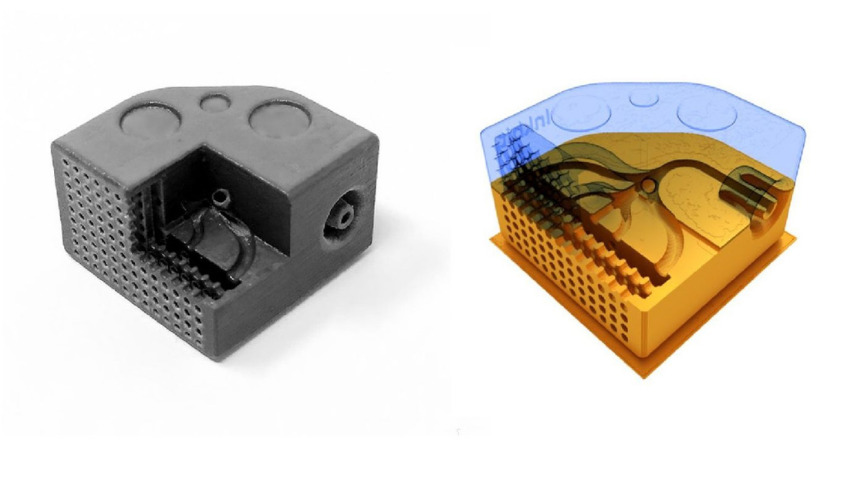
Inkbit, a spinout of the Computer Science and Artificial Intelligence Laboratory (CSAIL) at MIT, has developed a new additive manufacturing system that they claim will revolutionize 3D printing. Led by Professor Wojciech Matusik and Davide Marine, the company is known already for building the first 3D printer driven by vision-based feedback control. Now they have launched their first Additive Manufacturing System with Inkbit Vista, which according to their team is the first-of-its-kind closed loop feedback 3D printing ecosystem. They claim it can be used to transform traditional design and manufacturing methods with a platform based on scalable inkjet deposition and 3D machine vision.
Inkbit vista was created using Inkbit’s proprietary solution, Vision-Controlled Jetting (VCJ), and multi-material design software. Vision-Controlled Jetting is the first to use machine vision and artificial intelligence to deliver a multi-material jetting platform. It boasts a convergence of advanced computational techniques with a scalable hardware architecture and unique material chemistries, with Inkbit working with both high-performance elastomers and high-temperature materials, such as resins. VCJ enables real-time, in-process voxel-level control to meet the reliability and performance demands of volume manufacturing. Davide Marini, co-founder and CEO at Inkbit talking about the launch stated, “We are thrilled to launch Inkbit’s Additive Manufacturing System and offer a unique, rapidly deployable 3D printing solution to companies looking to adopt digital manufacturing.”
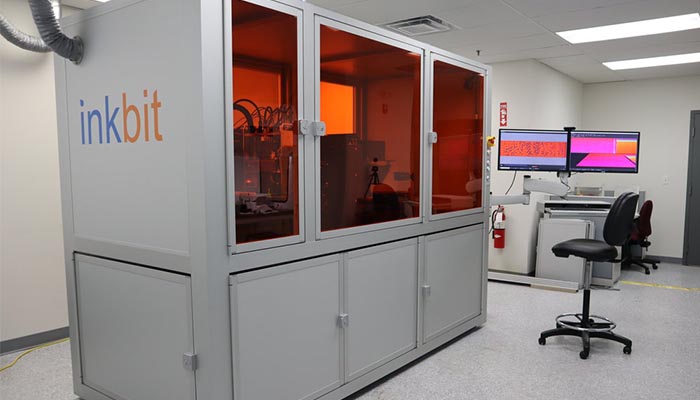
The Inkbit 3D printer (photo credits: Inkbit)
According to Inkbit, the VCJ makes it possible to develop end-use products with high-performance polymers. This is thanks to three features of the technology: being able to optimize in real-time for accurate and reliable prints; simplifying and automating the full workflow; and combining resin 3D printing precision with production-grade materials to move beyond prototyping. They claim that the highly-automated 3D printing ecosystem features the first of its kind closed-loop feedback control, multi-material printing capabilities, and low cost-per-part for final part production.
More from the desk
Six other notes from the rest of the bench.
 Applications3D Printing in Aeronautics: BAE Systems acquires another Stratasys 3D printerAerospace is one of the first sectors to have used additive manufacturing, in particular metal 3D printing, whether to produce prototypes, spare parts or end-use parts. It includes the production of turbines, engine parts, aircraft seats, and more. Additive manufacturing…
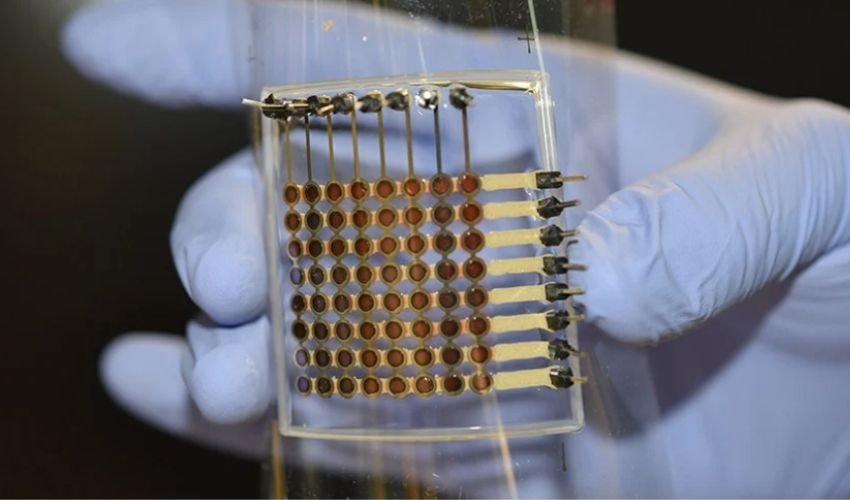 NewsResearchers at the University of Minnesota Manufacture the First 3D Printed Flexible OLED DisplayA team of researchers at the University of Minnesota have created the first 3D printed, flexible organic light-emitting diode (OLED) displays, measuring 3.8 cm by 3.8 cm with 64 pixels. The project is particularly interesting as it is a flexible…
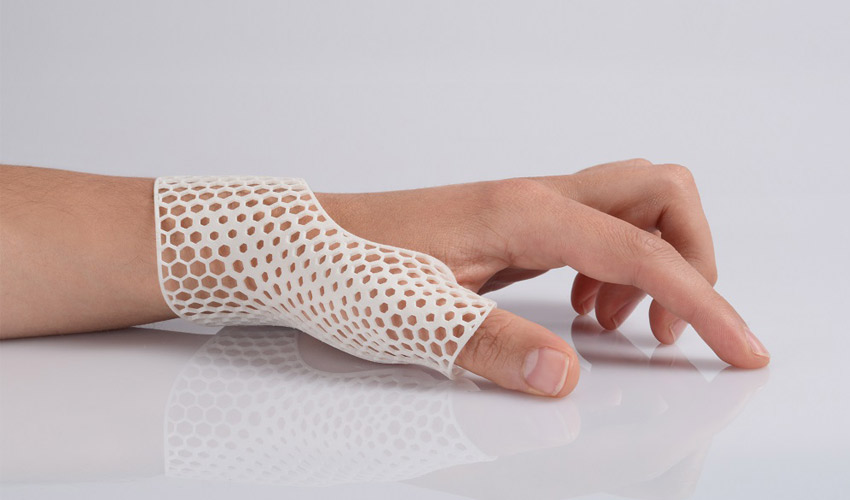 MaterialsShapeways in collaboration with EOS will offer PA 11 for applications in the medical sectorThe 3D printing service giant, Shapeways, has just added a new material to its range to enable the creation of 3D printed orthosis and prostheses. The new material is polyamide 11 (PA 11), one of the most widely used materials…
 NewsTERA, the futuristic and sustainable home developed by AI SpaceFactoryToday, we come back on the TERA project, revealed back in May by AI SpaceFactory. If you didn’t know, TERA is a futuristic eco-habitat, showcasing a sustainable way of building on Earth. It was created with space driven technology developed…
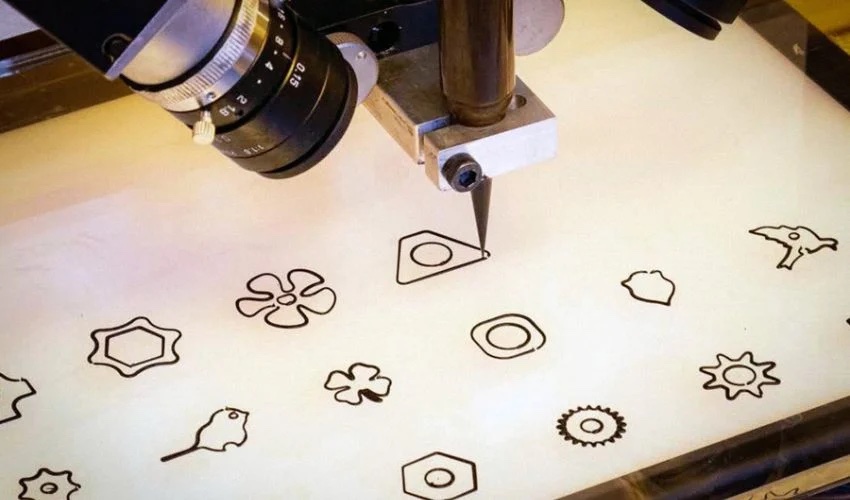 NewsMIT Researchers Integrate AI for Improved 3D PrintingEvery day, additive manufacturing is evolving. Unsurprisingly, this also means that it is becoming more and more complicated to master all its applications and technologies. Even for experienced workers within additive manufacturing, this can sometimes lead to difficulties, espec
 PrintersRedefine Meat raises $6M to bring its alternative meat 3D printer to marketBack in June, we shared with you the latest advancements in 3D printed meat. We had spoken to Redefine Meat, one of the key players in this market to learn more about the startup’s activities in the sector. The company…