News
Researchers at the University of Minnesota Manufacture the First 3D Printed Flexible OLED Display
A team of researchers at the University of Minnesota have created the first 3D printed, flexible organic light-emitting diode (OLED) displays, measuring 3.8 cm by 3.8 cm with 64 pixels. The project is particularly interesting as it is a flexible…
- 3 min read
- News
- Six more stories
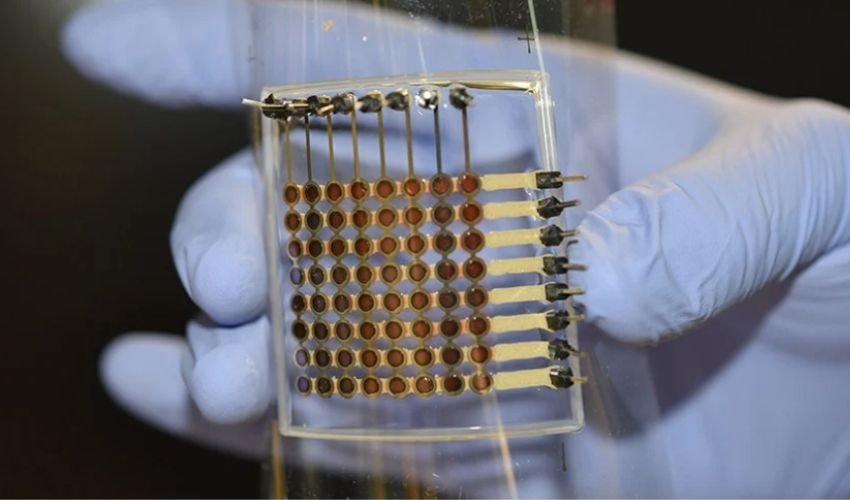
A team of researchers at the University of Minnesota have created the first 3D printed, flexible organic light-emitting diode (OLED) displays, measuring 3.8 cm by 3.8 cm with 64 pixels. The project is particularly interesting as it is a flexible display that could be used to fold smartphone or TV screens, all at a more affordable cost. Two different additive manufacturing technologies and a custom printer were used to produce it.
Organic light-emitting diodes rely on organic materials to emit light, unlike LCDs which use inorganic crystalline semiconductors. OLEDs are therefore an alternative to LCDs and have several interesting features: better energy efficiency as they do not require backlighting, high contrast ratio, mechanical flexibility, wider viewing angle and better resistance to breakage. However, 3D printing of such diodes has so far presented many challenges. OLED display technology is based on the conversion of electricity into light using a layer of organic material. Creating this layer is difficult because it requires perfect uniformity, which is more complicated to achieve through additive manufacturing. Additionally, polymer-metal bonds made using 3D printing are also more unstable.
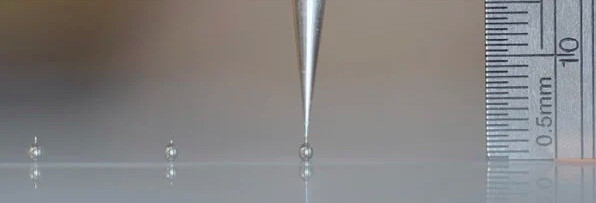
An extrusion method and a spray process were used (photo credits: McAlpine Group, University of Minnesota)
Six layers 3D printed to form the OLED display
The team used two 3D printing processes to overcome these challenges and create the six layers of the display. Using an extrusion machine, they created the electrodes, insulation, interconnects and encapsulation. The same 3D printer was then used to create the layers using a spray printing process. Specifically, the layers were successively printed from various materials, depending on the function of the layer in question. For example, the first layer was deposited on a flexible PET film and silver nanoparticles; the fourth layer is a silicone layer covering the underlying conductive materials. Finally, the device was encapsulated with a polymer cast in an extrusion-printed silicone mold.
More from the desk
Six other notes from the rest of the bench.
 GuidesInterview with Field Ready about its humanitarian work using 3D printingOne of the advantages of 3D printing is that it allows parts to be produced locally and objects to be optimised as needed. No need to physically store or use suppliers on the other side of the world: thanks to…
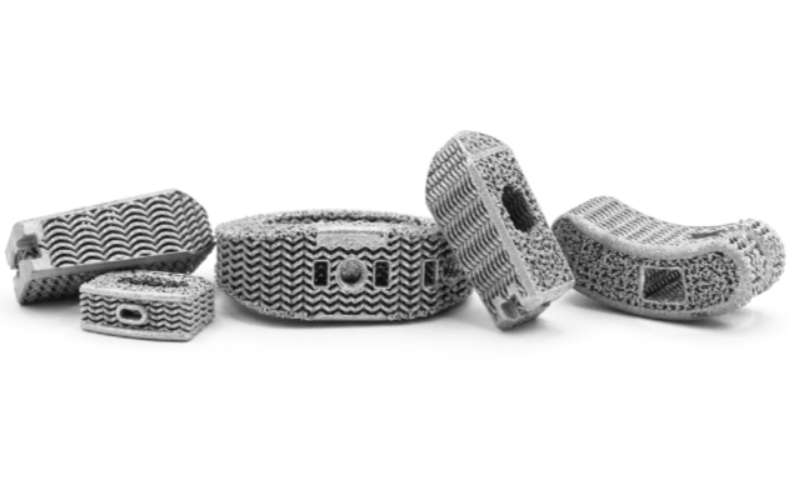 ApplicationsNexus Spine Announce Availability of Novel 3D Printed Spinal ImplantsNexus Spine announced that their novel implants for spine surgery have now been made broadly available. These include the compliant-mechanism based system, PressON, and a flexible titanium device for interbody fusion, Tranquil. Nexus Spine specialises in the development of medica
 News$28 Million Invested in Mosaic ManufacturingThe additive manufacturing industry has seen some turbulence over the last several months. We have seen layoffs, Shapeways declared bankruptcy, and Nano Dimension has announced its intention to acquire Desktop Metal. Amidst this change, however, comes positive news: Canadian comp
 NewsHP and Legor Collaborate to Explore New Ways to Produce JewelryThrough a partnership with HP, Legor hopes to take advantage of the benefits of additive manufacturing, to develop new applications with metals in the jewelry industry. For those of you who aren’t familiar with the Legor Group, it is company…
 NewsThe Warp, a 3D-Printed Japanese Teahouse Made of Recycled WoodAt the latest edition of Dubai Design Week, Japanese architecture studio Mitsubishi Jisho Design unveiled The Warp, a new sort of tearoom. Made from recycled wood using an extrusion 3D printing technique, this installation showcases an innovative approach called “Regenerative&hel
 ApplicationsResearchers develop 3D printed human heart model for surgical planningAt Carnegie Mellon University in Pittsburgh, a team of researchers has developed a printing method called FRESH (Freeform Reversible Embedding of Suspended Hydrogel), which is able to produce a human heart model to help surgeons in their operations. Using alginate…