Materials
Metal composite with varying layer hardness is produced with 3D printing
Damascus steel is a type of steel originally used for sword blades. In Germany, a team from Max-Planck-Institut für Eisenforschung (MPIE) and the Fraunhofer Institute for Laser Technology have developed a process that allows this type of steel to be…
- 3 min read
- Materials
- Six more stories
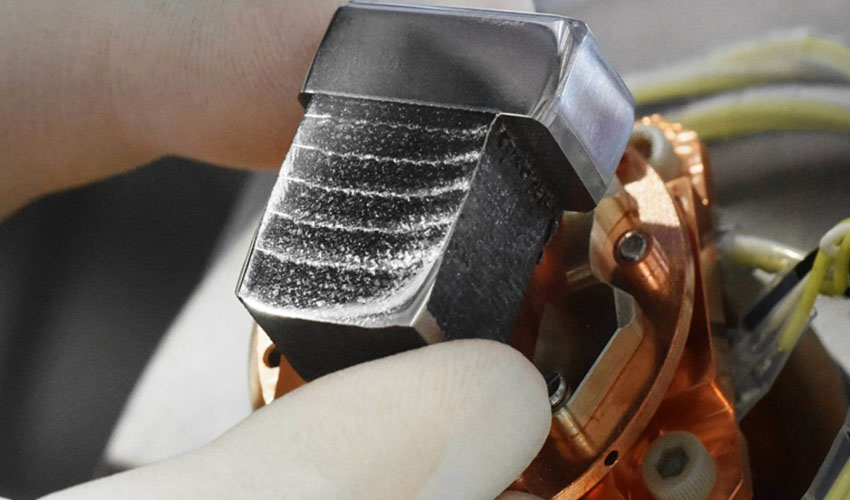
Damascus steel is a type of steel originally used for sword blades. In Germany, a team from Max-Planck-Institut für Eisenforschung (MPIE) and the Fraunhofer Institute for Laser Technology have developed a process that allows this type of steel to be produced layer by layer using a laser 3D printer. Damascus type steel is known for being hard yet tough because it is composed of layers of different iron alloys, and using the 3D printing process, it could be used to make aerospace components and tools for example. Other steels which offer the same properties have not been made for the additive manufacturing process which explains why scientists have not been able to exploit the benefits of this technique yet.
The researchers explain that back when Damascus steel was used for swords, to influence the properties of iron alloys, the only option was to adjust their carbon content. Therefore, they would obtain a type of steel that was either soft yet tough or hard yet brittle. European blacksmiths developed a new technique which consists of folding the alloys into many thin layers to give the steel hard yet tough properties. This is why Damascus steel can usually be recognized by its striped pattern. Following some research, the teams from Germany successfully managed to develop a steel that consists of a single material but is made up of hard and ductile layers to form “Damascus steel”.
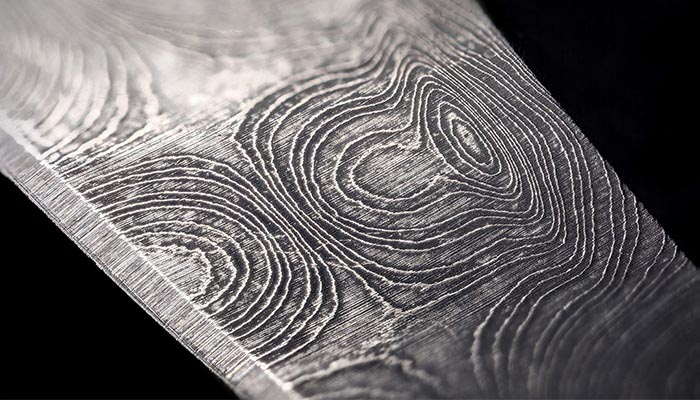
Damascus type steel is known for being hard yet tough because it is composed of layers of different iron alloys, it is usually recognized by its pattern.
Creating a metal composite with varying layer hardness
The first step of the process was to develop an alloy that would allow to arrive at the desired properties. Therefore, the researchers developed a material consisting of iron, nickel and titanium. In order to be able to create the desired metal structures, the researchers interrupted the 3D printing process for a certain time after each newly-deposited layer. “We have succeeded in specifically modifying the micro-structure of the individual layers during 3D printing so that the final component has the desired properties – and all this without subsequent heat treatment of the steel,” commented Philipp Kürnsteiner, post-doctoral researcher at MPIE.
More from the desk
Six other notes from the rest of the bench.
 NewsTop 5 Videos: 10 Dates that Changed 3D PrintingThis week we found the top 5 videos about 3D printing and the way additive manufacturing is changing production. The technology has infiltrated many sectors, from medical to automotive: check our selection of the week to keep up with the innovations! If you enjoy these, you&helli
 ApplicationsFormnext Provides a Stage for the Applications and Potential of AM in AerospaceLike every year, Formnext 2024 was a snapshot of what is currently driving the AM industry and where trends will be heading. While last year’s focus was on automotive and sustainability, this year we saw an increased presence of 3D…
 NewsApple Is Rumored to Be Using 3D Printing For Next Apple WatchSneakers, bikes, cameras…apple watches? 3D printing is being adopted more and more in the creation of consumer goods thanks to its ability to cut costs while allowing for unique and customized products. Now, a recent rumor has added yet another…
 Guides3DOptimizer on the importance of 3D printing settingsHaving started at a 3D printer company to support customers working with 3D printing parameters, today, 3DOptimizer enables much more. The company offers a software that aims to optimize the settings for FFF 3D printing in order to avoid faulty…
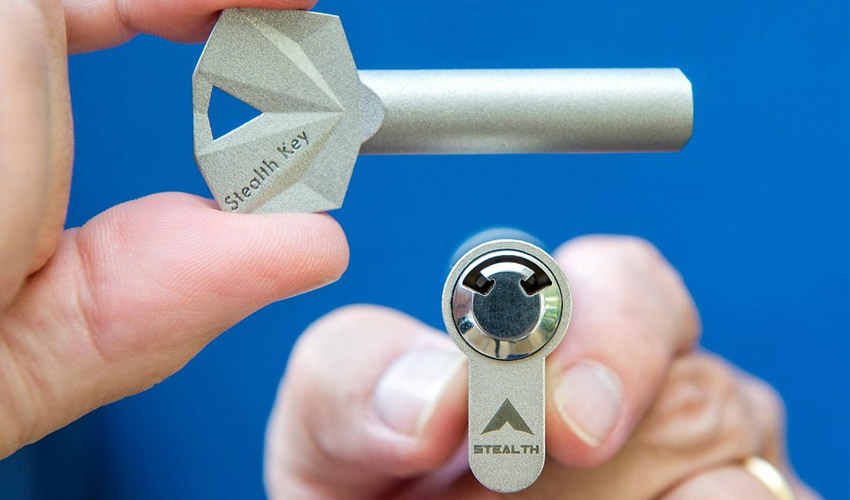 NewsFieldmade and UrbanAlps 3D print secure keys on demandThe young Swiss company, UrbanAlps had created a metal 3D printed key, hiding security functions inside its mechanism to make it impossible to scan it, in order to protect it. The company has just announced a collaboration with Fieldmade, a…
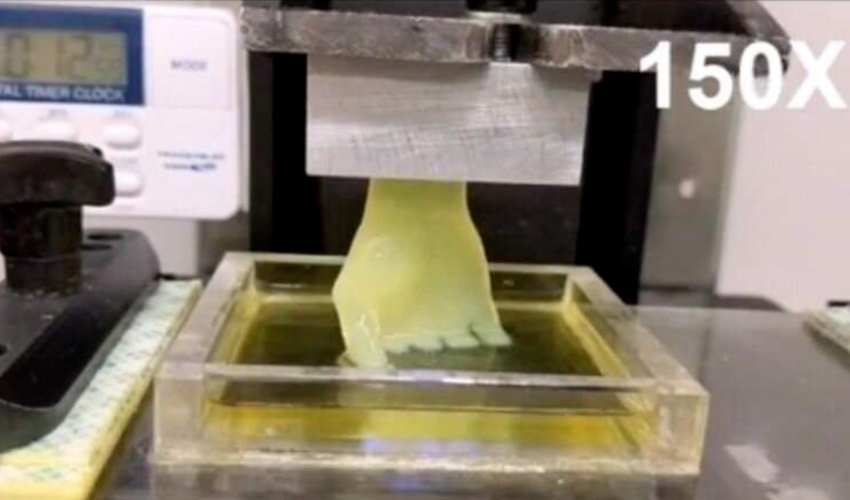 ApplicationsFast Hydrogel Stereolithography Printing to Revolutionise Organ TransplantsResearchers from the University at Buffalo in New York have developed a way to create large‐scale biocompatible hydrogel models using a fast hydrogel stereolithography printing (FLOAT) method. This method is said to be suitable for printing cells with embedded blood…