News
Measurement In Real Time: Researchers Develop 3D-Printed Insoles
Did you know, the American Podiatric Medical Association (APMA) surveyed 1,000 US adults and found that 77% of Americans have experienced foot pain? Now, 3D-printed insoles are set to provide relief. The new development by researchers at the Swiss Federal…
- 3 min read
- News
- Six more stories
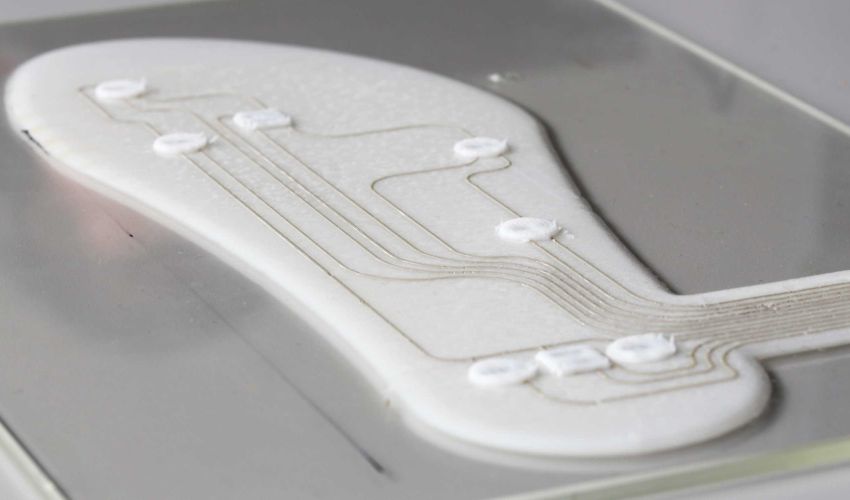
Did you know, the American Podiatric Medical Association (APMA) surveyed 1,000 US adults and found that 77% of Americans have experienced foot pain? Now, 3D-printed insoles are set to provide relief. The new development by researchers at the Swiss Federal Institute of Technology Zurich (ETH Zürich), Federal Institute of Technology in Lausanne (EPFL), and the Federal Laboratory for Materials Testing and Research (Empa) is designed to allow patients and athletes to track the progress of their therapy and training. The insole is equipped with integrated sensors that are designed to measure the sole pressure directly from the shoe, the team says in their scientific publication.
Whether in sports to optimize one’s own performance or to minimize foot-related complaints in everyday life – more and more people are benefiting from custom-made insoles. In most cases, however, the process of sole production takes a lot of time. A personal pressure profile of the feet must first be created for each customer. To do this, customers must step barefoot onto a pressure-sensitive mat so that the footprint can be recorded. The insole is then created by hand based on the individual pressure profile. This not only costs time, but is also limited to the performing facility.
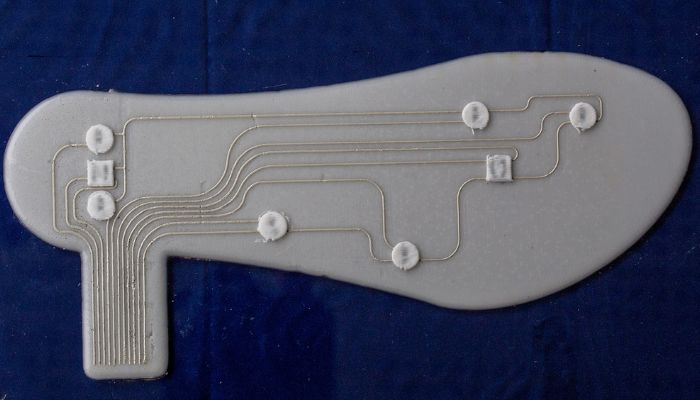
3D printed insole with conductive tracks and sensors made of piezoelectric elements
The insoles, made using additive manufacturing, record the pressure patterns in the shoe in real-time, so the activity the wearer is performing becomes apparent – whether “someone is walking, running, climbing stairs or even carrying a heavy load on their back. In which case, the pressure shifts more to the heel,” says Gilberto Siqueira, co-project leader and senior research assistant at Empa and the Laboratory for Complex Materials at ETH Zurich. The sensors, AKA piezo elements, transform mechanical pressure into electrical signals, measuring both regular and shear forces.
More from the desk
Six other notes from the rest of the bench.
 NewsNew Concrete 3D Printing Method Reduces Ecological Footprint3D printing is gradually transforming the construction industry. Various projects, from houses to shopping malls, have already been created thanks to this technology. Today, one project in particular is attracting attention: researchers at Nanyang Technological University in Sing
 NewsTop 5: The Dutch Navy is Integrating 3D PrintingOnce again Sunday is here and everyone can start to get ready for the week ahead. As we do every week, we have presented below five of the top 3D printing videos. Start off with a video that shows how…
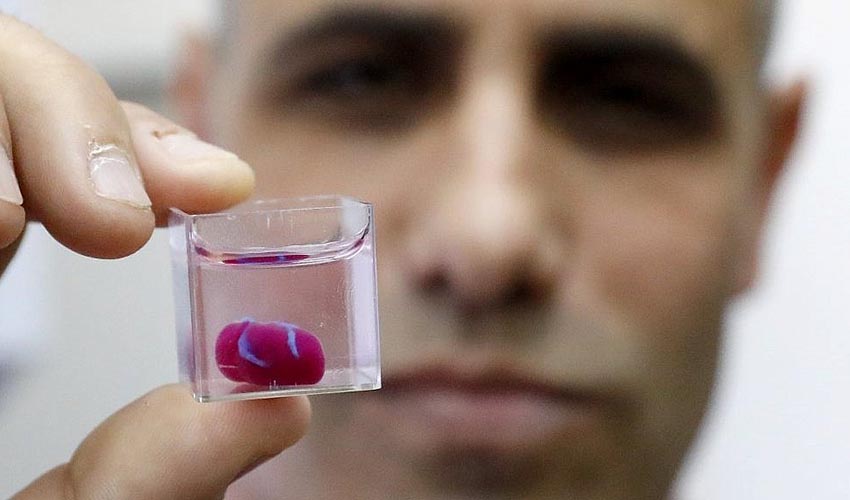 ApplicationsTesting drugs on 3D printed heart tissueThe German multinational pharmaceuticals company, Bayer, has announced that it will test new drugs on 3D printed heart tissue. Tel-Aviv University achieved a big breakthrough last year when it unveiled the world’s first 3D printed heart and vessels, and it…
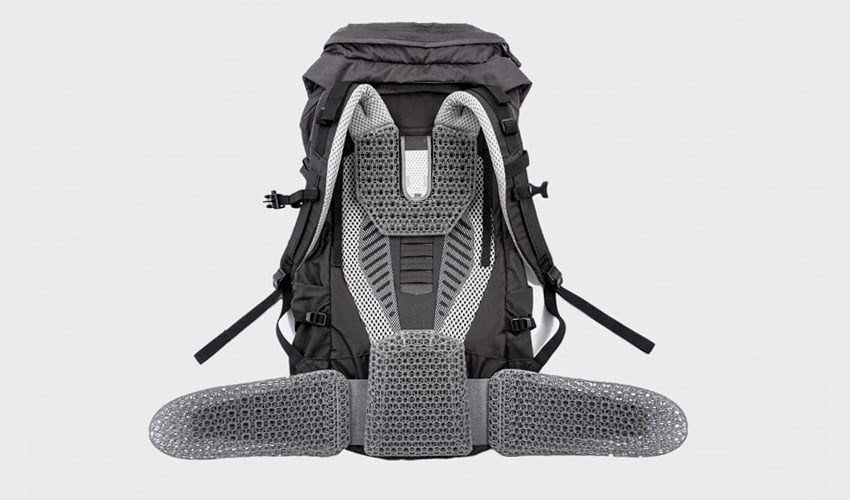 NewsOECHSLER Has Made a Backpack With 3D Printed, Shock-Absorbing FabricGerman company OECHSLER is behind a new innovation that aims to take the additive manufacturing sector into new dimensions. Specifically, they have developed a hiking backpack that incorporates 3D-printed, shock-absorbing mesh material for the first time. OECHSLER’s proposa
 MaterialsAustralian Scheme Recycles PPE for 3D Printing FilamentThe COVID-19 pandemic devastated communities all over the world, and we are still feeling the social and medical effects today. One aspect which sometimes goes unmentioned is the excess of PPE (Personal Protective Equipment) waste: this includes masks, gloves, and…
 NewsTop 5 Videos of the Week: New titanium powder production plant for AMThis week we found the top 5 videos about 3D printing and the way additive manufacturing is shaping our society. The technology has infiltrated many sectors, from medical to automotive! Check out our selection of the week to keep up with the innovations! This week we…