News
Madagascar’s First 3D Printed School Completed
Early last year, we introduced Thinking Huts, an American nonprofit organization that’s main goal is to help children gain access to education in underprivileged areas in the world. To make that possible, the organization, which was founded in 2015, relies…
- 3 min read
- News
- Six more stories
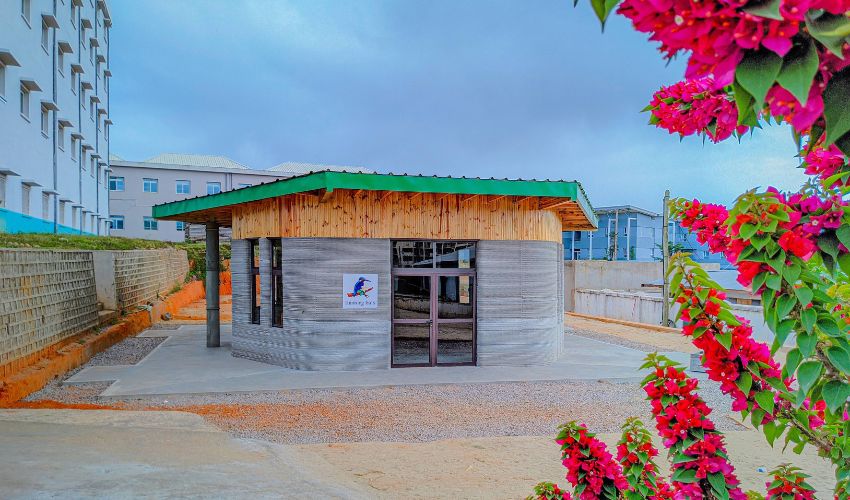
Early last year, we introduced Thinking Huts, an American nonprofit organization that’s main goal is to help children gain access to education in underprivileged areas in the world. To make that possible, the organization, which was founded in 2015, relies on additive manufacturing technologies allowing them to build schools in a more ecological and sustainable way. In addition to that, 3D printing allows them to reduce construction waste and time. Recently, Thinking Huts proudly announced that their pilot project, Madagascar’s first-ever 3D printed school, located in Fianarantsoa in south-central Madagascar, has finally been completed and officially opened its doors.
The project called “Bougainvillea” was originally started seven years ago as an initiative to fulfill the worldwide need for educational institutions in underserved areas. The organization, which plans to build more schools of the same type, chose Madagascar as the first location for their projects for a variety of reasons. One of the main ones is the deep need for schools on the East African Island. As a UNESCO report states, 97% of Malagasy children at the age of 10 do not even possess the reading comprehension required to read a single sentence, placing Madagascar among the countries with the greatest educational disadvantages worldwide. With overcrowding and long travel distances being the main problem, the estimated number of schools needed on Malagasy soil is around 22000.

Maggie Grout, CEO, and founder of Thinking Huts
For Thinking Huts founder and CEO Maggie Grout, the idea of providing access to education for those in need also has a very personal aspect: “I was adopted from China when I was a baby, and I am here today because of my parents and the opportunities I achieved through education. I founded Thinking Huts when I was 15 after becoming fascinated with the potential of technology to create architectural solutions for a world of good. My life could have followed a very different timeline, and I do not take that for granted. My hope is to find a solution that increases global access to education because it is at the root of empowering people to lift themselves out of poverty.”
More from the desk
Six other notes from the rest of the bench.
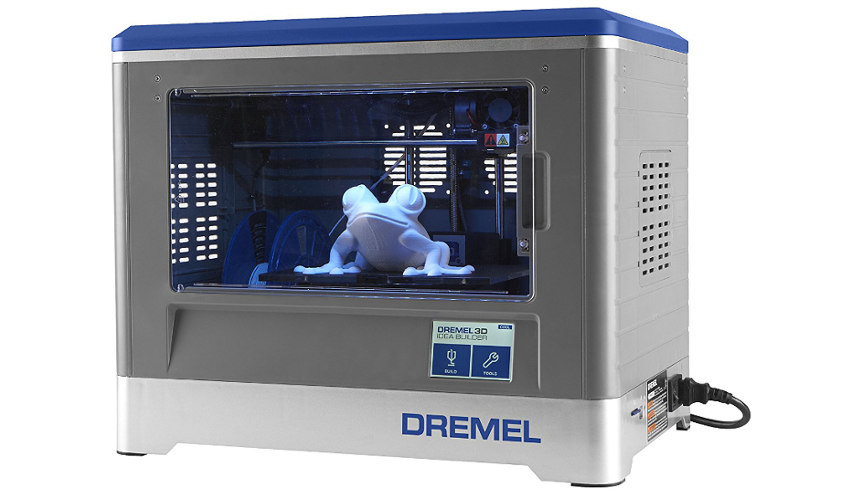 PrintersLab 3Dnatives: Dremel Idea Builder 3D Printer TestDespite its history in the DIY industry, American tool brand Dremel announced not too long ago that they would enter the 3D printing market. Since then, they have released the Dremel Idea Builder, a Plug & Play 3D printer based…
 ApplicationsNikon AM Synergy Secures U.S. Department of War Contract to Modernize Aeronautical Supply ChainAs the U.S. military grapples with aging supply chains and prolonged lead times for critical aircraft, the Department of War is turning to advanced additive manufacturing to bridge the gap. On March 10, Nikon AM Synergy Inc. announced it had…
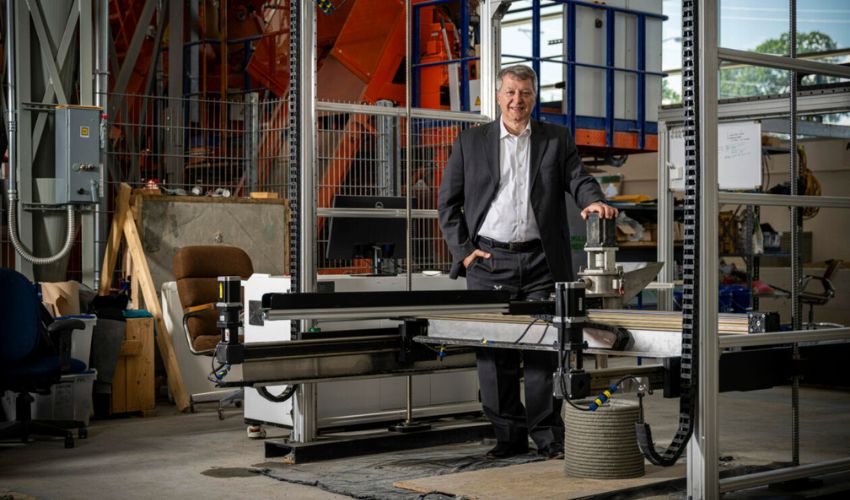 NewsUSACE Funds Research Into AI-Assisted, 3D Printed ConcreteAs much as additive manufacturing has benefitted the general public, the defense sector has also made great gains with 3D printing. So much so that additive manufacturing in the military is expected to be worth $1.7 billion in just a…
 NewsA 3D-Printed Robot Hand Capable of Playing Famous Video Game Super Mario Bros from NintendoEngineers from the University of Maryland have used additive manufacturing to develop a 3D-printed robot hand capable of playing one of the most famous video games from Nintendo. Although it may seem like science fiction, the project is already a…
 Guides#Talk3D: Interview With Sherri Monroe, Executive Director of AMGTAAs you know, additive manufacturing has a key role to play in greener, more environmentally friendly production. Namely because by using only the necessary material, manufacturers can reduce waste and consumption of plastic, metal or other materials. This is particularly…
 Guides#3DStartup: Gameet and the Future of Assisted Reproduction Through 3D Printing3D printing has proven to be a versatile tool across industries as diverse as engineering, medicine, and pharmaceuticals. But did you know it’s also making an impact in the field of assisted reproduction? In this area, the technology opens up…