News
First 3D Printed Seawalls Placed in Florida to Fight Against Rising Seas
As climate change accelerates and sea levels surge, coastal communities worldwide confront an unprecedented threat. Compounding this challenge is the alarming decline of coral reefs. While 3D printing has previously addressed these issues individually, Miami-based tech company Ki
- 3 min read
- News
- Six more stories
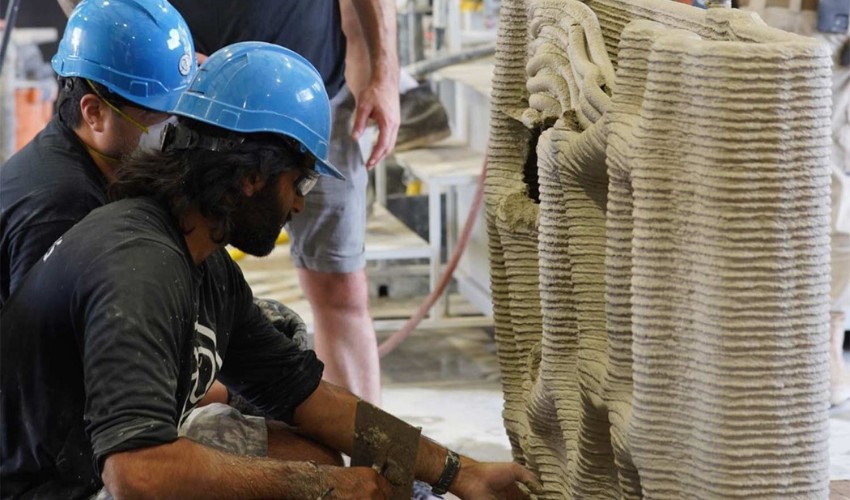
As climate change accelerates and sea levels surge, coastal communities worldwide confront an unprecedented threat. Compounding this challenge is the alarming decline of coral reefs. While 3D printing has previously addressed these issues individually, Miami-based tech company Kind Designs has taken an innovative approach, turning to 3D printing to tackle both challenges simultaneously. The company, through its development of 3D printed seawalls, has established itself as a leader in coastal sustainability, as their solution holds the potential to significantly reshape the way we safeguard our shorelines.
Utilizing state-of-the-art 3D printing technology, Kind Designs has engineered seawalls that transcend traditional functionality. Coined as ‘Living Seawalls,’ these structures serve as robust barriers against erosion, flooding, and sea-level increases and function as vibrant marine ecosystems, fostering biodiversity and habitat restoration. By mimicking the structure of natural marine habitats such as coral reefs and mangrove roots, these 3D printed seawalls provide refuge and food for many marine species, promoting ecological resilience in the face of environmental challenges.
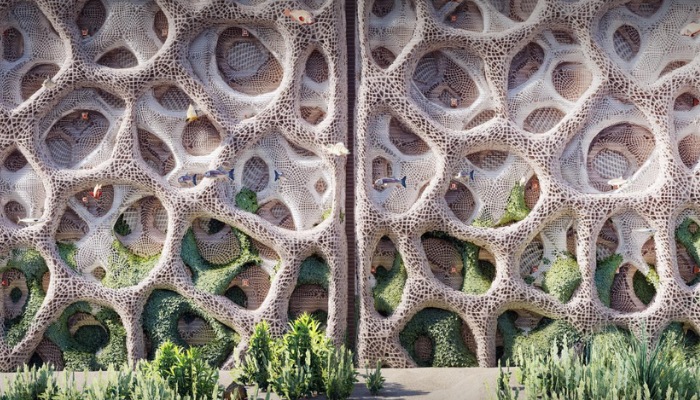
Kind Designs’ 3D printed seawall.
How Do the 3D Printed Seawalls Work?
The Living Seawalls are meticulously designed to mimic the structures of natural marine habitats. Each layer incorporates carefully designed textures and cavities, acting as coral reefs and encouraging colonization by offering shelter and breeding grounds for diverse marine life. Printed using non-toxic concrete, the walls not only meet stringent environmental standards but also ensure the safety of the marine life interacting with them.
More from the desk
Six other notes from the rest of the bench.
 NewsForward AM and Xuberance Announce Additive Manufacturing Technical Center in ChinaInterest in additive manufacturing, specifically in the Asia-Pacific region, continues! Forward AM is joining companies like EOS and Arburg, and has opened a new Additive Manufacturing Technical Center (AMTC) in Shanghai, China. The new center is a collaboration between Forward&h
 News3D Printed Robots to Be Used in Search-and-Rescue OperationsIn Search-and-Rescue operations, timing and flexibility is often key to successful results. It is often integral not only that rescue efforts happen as quickly as possible to guarantee the maximum number of survivors in a crisis, but that responses be…
 Printers3Dnatives Lab: Testing the Dagoma Magis 3D PrinterLast year, in March 2018 to be exact, the French manufacturer Dagoma presented the Magis 3D printer to the light of day. Thus succeeding its Neva model and its DiscoEasy 200, a model widely acclaimed by the 3D community. Characterised by its…
 ApplicationsAdditive Manufacturing Market Resumes Growth, Driven by the Defense SectorAMPOWER is an additive manufacturing consultancy dedicated to accelerating the adoption of 3D technologies worldwide. The company regularly publishes market studies and reports that shed light on the 3D printing industry. It has just unveiled its latest project, which analyzes&he
 NewsNew 3D Printed Slippery Toilet Will Help Save WaterWith environmental concerns on everyone’s mind after July 2023 was the hottest month on Earth since records started being kept, more and more innovations are coming out to try and solve the climate crisis. This of course includes through efforts…
 NewsCanada’s First 3D Printed Student Residence Breaks GroundThe University of Windsor has begun 3D printing what will become Canada’s first net-zero, multi-storey student residence, marking a major national milestone in additive construction and sustainable building design. The project, which officially moved into its printing phase at 10