Materials
Is Stabilizer Residue in Inks Inhibiting Conductivity in 3D Printed Electronics?
Researchers from the University of Nottingham have revealed that stabilizer residue in additive manufacturing inks function to inhibit conductivity in 3D printed electronic devices. While it was previously thought that the principal cause of reduced vertical conductivity through
- 3 min read
- Materials
- Six more stories
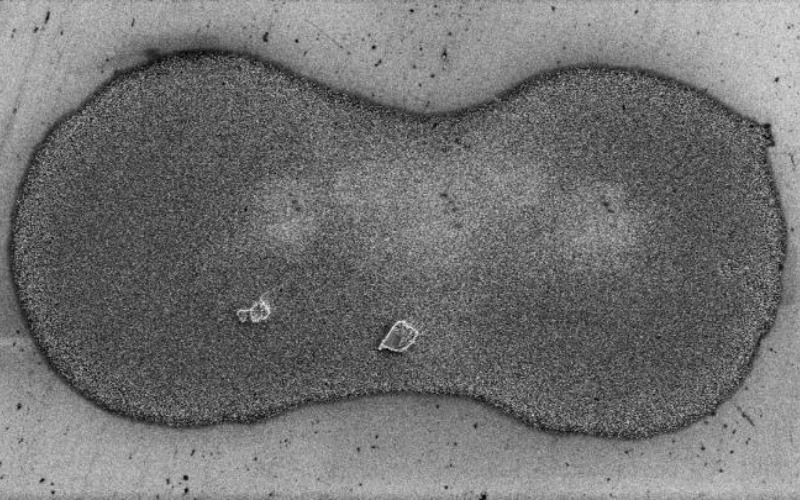
Researchers from the University of Nottingham have revealed that stabilizer residue in additive manufacturing inks function to inhibit conductivity in 3D printed electronic devices. While it was previously thought that the principal cause of reduced vertical conductivity through a printed device was shape and physical continuity problems at the interfaces of the constituent nanoparticles (at the very small micro and nanoscale), this study demonstrates otherwise. Instead, using silver nanoparticles, Nottingham researchers were able to show that reduced vertical conductivity is in fact caused by organic chemical residues in the inks.
One of the most commonly used types of conductive materials for printed electronics are inks which contain metal nanoparticles. By inkjetting layers of metal nanoparticle materials, users are able to achieve unprecedented design flexibility, rapid processing and 3D printing of functional electronic devices such as sensors, solar panels, LED displays, transistors and smart textiles. Normally, inkjet 3D printing of metals will form solid printed objects by first evaporating the solvent upon printing, also known in this case as pinning, and subsequently sintering, which is to say the low temperature consolidation of nanoparticles. This second stage is of particular importance as in many applications nanoparticles are co-printed with other functional/structural organic materials that are sensitive to higher temperatures, and as such low temperature is cardinal.
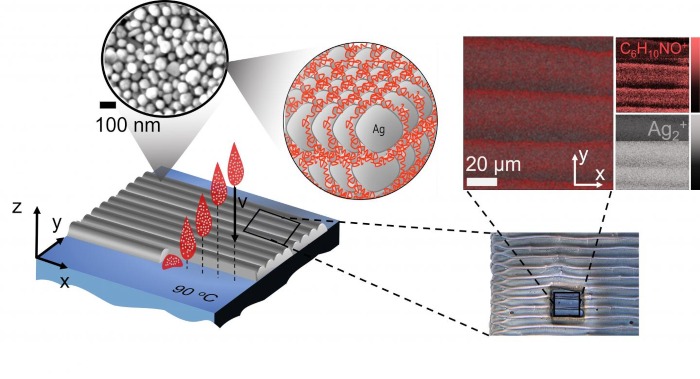
(left) Digital inkjet printing of inks containing metal nanoparticles with in-situ solvent evaporation (pinning). (right) Optical and chemical images of a printed layer of silver nanoparticles showing organic residues at the surface. (Photo Credit: Gustavo Trindade)
However, in an effect known as functional anisotropy, layers produced by inkjet printing of metal nanoparticles have different electrical conductivity between horizontal and vertical directions. This is a longstanding problem when it comes to 3D printing functional electronic devices and has prevented the technology from being used for advanced applications. As the study’s lead author, CfAM Research Fellow Dr Gustavo Trindade, explains, “The conductivity of inkjet-printed metal nanoparticles is known to be dependent on processing temperature and have been previously attributed to changes in the shape and porosity of clustered nanoparticles, with the role of organic residues being only speculated.” These residues are added to the inks for the purpose of stabilising the nanomaterials, but also end up forming low-conducting, very thin nanoscale layers which interfere with the electrical conductivity of the printed sample in the vertical direction.
More from the desk
Six other notes from the rest of the bench.
 ApplicationsThe Role of Large Format Additive Manufacturing in Boat Building and RepairIn the maritime sector, additive manufacturing is becoming popular for the production of boats, whether to design custom parts, higher-performance components or entire models. In Greece, one of the countries where tourism is a key asset for the economy, the…
 NewsWhy The New York Embroidery Studio is Leveraging 3D PrintingA flash of sequins, elegant pleats, fastidious embroidery—this kind of detail, used deftly, will always make a difference in fashion. Why? Because thoughtful design should always elevate a piece. The New York Embroidery Studio (NYES) has been elevating clothing in…
 NewsORNL designs the first 3D printed nuclear reactorAt Oak Ridge National Laboratory (ORNL), a team of researchers is continuing its research to build a 3D printed nuclear reactor: they have designed the reactor core and intensified the entire additive manufacturing process to validate the reliability of the…
 GuidesWhat is the Status of Women in the 3D Printing Industry?International Women’s Day takes place every year on March 8th. According to the United Nations, it is a global day that celebrates the achievements of women around the world as well as the progress that has been made up to…
 SoftwareMSC Software explains the importance of simulation software for AMDesign is extremely important for any manufacturing process. If you want to achieve the performance, cost and lead times enabled by additive manufacturing technologies, you should start with the right design. MSC Software, specialized in simulation software, enables engineers to&
 ApplicationsPROTIQ and its New Solution for Orthopedic ShoesIn the orthopedic sector and more broadly in medicine, additive manufacturing has become an essential technology. Whether for the production of prostheses, orthoses or implants, 3D printing allows medical devices to be manufactured in a short period of time and…