Applications
ICON’s 3D Printed Simulated Mars Surface Habitat Will Help Pave the Way for Space Exploration
NASA is once again using 3D printing in its work to bring humanity closer to space exploration. Not long after after announcing that Redwire Regolith Study, which will test whether 3D printing of regolith (loose soil) can be used to…
- 3 min read
- Applications
- Six more stories
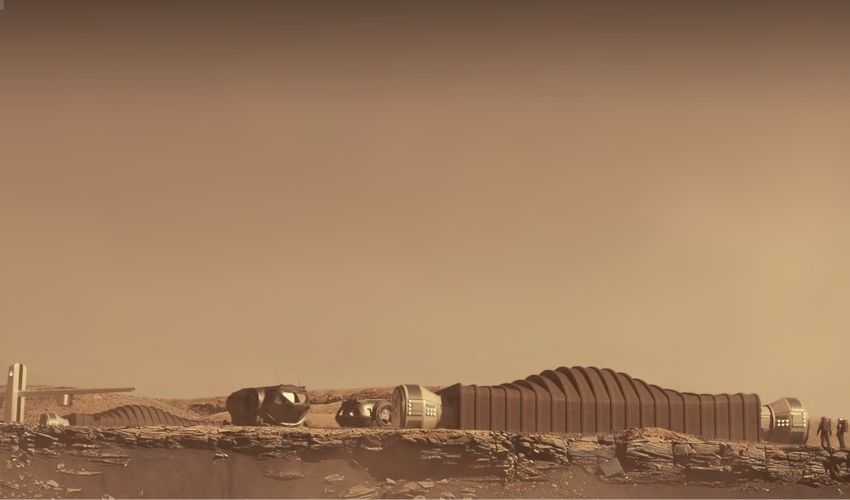
NASA is once again using 3D printing in its work to bring humanity closer to space exploration. Not long after after announcing that Redwire Regolith Study, which will test whether 3D printing of regolith (loose soil) can be used to create habitats on other planets, will be headed up to the International Space Station on Northrup Grumman’s 16th commercial resupply service mission, ICON has announced that it will be using 3D printing to create the first simulated Mars Surface Habitat for NASA in collaboration with architecture firm BIG-Bjarke Ingels Group. The aptly named Mars Dune Alpha will be delivered to NASA’s Johnson Space center in Houston and will be used to stimulate a realistic Mars habitat for the one-year Mars mission analog study.
For some time now, NASA has been working to find a way to create habitats on the Moon and other planets, ultimately of course working toward long-term space exploration of our universe. Starting with the Centennial challenge and Project Olympus, ICON’s own project through the Artemis program to begin research and development of a system that would enable construction on the Moon. 3D printing is actively being considered as one of the promising techniques that would enable further travel into the stars. In this latest news, ICON and BIG are creating a 3D-printed habitat that will be used to gather research for future missions to Mars.
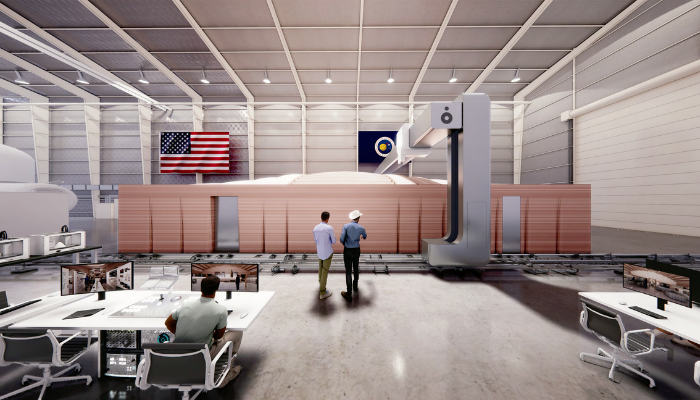
A preview of how Mars Dune Alpha will look (photo credits: ICON)
Mars Dune Alpha
Mars Dune Alpha will be a 1,700 square-foot structure and will be made using ICON’s Vulcan construction system. It was designed by Big-Bjarke Ingels Groups and as previously mentioned will ultimately be used to stimulate a realistic Mars habitat that would be able to support long-duration, exploration-class space missions. This means that life in the structure will resemble the experience of those who in the future will live on Mars. The data gathered from the experiences of those selected will be used to develop NASA’s standards for long-duration exploration missions.
More from the desk
Six other notes from the rest of the bench.
 NewsAdvanced metal AM enables microturbines to be 40X more efficientA microturbine has historically been a simplified version of a gas turbine, suitable for a variety of applications: they are used in unmanned aerial vehicles (UAVs), to charge the batteries that drive motors, as range extenders, or in hybrid UAVs…
 PrintersItalian National Cycling Team Improves Aerodynamics Using Calibry 3D ScannerIn their quest for Olympic Gold ahead of Tokyo 2021, the Italian National Cycling team enlisted the expertise of Russian manufacturer, Thor3D’s Italy-based partner, 3DiTALY, with the goal of reducing aerodynamic drag, which optimizes a cyclist’s efficiency. Thor3D’s C
 MaterialsReinforcing concrete with 3D printed polymer latticesConcrete is one of the most widely used man-made building materials and one of the world’s most consumed substances, second only to water. It is cheap, abundant, and capable of heavy loads, but, it is also brittle and tends to…
 PrintersWhich Dremel 3D Printers Are Currently On the Market?In 2014, Dremel Manufacturing Company moved into 3D printing market with their offshoot, Dremel DigiLab. In line with their focus to shape the new generation of pioneers, their motivation, according to the website, centers around using their products and machines…
 NewsResearchers develop 3D printing method for milkAdditive manufacturing has infiltrated almost all industries, including food! In fact, 3D printed food was first studied by NASA in 2006: the space organization was researching how to feed astronauts during longer space missions. Fourteen years later, researchers are still&hellip
 Software3DEXPERIENCE Make, Dassault Systèmes’ on-demand AM platformAdditive manufacturing is revolutionising the industry by leading a real change in production methods: relocation of manufacturing resources, gains in terms of flexibility for the production of prototypes and small series in-house, reduction in lead times and costs, etc. However,