News
Advanced metal AM enables microturbines to be 40X more efficient
A microturbine has historically been a simplified version of a gas turbine, suitable for a variety of applications: they are used in unmanned aerial vehicles (UAVs), to charge the batteries that drive motors, as range extenders, or in hybrid UAVs…
- 3 min read
- News
- Six more stories
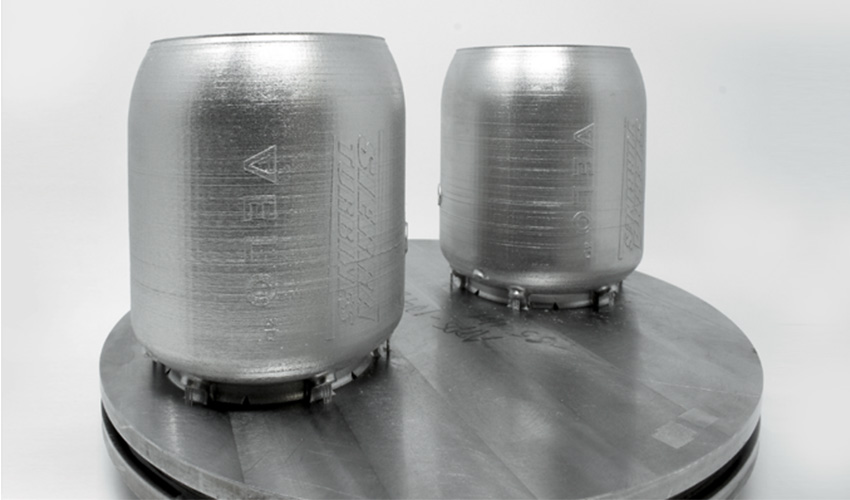
A microturbine has historically been a simplified version of a gas turbine, suitable for a variety of applications: they are used in unmanned aerial vehicles (UAVs), to charge the batteries that drive motors, as range extenders, or in hybrid UAVs that alternate between batteries and motors. In the US, Sierra Turbines has been breaking the rules of conventional manufacturing to improve the performance of microturbines. Roger Smith, Chief Executive Officer, explains that the company plans to additively manufacture at least 95% of their microturbine components, even when the company reaches large scale production. To do so, the company decided to collaborate with VELO3D, relying on its proprietary support-less metal additive manufacturing technology. Their aim is to make their turbines 40x more efficient by providing 10x more power density and reducing weight by 50% compared to traditional microturbines.
Additive manufacturing technologies will not replace traditional manufacturing methods, but they can certainly boost performance for applications where design has not been optimized yet. This is the case of microturbines, where cost restrictions have always prohibited manufacturing complex features that would improve performance. The time between overhaul (TBO) for most small turbine engines averages 40 to 50 hours but Roger Smith intends to raise that value to 1000+ hours, on par with commercial aircraft. He also plans to reduce engine weight by half, cut noise, and improve fuel efficiency, all while making the turbines easier to manufacture. These are ambitious goals to say the least!
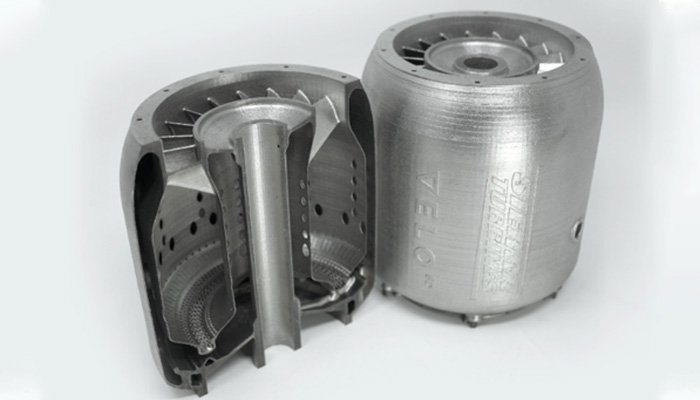
Two 3D-printed turbine combustors that serve as the core of Sierra Turbines’ small engine | Photo courtesy of VELO3D
Roger Smith explains that he is confident that his team will succeed where others have failed thanks to a host of design improvements only made possible with advanced metal AM. This is where VELO3D’s support-free capabilities and their dedicated AM software Flow come in. Today, some designs are impossible to manufacture with powder-based metal AM technologies without supports, adding additional post-processing steps to remove them, therefore increasing costs and limiting design freedom. Ultimately, support-free technology enables more complex components to be manufactured.
More from the desk
Six other notes from the rest of the bench.
 ApplicationsResearch Begins On 3D Printed Drugs For Pediatric CareIn 2022, the global pharmaceutical industry was valued at $1.4 trillion, but it has only been in the past few years that more buzz has surfaced about 3D printed medications and how their production could revolutionize the way we take…
 News10 Reasons Why Post-Processing Is Important in 3D PrintingWhen we talk about 3D printing, it stands without saying that most would think first about the actual printing process. However, additive manufacturing comprises several stages, from modeling to final part, including design and optimization, slicing, 3D printing and post-processi
 ApplicationsFirestorm Labs and Greenjets Forge Path for Next Generation 3D Printed DronesFirestorm Labs and Greenjets have joined forces to develop groundbreaking drone solutions through additive manufacturing. Firestorm Labs, known for their Modular Unmanned Aerial System (MUAS), aims to create a 100% additively manufactured UAV airframe and engine with the help of&
 NewsUniversity to Offer BSc in Additive ManufacturingAs the additive manufacturing sector grows and produces increasingly refined products, the shortage of trained individuals will become more of an issue, even a limiting factor for the potential of the technology. To combat this, higher education facilities are teaching…
 NewsAPG Manufactures Lathe Chuck Jaws with Tritone’s MoldJet TechnologyOne of the best-known advantages of 3D printing, which is appreciated by different industries, is freedom of design. While still having to follow rules with certain limitations depending on the part to be produced, Design for Additive Manufacturing (DfAM) allows…
 NewsTop 5 Videos of the Week: Farmshelf, MakeX & More!This week’s Top 5 Videos of the Week includes videos from brands such as Ultimaker, MakeX, and Farmshelf. These videos encompass agriculture, backpacks, and the music industries. A new Top 5 Videos is uploaded every Sunday, so don’t forget to…