Applications
3D Printed Human Skin Equivalents Help Identify Potential HSV Treatments
Herpes Simplex Virus (HSV) is estimated to infect 64% of the world’s population, according to the World Health Organization. The virus causes oral and genital herpes, and while it can be asymptomatic, it can also cause painful flare-ups and make…
- 3 min read
- Applications
- Six more stories

Herpes Simplex Virus (HSV) is estimated to infect 64% of the world’s population, according to the World Health Organization. The virus causes oral and genital herpes, and while it can be asymptomatic, it can also cause painful flare-ups and make those infected susceptible to HIV. Especially for immunocompromised people, the virus can be debilitating. Of course, there are antivirals to treat the disease, the most common being acyclovir—but the treatments are not a cure. Once a person is infected, HSV travels to their nerve cells, where it can start replicating and hide from any antiviral treatments or the immune system. In a few weeks, the immune system can clear up the primary infection, but HSV will remain in those nerve cells it first infected, staying in the body for life. Now, new HSV treatments are being developed thanks to 3D printing.
Current medication is not effective against latent HSV, and it also requires consistent large dosages. Patients can also become resistant to these treatments, which often do not control symptoms adequately. That is why Dr. Jia Zhu, an associate professor in the Fred Hutch Vaccine and Infectious Disease Division who has dedicated her career to studying HSV, is working towards better HSV treatments. In an article for the Fred Hutch Cancer Center, she shared that the key to creating better treatments was understanding why we have our current antiviral treatments in the first place.
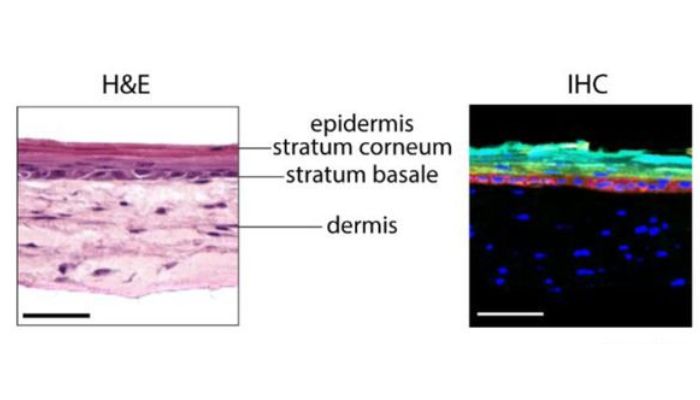
Skin layers (Credit: Zhu Lab)
The type of replicating HSV that can be targeted by antivirals primarily occurs in the basal layer of epithelial cells, which is the innermost layer of the epidermis. This explains why the sores and ulcers associated with herpes often appear in barrier epithelial tissues like the oral mucosa and genital skin. “While this is a complex process facilitated by many different cell types that collectively structure your epidermal tissue,” Dr. Zhu said, “the antivirals we use to treat HSV today were developed using in vitro culture of Vero cells and fibroblasts.”
More from the desk
Six other notes from the rest of the bench.
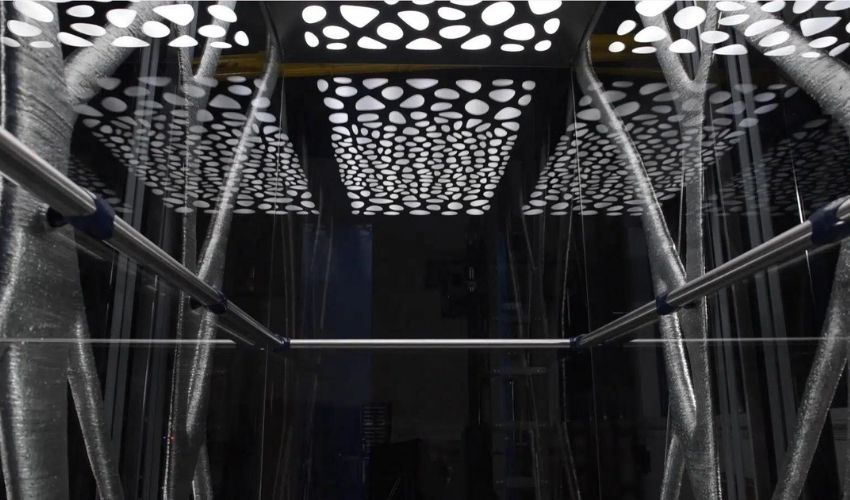 NewsMX3D and Schindler Have Used 3D Printing to Design an ElevatorWhat began in 1857 in the Haughwout department store in New York has become an indispensable part of our lives: the passenger elevator. However, we realize that although we are in one almost every day, it rarely leaves a lasting…
 NewsADDITIV digital World is starting tomorrow, are you ready to take part?Every year, key events in the sector are at the centre stage of big developments and advancements in additive manufacturing. Active players and users of 3D printing technologies come together to discover the latest solutions from manufacturers, experience first-hand the…
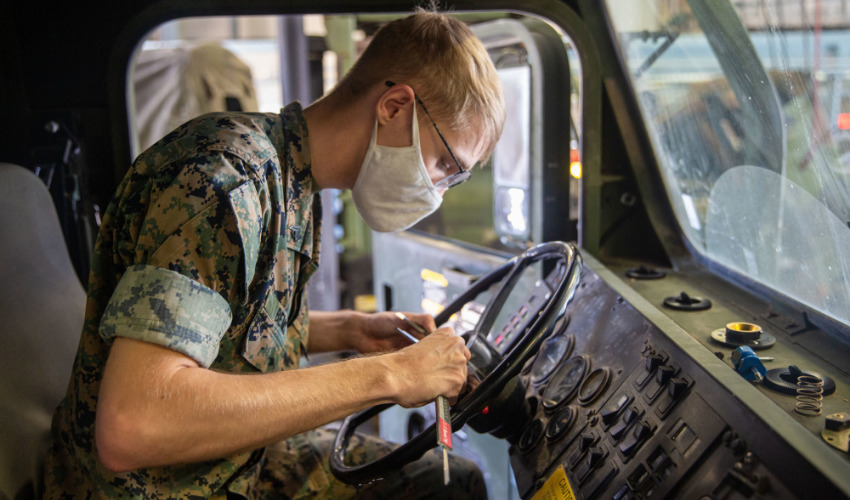 ApplicationsUnited States Marines Use AM for New Vehicle Maintenance ToolOnce again the American military is turning to additive manufacturing (AM) for innovative applications to help them in the field. This time, Marine Corps System Command’s (MCSC) Advanced Manufacturing Operations Cell (AMOC) has helped to develop a 3D printed metal…
 Applications3DExpress: Boeing Reduces Satellite Solar Array Production Time by 50% with 3D PrintingIn this week’s 3DExpress, we are covering some positive industry news: first, Boeing reports that it is using 3D printing to create solar array substrates—a decision that will cut production time in half. Second, we touch on ORNL’s new research…
 NewsPrinted Farms completes the first 3D printed building in FloridaPrinted Farms, a Florida based start-up, has completed the 3D printing stage of the first 3D printed building in Florida. The project was completed using a COBOD BOD2 printer, which has been successfully used in a number of 3D printing…
 ApplicationsA 3D printed electric car ready for 2019?You may have read about this throughout 2018; that a 3D printed electric car will hit the market later this year. The Italian manufacturer X Electrical Vehicle (XEV) announced last year that their car; the LSEV, will be ready in April…