News
How Important is Sustainability in Additive Manufacturing?
During Formnext 2021, the four-day international trade fair for additive manufacturing, we saw new and optimized machines, innovative materials, software packages and post-processing solutions and applications. In recent years, it has become clear to many manufacturers, but espec
- 3 min read
- News
- Six more stories
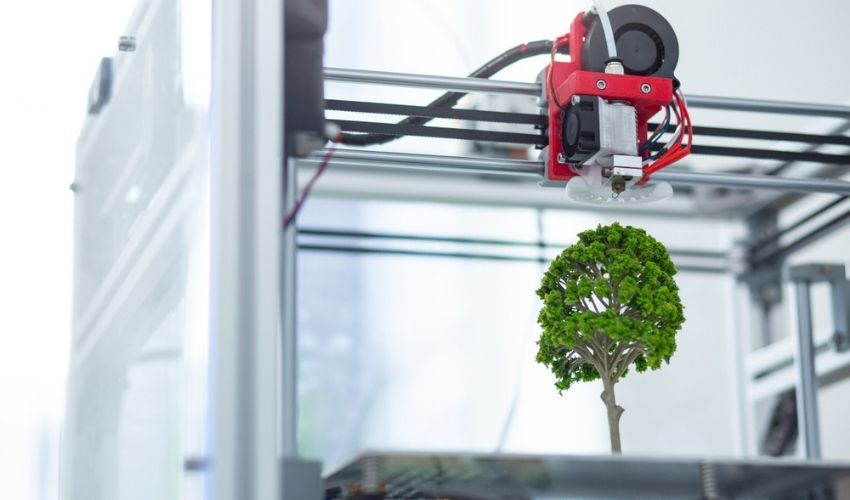
During Formnext 2021, the four-day international trade fair for additive manufacturing, we saw new and optimized machines, innovative materials, software packages and post-processing solutions and applications. In recent years, it has become clear to many manufacturers, but especially to users, which technologies and materials will continue to dominate the market in the future. Instead of numerous new innovations, the focus is now on product optimization as well as optimization of the AM supply chain. Furthermore, in addition to the goal of creating more effective machines for series production and automating production processes, both of which are helping to solidify AM’s presence in Industry 4.0, sustainability is also becoming a main focus in the development of additive manufacturing. But what specific demands does the market place on companies? And how are they facing up to current and future challenges? We were out and about at Formnext and were able to talk to some of the exhibitors about this and find out more about the aspirations of the different players in AM.
As a process in itself, additive manufacturing already represents a more sustainable means of production. This is particularly evident in the fact that 3D printing eliminates the use of excess material and thus unnecessary waste virtually from the outset. The ability to use generative design also plays an important role in terms of part optimization and is one of the main advantages of 3D printing compared to traditional manufacturing methods. In addition, a 3D printer enables on-demand manufacturing. This not only saves time, but also eliminates the need for long transport routes and storage areas, consequently reducing CO2 footprints.
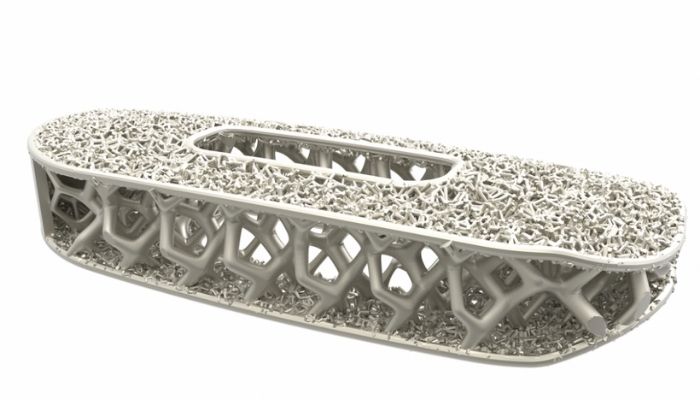
Thanks to generative design, components can be optimized and material used efficiently (photo credits: NuVasive)
Of course, however, 3D printing itself also has an impact on the environment. The German Federal Environment Agency has published a trend report to assess the environmental impact of 3D printing, in which the direct and indirect effects are examined. The report specifically points out the high energy requirements as well as the indoor pollutants produced. The mining of raw materials for material requirements also has an impact on the environment. However, the Federal Environment Agency sees potential here in the implementation of new recycling concepts. Printed parts could, for example, be recycled further down the line as filament.
More from the desk
Six other notes from the rest of the bench.
 Guides#Startup3D: Tesseract Brings Linear Motors to 3D PrintersAlmost every 3D printer moves its printhead with belts and pulleys, an affordable solution that comes with certain limits. The belt stretches, vibrates, and loses rigidity over time. For years, the industry has had a faster and more precise alternative…
 NewsInnovative Ice-cream through 3D printingIt is summer and hopefully the sun is with us through out. And when the weather is hot it is time to cool down, and no better way to do so than with ice-cream. But why would you settle with…
 MaterialsWhy the Additive Manufacturing Industry Cannot Afford to Miss NPE2027The plastics landscape is shifting rapidly, and with it, the boundaries of industrial production. For companies in the additive manufacturing sector, the intersection between traditional plastics processing and 3D printing has become a core strategic alignment. As the global manu
 NewsGet All the Latest News From Formnext 2023 With 3DnativesWe have all heard the iconic slogan “Formnext – where ideas take place.” This is how Mesago presents one of the most important events in 3D printing, attracting people from far and wide with visitors from Australia, Asia, Europe, North…
 ApplicationsUW-Madison Engineers Achieve Zero Gravity 3D Printing of RAMStudent engineers at the University of Wisconsin-Madison have taken a giant leap toward self-sustaining space exploration by successfully 3D printing Random Access Memory (RAM) devices in zero gravity. This achievement, realized in March 2024, represents a significant advancement
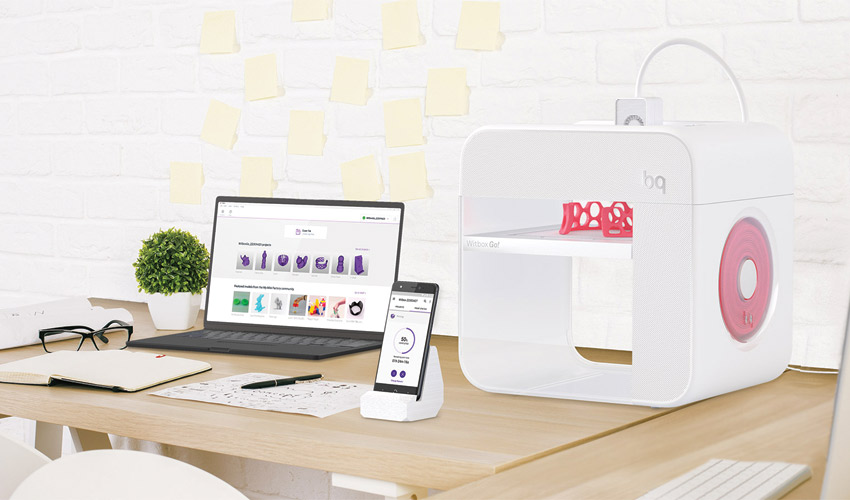 Printers3Dnatives Lab: Testing the BQ Witbox Go! 3D printerThe Spanish manufacturer BQ, which is responsible for a wide range of 3D printers and is one of the leading European manufacturers, with the Plug & Play models Witbox 1 and Witbox 2, recognisable by their volume of printing, as well as the machines…