Applications
Can 3D Printing Improve Hospital Outcomes?
Does additive manufacturing have a place in healthcare establishments? This is precisely the question being analyzed in research conducted by Dr. Atana Chaudhuri, associate professor of technology and operations management at Durham University Business School. He conducted a surv
- 3 min read
- Applications
- Six more stories
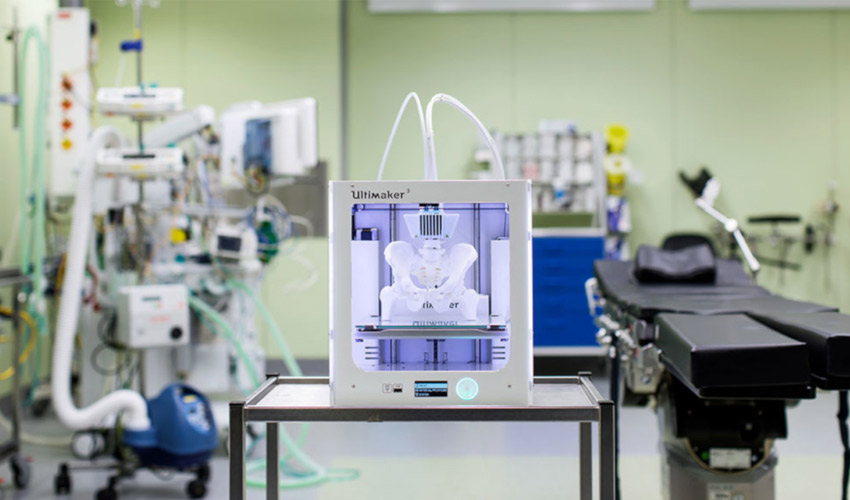
Does additive manufacturing have a place in healthcare establishments? This is precisely the question being analyzed in research conducted by Dr. Atana Chaudhuri, associate professor of technology and operations management at Durham University Business School. He conducted a survey that illustrates how 3D technologies in hospitals can impact the operational practices of doctors from a variety of specialties, and also the quality of patient care. The results show that 3D printing is a key tool to alleviate hospital pressures, in terms of both time and expense. Dr. Chaudhuri, however, calls for caution: healthcare establishments must measure the advantages and constraints of such integration into their structure and ensure that healthcare staff is sufficiently trained.
We could take many examples of hospitals in the United States that have integrated additive manufacturing into patient care. One of the top Children’s Hospitals in America, Seattle Children’s Hospital has been using the Stratasys Digital Anatomy 3D printer to plan and practice intricate surgeries for patients with rare conditions. This type of application within hospitals allows doctors to design anatomical models, imagine medical devices, or visualize their operations more precisely. This study from Dr. Chaudhuri is used to measure the effectiveness of 3D technologies in hospitals: do they really have a positive impact?
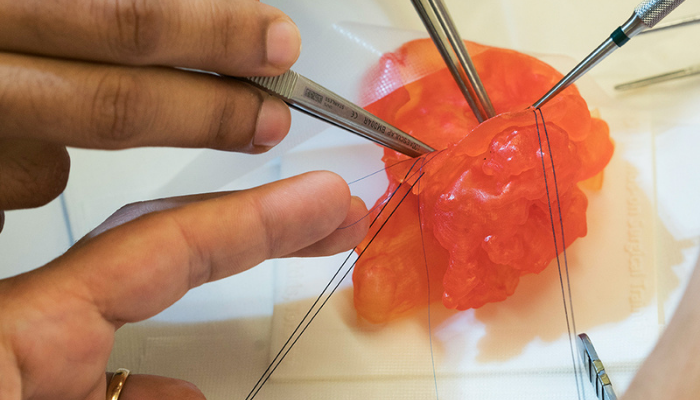
Digital Anatomy software and materials realistically mimic bone and tissue. (Photo Credit: Stratasys)
First observation of the report: additive manufacturing allows a reduction in operating time. Dr. Chaudhuri says: “Surgical operations lasting from 4 to 8 hours can be shortened from 1.5 to 2.5 hours if patient-specific instruments are used and from 25 to 30 minutes if only an anatomical model is used. used to plan the operation. ”An advantage that could allow more patients to be treated. This time dimension also concerns the convalescence of a patient. The study shows that the use of 3D printing would make it possible to recover better (about twice as fast) but above all to prevent the patient from returning to the hospital after his operation. This is particularly the case when an implant is transplanted: when this is 3D printed, it usually has a much longer lifespan than a conventional implant.
More from the desk
Six other notes from the rest of the bench.
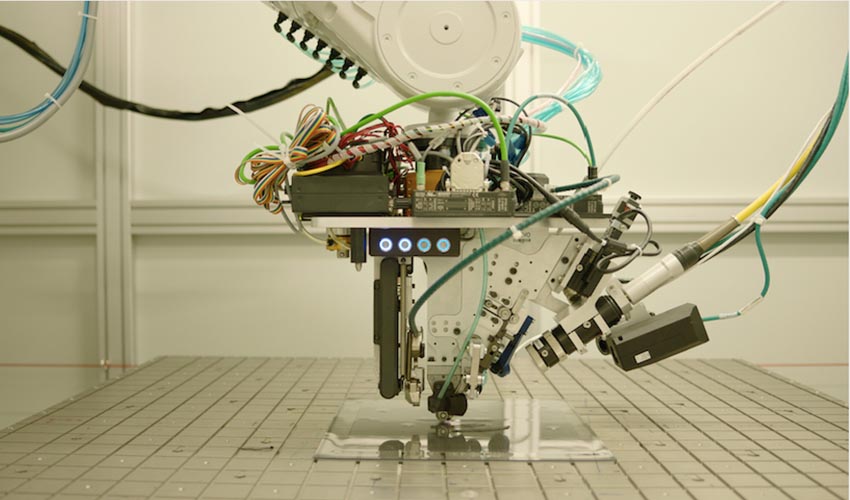 GuidesAREVO launches world’s first high-speed AM composite systemAREVO, a young Californian company, is known for having developed an additive manufacturing platform to transform composites production in the AM sector. As you may know, composites represent a growing segment in this industry, and have started competing with some…
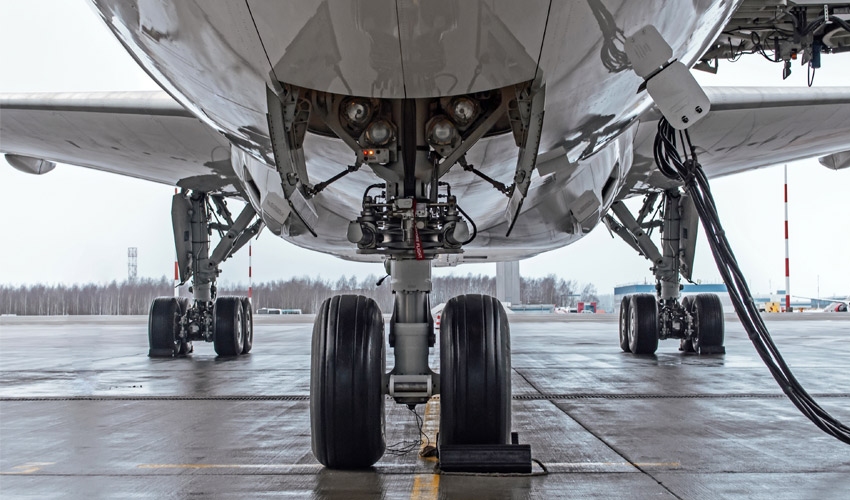 ApplicationsAirbus and Safran Join British Consortium to Develop Metal 3D PrintingAerospace giants Airbus and Safran, through its Safran Landing Systems branch, have announced that they are part of a new project to improve manufacturing processes in the aerospace sector. The group will work to create a new DED process, named…
 MaterialsNASA uses 3D printing to create rocket engine alloysIn another huge step towards fully 3D-printed rocket engines, NASA has successfully tested an igniter prototype made from two metal alloys. Engineers at NASA have been hard at work to produce this component using a new method of laser printing. As…
 ApplicationsRicoh and SimBioSys Partner on AI-Powered 3D Models for Personalized Breast Cancer TreatmentRicoh USA, known for its expertise in custom medical device design through Ricoh 3D for Healthcare, is teaming up with SimBioSys, a tech company focused on AI integration and computational modeling. Together, the two companies recently announced a collaboration focused…
 NewsMeet McLaren’s New Artura Hybrid Supercar with 3D Printed CoresA few days ago, luxury carmaker McLaren introduced its latest concept: its first high-performance hybrid supercar, the McLaren Artura. Engineered to combine technology, design and unmatched performance, the hybrid car is a compendium of innovation, and of course, additive manufac
 GuidesThe IAAC: Innovative 3D Printing with ArchitectureThe Institute for Advanced Architecture of Catalonia (IAAC) is a training center in Barcelona dedicated to developing sustainable architectural projects, innovating, and using the best of new technologies, including 3D printed houses. Their mission is to imagine the future of&hel