News
Meet McLaren’s New Artura Hybrid Supercar with 3D Printed Cores
A few days ago, luxury carmaker McLaren introduced its latest concept: its first high-performance hybrid supercar, the McLaren Artura. Engineered to combine technology, design and unmatched performance, the hybrid car is a compendium of innovation, and of course, additive manufac
- 3 min read
- News
- Six more stories

A few days ago, luxury carmaker McLaren introduced its latest concept: its first high-performance hybrid supercar, the McLaren Artura. Engineered to combine technology, design and unmatched performance, the hybrid car is a compendium of innovation, and of course, additive manufacturing is part of it. The British company claims to have used 3D metal printing to design the engine block and cylinder head cores. This method would allow better cooling of the engine, and therefore better performance.
The electrification of vehicles is a rapidly growing trend worldwide. According to a report by the IEA, the global sale of electric cars has registered a 40% year-on-year increase. Additionally, a recent report from Fortune Business Insights mentions that the electric vehicle market is expected to reach $985.72 Billion by 2027, with customers especially favoring efficient hybrid cars. There’s no doubt that car manufacturers are moving more into the market and in many cases, additive manufacturing is helping development. For example, Porsche has reduced the total weight of the drive by about 10%. There is also the case of Aptera Motors, which has come up with a partially 3D printed design. This time we’re going to England, where McLaren has unveiled an innovative concept.
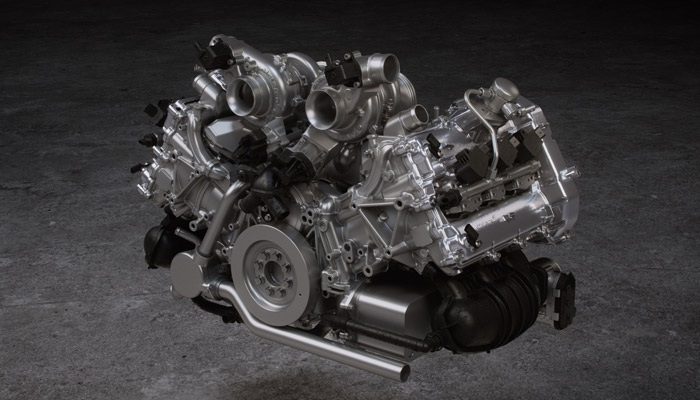
The McLaren Artura motor (Photo Credit: McLaren)
The McLaren Artura had a weight reduction requirement, so engineers turned to carbon fiber to design a lighter frame. The monobloc structure will weigh only 82kg (180.8lbs) and will help protect the battery pack – in fact, the total weight of the hybrid components is only 130kg (286.6lbs). Carbon fiber also offers more impact resistance. On the engine side, the McLaren Artura’s engine will be more compact, smaller and denser than a conventional radial-flow E-motor. Weighing only 15.4 kgs, it can reach 0-100 km/h in just 3 seconds, with a top speed limited to 330 km/h.
More from the desk
Six other notes from the rest of the bench.
 MaterialsCalifornian Start-Up Unveils First Ever Sustainable Filament Made From WineOver the years we have certainly seen some odd alternative 3D printer filaments. There have been filaments made from coffee grounds, hemp and even food waste. These filaments have often been made for a noble cause, namely to address sustainability…
 NewsDyeMansion Adds Three New Systems to its Powershot PortfolioDyeMansion have just announced the addition of three new systems to its Powershot product portfolio, during an interactive-online event hosted from their HQ in Munich. During the event the company also demonstrated its new products live, as well as hosted…
 News3D Hubs Report: Key Market Findings and Trends for 20193D Hubs has released its traditional quarterly trends report. 3D Hubs is the world’s largest network of manufacturing services. Looking back on 2018, the company admits that the most significant change was the evolution of 3D printing from an almost…
 ApplicationsWhy is dental additive manufacturing growing?In its latest report, the Chinese consulting and market research firm, QY Research revealed the trends to expect in the dental 3D printing industry for 2025. The report, entitled “Global Dental 3D Printing Market Analysis, 2014 – 2025” suggests that…
 NewsAitiip Leads The HERON Project to Improve Energy Efficiency in AeronauticsZaragoza-based Aitiip Technology Center has taken the reins of the European HERON project. The idea came about as a result of the European commitment to the environment—more specifically, due to carbon emissions from the aeronautics industry. Thus, the primary mission…
 NewsTop 5 Videos: Creality and AM in EuropeHello everyone, and as always happy Sunday! We have an exciting bunch of videos to share with you this week, with a wide variety ranging from Creality and SolidCAM at Formnext to 3D printed prosthetics, student projects and innovations! We…