Applications
Airbus and Safran Join British Consortium to Develop Metal 3D Printing
Aerospace giants Airbus and Safran, through its Safran Landing Systems branch, have announced that they are part of a new project to improve manufacturing processes in the aerospace sector. The group will work to create a new DED process, named…
- 3 min read
- Applications
- Six more stories
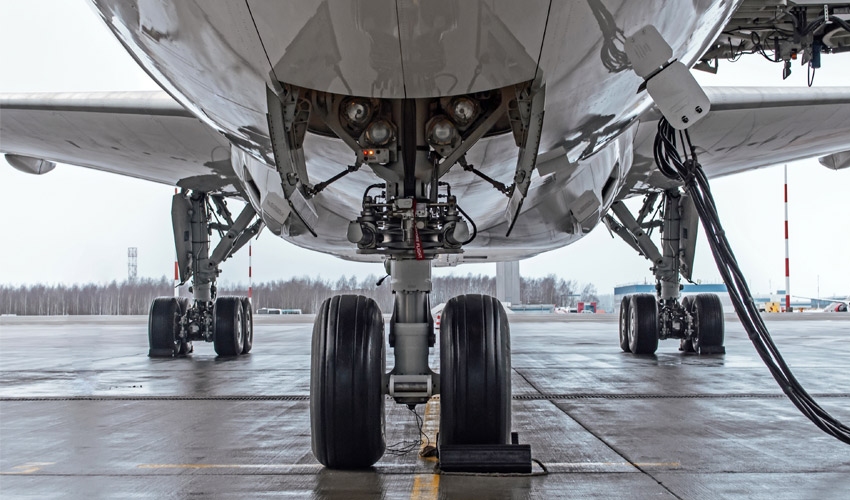
Aerospace giants Airbus and Safran, through its Safran Landing Systems branch, have announced that they are part of a new project to improve manufacturing processes in the aerospace sector. The group will work to create a new DED process, named Hybrid Direct Energy Deposition (DED) Sprint, which will combine additive manufacturing, forging and forming methods, with the goal of understanding how they can reduce costs and production times while increasing component sustainability. Of particular interest in this new consortium is the potential role of Directed Energy Deposition (DED), a metal 3D printing technology known to facilitate the repair of existing parts.
The consortium is led by the National Manufacturing Institute Scotland (NMIS) and funded by the Aerospace Technology Institute (ATI). It includes several partners, as well as an industrial steering group made up of 13 companies, including Airbus and Safran Landing Systems. Their participation demonstrates the interest of industry leaders in additive manufacturing as they seek to develop more efficient processes for their future operations.
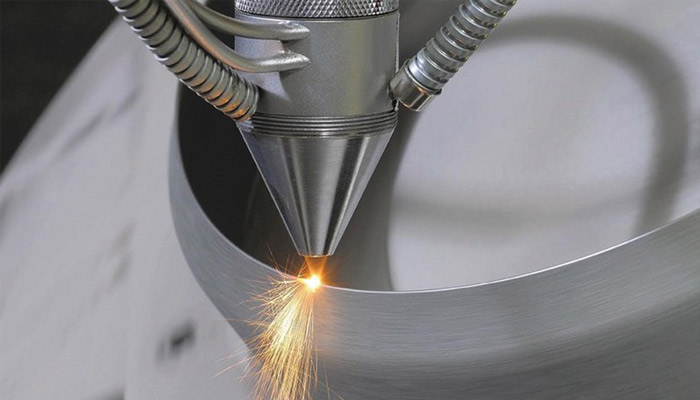
The DED process allows users to repair existing metal parts
The project has already started with two phases led by the University of Strathclyde and Cranfield University. They are working on the development of a demonstration part which should be presented later this year. The third phase , led by by the Northern Ireland Technology Center (NITC) at Queen’s University Belfast, will focus on PKM machining. Meanwhile, the final proof of concept phase will compare the various so-called conventional manufacturing methods with alternatives such as DED technology. The latter is particularly interesting for repairing metal parts, adding additional functionalities or designing more complex and bulky components. The consortium, including Airbus and Safran, seeks to develop a hybrid manufacturing process including the deposition of material under DED in order to meet the challenges of the aerospace industry.
More from the desk
Six other notes from the rest of the bench.
 NewsICON Raises $ 9 Million to Create Affordable 3D Printed HousesRemember the American startup based in Texas: ICON? Now the company has presented their project of 3D printed houses, created in few hours and at an unbeatable price. ICON has just announced that a fundraising effort raised $ 9 million. The money will help…
 GuidesMadeInAdd CEO: ‘The Companies Adopting 3D Printing Fastest Aren’t the Ones You’d Expect’You might expect large corporations, with the budgets and engineering resources to match, to be the first in line when it comes to adopting “new” technologies like additive manufacturing. According to Andrea Gorlezza, CEO of MadeInAdd, the opposite is closer…
 ApplicationsWill 3D Printing Be Used for the First Commercial Mission to Mars?If you have been following along for a while, you certainly know that additive manufacturing is playing an important role in the aerospace sector and especially in space travel. Already it is being used for applications in missions to both…
 NewsA New Technology Can Create 3D Models Using SoundAdditive manufacturing can be used in a wide range of fields and applications. Bioprinting in particular has shown real promise in the medical field. In this process, cellular structures are produced from a bio-ink to create skin, tissue and organs.…
 NewsAdvanced metal AM enables microturbines to be 40X more efficientA microturbine has historically been a simplified version of a gas turbine, suitable for a variety of applications: they are used in unmanned aerial vehicles (UAVs), to charge the batteries that drive motors, as range extenders, or in hybrid UAVs…
 SoftwareWhat Are the Trends in 3D Software for Additive Manufacturing?Last week, Formnext Digital Days commenced, with the aim of reaching a wider audience beyond the phsyical Frankfurt expo. Virtual attendees were able to enjoy networking sessions and engaging panels led by industry experts from additive manufacturing. It was certainly…