Materials
The High-Performance Polymer Market: An Opportunity for 3D Printing?
Research and Markets recently released its latest report on the Global High-Performance Materials in Additive Manufacturing Market. Entitled ‘The Global 3D Printing High-Performance Plastic Market’, it analyzes the place and evolution of high-performance polymers such
- 3 min read
- Materials
- Six more stories
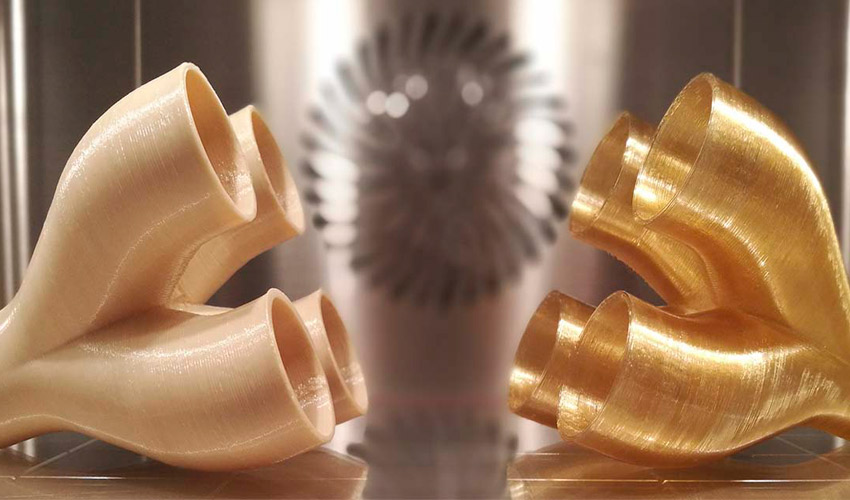
Research and Markets recently released its latest report on the Global High-Performance Materials in Additive Manufacturing Market. Entitled ‘The Global 3D Printing High-Performance Plastic Market’, it analyzes the place and evolution of high-performance polymers such as PA, PEEK, PEKK, PEI and reinforced high-performance materials. The study predicts 22.9% growth between 2020 and 2025, with an estimated market of $ 202 million in 4 years. A real opportunity for the 3D printing sector which is increasingly looking for thermoplastics with high added value, some in competition with metals due to their chemical, mechanical and thermal resistance. The report covers filaments, powders and granules as well as all the regions of the world and the different applications possible today.
High-performance polymers have been popular with the additive manufacturing market for a few years now because they offer very good properties and characteristics: high resistance to heat, chemicals and solvents, high strength, etc. Often used in sectors such as aeronautics, railways, medical or even automotive, they require demanding printing parameters, particularly in terms of extrusion temperatures and are compatible with some industrial machines.
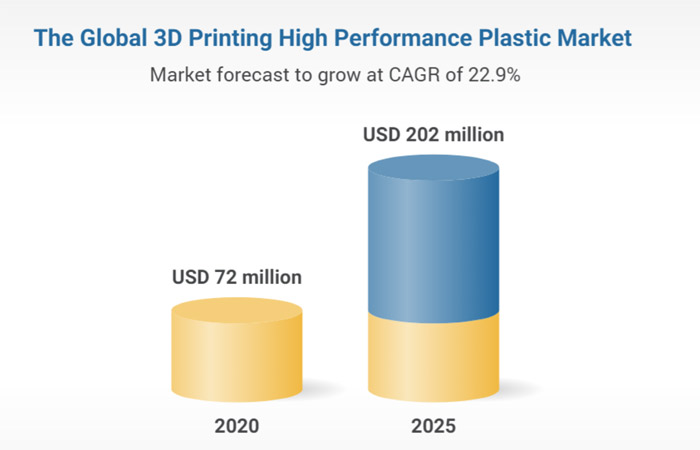
The high-performance polymers market is expected to register an annual growth of 22.9% (Photo Credit: Research and Markets)
The most used polymers and technologies
The published report reveals that PEEK and PEKK, two materials belonging to the PAEK family, are the high-performance polymers that represent the fastest growth in both volume and value. It should also be noted that PEEK is more widely used in the medical sector. As a sterilizable material, it is particularly interesting in the production of personalized implants, especially since its properties are similar to those of human bone, accelerating osseointegration. The report also specifies that certain polymers could replace metal spinal implants and orthopedic implants.
More from the desk
Six other notes from the rest of the bench.
 MaterialsWhat Technical Ceramics Are Compatible With Additive Manufacturing?Though the first thing that comes to mind for many when you mention ceramics is pottery or porcelain, technical ceramics are actually some of the strongest and toughest materials on Earth. Broken into two categories, oxides and non-oxides, the main…
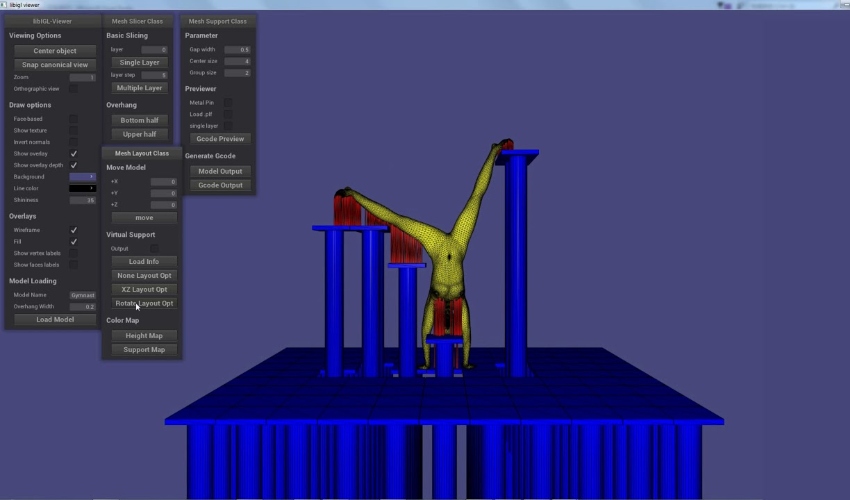 NewsNew Moving Platform 3D Printer Saves Time and MoneyResearchers from the University of Southern California Viterbi School of Engineering have created a novel method of reducing the material waste, and consequently, the cost of 3D printing using Fused Deposition Modeling, or FDM, technology. Together the team, led by…
 NewsThe 3D printed Future TreeThe use of concrete in 3D printing is revolutionizing the construction industry. From houses to pedestrian bridges, additive manufacturing provides a great deal of design freedom that goes beyond the limits of the imaginable. In fact, it may well be…
 NewsAMAZEA, an underwater scooter designed thanks to large format 3D printingThe company JAMADE Germany recently presented a brand new concept for underwater riding: AMAZEA is an underwater scooter where 75% of parts have been 3D printed. Designed on a BigRep large format 3D printer, the device allows you to explore…
 NewsGeneral Motors relies on additive manufacturing to reduce the weight of their carsUS automaker, General Motors (GM), has announced a new partnership with Autodesk. The goal of GM is to design 3D printed parts for their new electric cars to make them lighter and more efficient, all at a lower cost. The…
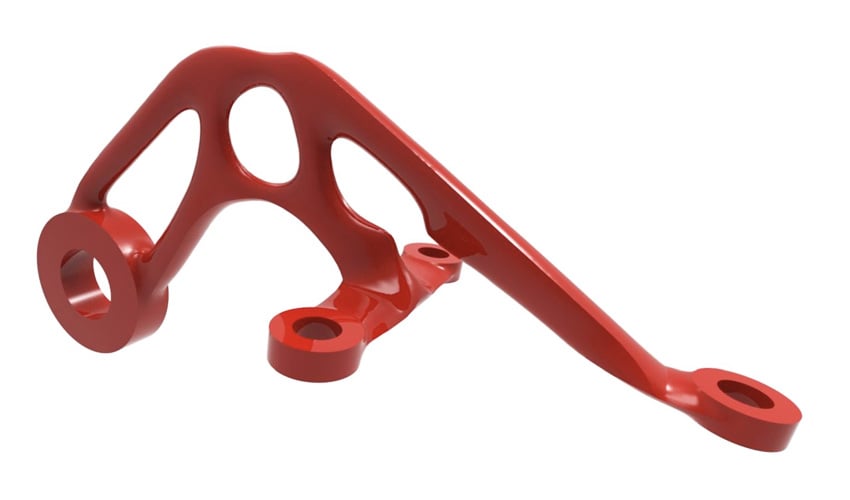 SoftwareSolid Edge: Siemen’s CAD Software for AMWhen it comes to 3D modeling parts and then printing them, choosing the right software is essential. Of all the 3D modeling software on the market, today we want to introduce you to Solid Edge. This solution is currently owned…