Applications
Is 3D Bioprinting the Future of Tailor-Made Medicine?
3D bioprinting is revolutionizing the medical field, offering groundbreaking solutions for everything from tissue engineering to personalized treatments. Thanks to 3D printing-like techniques, cells and biomaterials can be combined and deposited layer by layer to create biomedica
- 3 min read
- Applications
- Six more stories
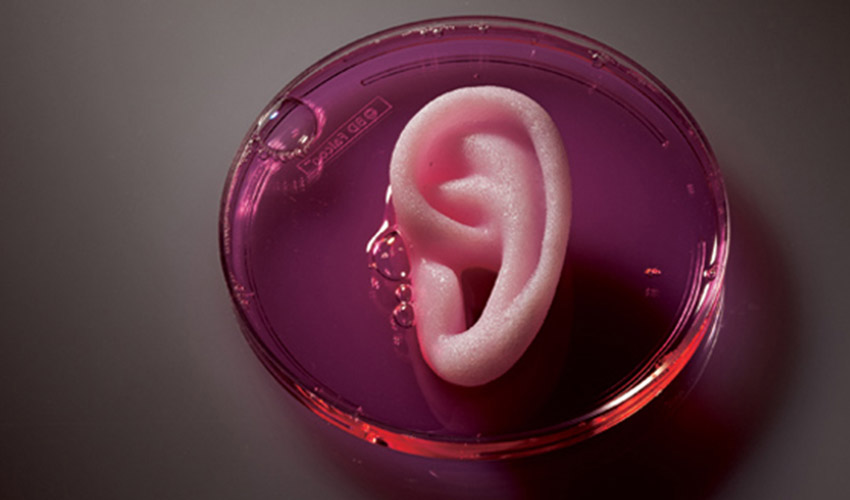
3D bioprinting is revolutionizing the medical field, offering groundbreaking solutions for everything from tissue engineering to personalized treatments. Thanks to 3D printing-like techniques, cells and biomaterials can be combined and deposited layer by layer to create biomedical parts that have the same properties as natural tissues. During this process, various bioinks can be used to create tissue-like structures, which have applications in medical and tissue engineering fields. The varied biomaterials that can be used are combined differently depending on the cells being treated and the final application.
One of the biggest endeavors of this field is to successfully bioprint a fully functional human organ. According to the Organ Procurement and Transplantation Network, around 17 people in the United States die every day waiting for an organ transplant, and the demand for transplants increases every year. 3D bioprinting could be a life-saving solution, but the science isn’t there yet. How could this technology develop? Below, we will explore recurring questions about bioprinting and different printing processes associated with the technology.
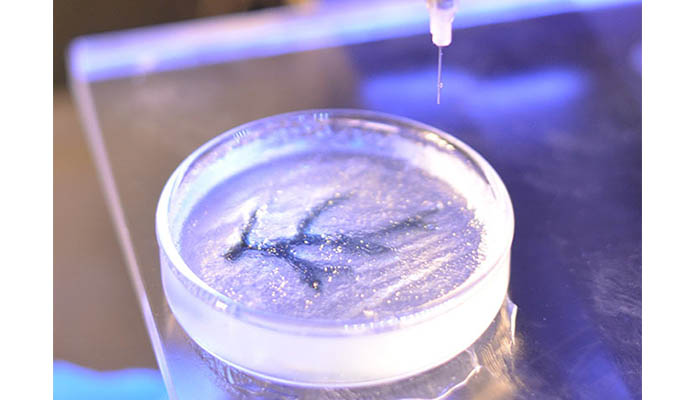
(Photo credits: FluidForm)
The Beginnings of 3D Bioprinting
3D bioprinting dates back to 1988 when Dr. Robert J. Klebe of the University of Texas presented his cytoscribing process, a method of micropositioning cells to construct two and three-dimensional synthetic fabrics using a common inkjet printer. In 2002, Professor Anthony Atala of Wake Forest University created the first organ using bioprinting: a small-scale kidney.
More from the desk
Six other notes from the rest of the bench.
 NewsSmithsonian’s 3D program allows users to 3D print thousands of artifactsHave you been missing museum visits and other cultural activities due to the COVID-19 pandemic? The Smithsonian Institution in Washington D.C. might have a solution for you. One of the many applications of 3D printing is its possibility to be…
 NewsCambridge Researchers 3D Print Smart Wall on UK National HighwaysCambridge researchers have achieved a significant milestone by developing the first 3D printed concrete infrastructure for a National Highways project. The innovative structure, known as a headwall, has been installed on the A30 in Cornwall and is equipped with sensors…
 GuidesWhat Are the Available Post-processing Solutions for 3D Printing?The additive manufacturing process rarely stops once your 3D printer has completed the part. Often, it takes varying amounts of time to complete post-processing steps, depending on the printing technology used. In fact, a recent study showed that the biggest…
 NewsTop 5 Videos: Self Healing MaterialsIt’s finally Sunday and that means we’re once again presenting you with our weekly Top 5 list of videos right from the exciting world of 3D printing. We start this weeks Top 5 videos with a short video that shows…
 GuidesSmart Cups discusses 3D printed beverages and its proprietary technologyIt is increasingly often that we hear news about how 3D printing technologies are transforming the food industry. Today we have numerous companies 3D printing meat, relatively recently emerged a project of 3D printed fish… But we rarely talk about…
 MaterialsEXTEM™AMHH811F filament can resist highest temperatures on the marketThe Italian manufacturer Roboze and the chemical company SABIC have unveiled the fruit of their recent collaboration: a new high-temperature 3D printing material, EXTEM™AMHH811F filament. Compatible with Roboze’s ARGO 500 3D printers, designed for production, this amorphous