News
French Astronaut Thomas Pesquet Brings 3D Printing to the ISS
Two weeks ago, French astronaut Thomas Pesquet flew for the second time to the International Space Station (ISS) for a six-month trip, becoming the ISS’s first French commander. What we found particularly interesting was that 3D printing accompanied him on…
- 3 min read
- News
- Six more stories
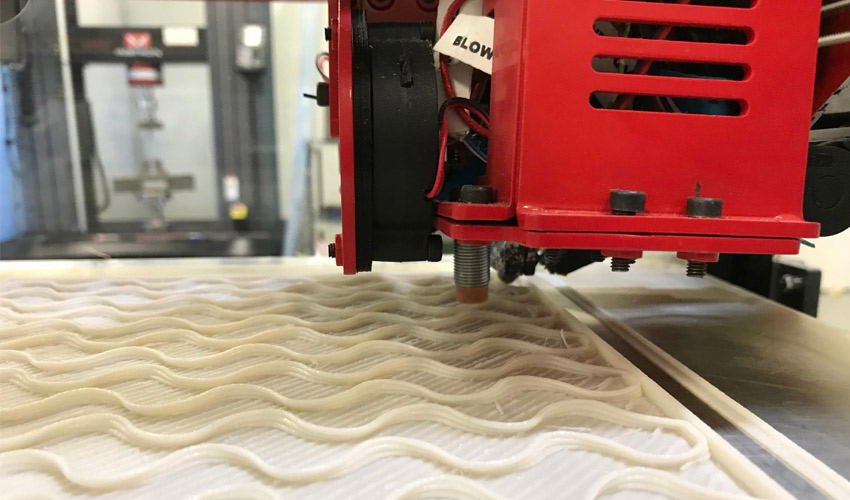
Two weeks ago, French astronaut Thomas Pesquet flew for the second time to the International Space Station (ISS) for a six-month trip, becoming the ISS’s first French commander. What we found particularly interesting was that 3D printing accompanied him on the journey, he embarked with 3D printed parts, including packaging for meals provided by the Hénaf group as well as a protective case for the French astronaut’s sleep headband. These parts were designed from a recyclable and edible foam made from PHA, a naturally occurring polymer synthesized by bacteria. These foams, designed by the ComposiTIC technical platform, offer a high level of protection, isolating shocks and vibrations, particularly important as you could image for the flight to space.
The ComposiTIC technical platform was created in 2014 at Southern Brittany University (UBS). Its goal is to develop innovative composites thanks to a robotized fiber placement technology. The platform was requested by CNES as part of the ESA’s Alpha mission carried out by Thomas Pesquet. During the next six months, the French engineer will conduct several maintenance operations as well as a hundred scientific experiments on board the ISS. And additive manufacturing has been involved in the implementation.
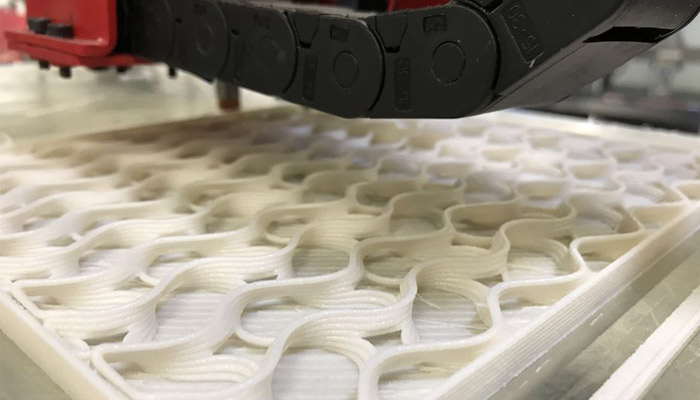
PHA granules were transformed into filament to 3D print the parts (photo credit: UBS)
A 3D printed foam to protect scientific equipment
Conducting scientific experiments in space has different constraints from those on Earth, especially in terms of packaging: any test on board the ISS must be carefully stored in a kind of box made of foam that protects against vibrations, the objective being to ensure that the equipment is functional and reliable once it arrives on the ISS. For the Alpha mission, one of the requests made by the French astronaut was to replace the traditional material from the oil industry with a recyclable foam, which would take up less space and above all generate less waste.
More from the desk
Six other notes from the rest of the bench.
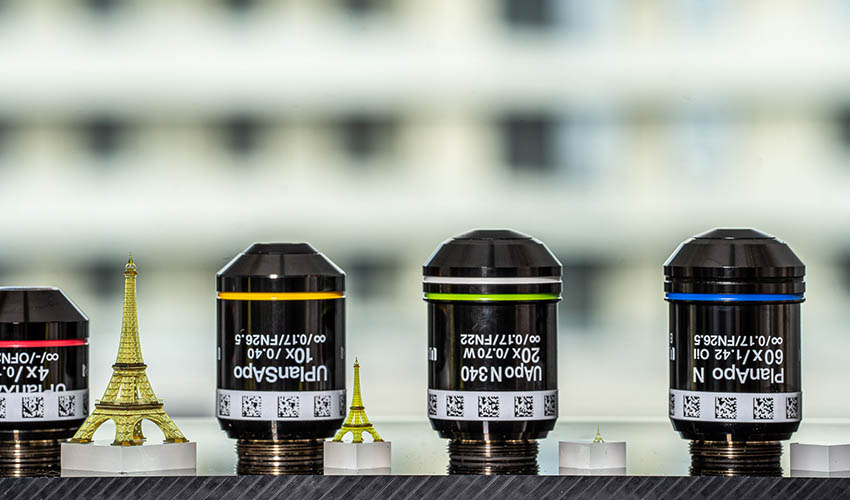 NewsUpNano develops high-resolution desktop 3D printing for micro partsUpNano is a young company based in Vienna that has recently developed a high-resolution microscale 3D printing technology. Based on the 2-photon polymerization process (2PP), the new technique is capable of producing plastic parts with a volume ranging from 100…
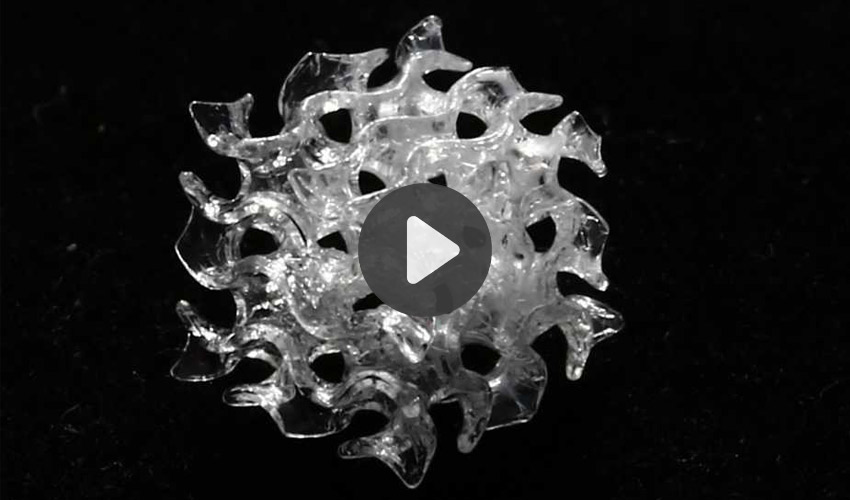 NewsTop 5 Videos of the Week: 3D printing glass with new technique…This week we found the top 5 videos about 3D printing and the way additive manufacturing is shaping our society. The technology has infiltrated many sectors, from medical to automotive! Check out our selection of the week to keep up with the innovations! This week we…
 ApplicationsSilk proteins allow the bioprinting of artificial tissuesA team of scientists from the Guwahati Indian Institute of Technology (IIT) is advancing bioprinting in India. Apparently, they created a bioink from silk proteins that could be used for 3D printing tissues, implants and organs at unbeatable costs. These…
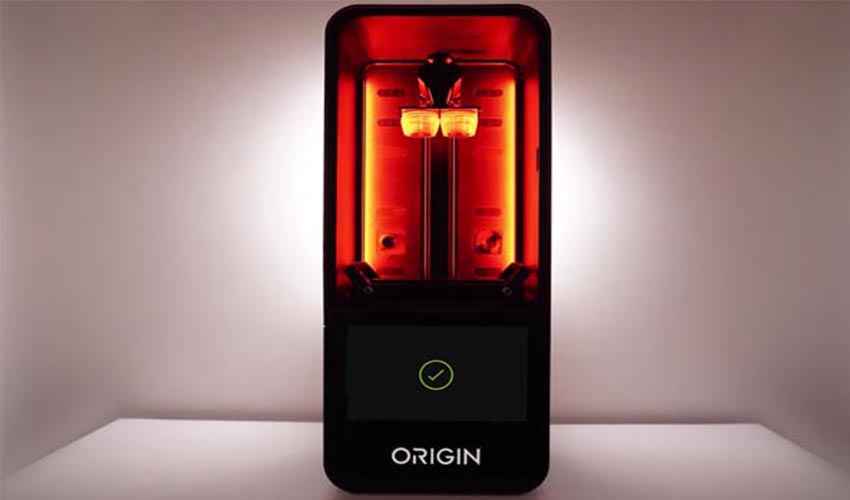 PrintersThe new Origin One 3D printer for high-volume productionOrigin, the Californian startup that developed its Open Additive Production platform to offer a new manufacturing method based on open materials, expandable software and modular hardware, with the aim of meeting the demand for better quality materials and customisation, just&hell
 NewsValve allows makers to 3D print and sell their merchandiseValve, the company behind the Dota, Half-life, Portal and Left 4 Dead series’, has partnered with Shapeways to allow fans to reproduce and sell merchandise and figures from their favourite games. 3D printing is a very disruptive technology. It is…
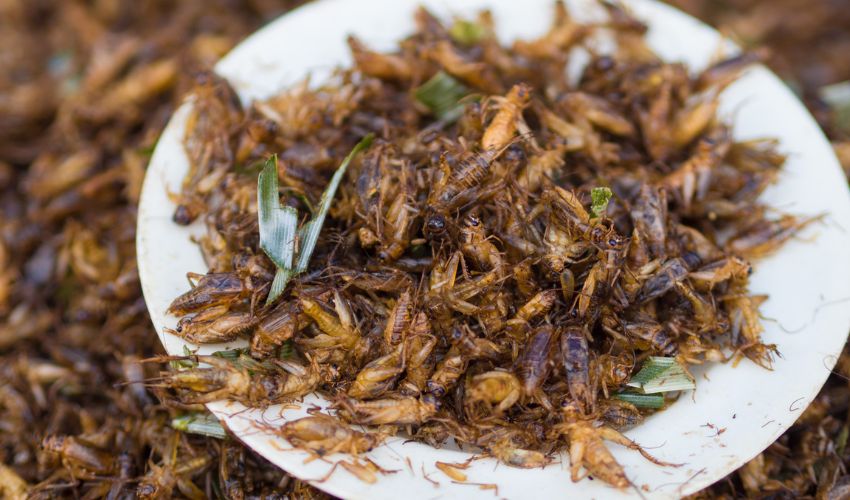 NewsCould 3D Printed Foods Made With Alternative Protein Sources Like Insects Prevent Food Crises?Researchers from the Singapore University of Technology and Design (SUTD) recently introduced a more sustainable 3D food printing approach. By using alternative protein sources including algae, plants, and insects, and combining them with more common nutrient-rich foods such as v