News
Could 3D Printed Foods Made With Alternative Protein Sources Like Insects Prevent Food Crises?
Researchers from the Singapore University of Technology and Design (SUTD) recently introduced a more sustainable 3D food printing approach. By using alternative protein sources including algae, plants, and insects, and combining them with more common nutrient-rich foods such as v
- 3 min read
- News
- Six more stories
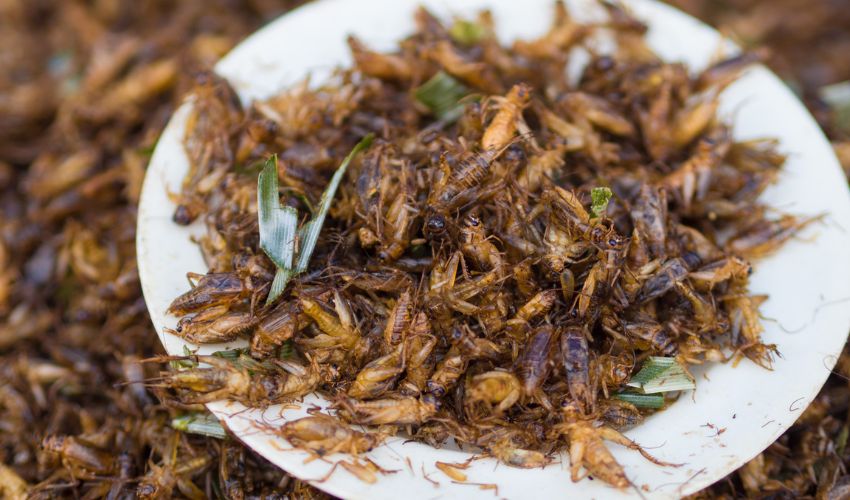
Researchers from the Singapore University of Technology and Design (SUTD) recently introduced a more sustainable 3D food printing approach. By using alternative protein sources including algae, plants, and insects, and combining them with more common nutrient-rich foods such as vegetables, the team is working toward finding a new way to address food supply challenges. The study called ‘Systematic Engineering approach for optimization of multi-component alternative protein-fortified 3D printing food Ink‘ was recently published in the latest issue of the journal, Food Hydrocolloids.
With each passing day, the menacing ecological crisis of our planet is coming closer to the point of no return. And while the sources of the environmental dilemma are also pretty clear to most of us, we tend to not always consider that besides the pollution of nature by plastic waste or emissions from engines, there are many other elements that play a role that need to be addressed at least as urgently as the obvious ones. A good example is the extensive demand for protein-rich food, which is the result of the world’s growing and aging population. While many new projects have emerged in the last few years that focus on simply switching animal protein with plant protein, the majority of people still prefer foods that are based on animals. The undesirable effects resulting from that preference are obvious: increased greenhouse gases, land and water consumption of animals and a variety of food supply challenges.
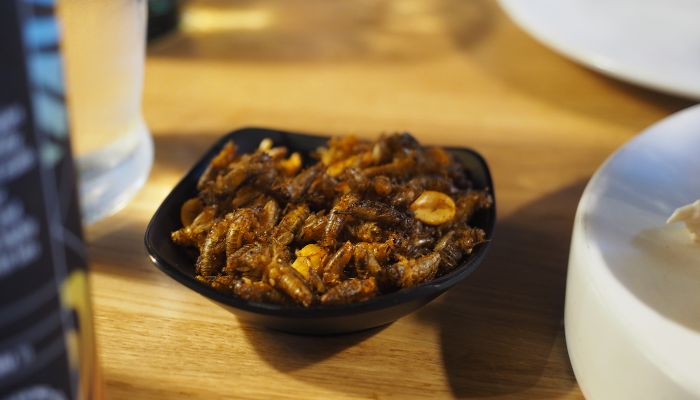
Eating insects is common in some countries (photo credits: JIP via wiki commons)
Creating Healthy Meals With Alternative Proteins
A recently introduced study by Singaporean researchers presented a new approach in which 3D printing can be used with alternate protein sources such as algae, plants, and insects to create nutritious and protein-rich meals. Although already established in some parts of Africa, Asia, and South America, the idea of eating insects is something many people in Western countries are most likely to stay away from. The mere suggestion of eating insects is met by the majority of people with negative reactions reaching from mild aversion and discomfort to feelings of horror or disgust, and that is highly unlikely to change anytime soon. What makes the new effort introduced by Prof Chua Chee Kai and his team from SUTD so special is that, by processing and mixing those protein sources with commonly known foods like carrots, it can be turned into much more visually appealing shapes using 3D food printers. Prof Chua Chee Kai explained, “The appearance and taste of such alternative proteins can be disconcerting for many. This is where the versatility of 3D food printing rises to the challenge as it can transform the way in which food is presented and overcome the inertia of consumer inhibitions.”
More from the desk
Six other notes from the rest of the bench.
 NewsFirst Ever 3D Printed School to Open in MadagascarThe first ever 3D printed school is set to open its doors later this year. It may seem that the novelty of this feat is somewhat lessened by the dozens of additive manufacturing construction projects preceding it. But rest assured,…
 NewsTCT 3sixty 2021: A Round-Up of the News from the EventSlowly but surely, additive manufacturing events are starting to start back up after more than a year of inactivity due to the health crisis. Last week yet another popular event took place in person, on the heels of its sibling…
 PrintersThe Top Compact, Industrial FDM 3D PrintersDespite the growth in other additive manufacturing technologies in other years, fused deposition modeling continues to dominate a large share of the market. This can be seen not only with a corresponding rise in commercial, lower-cost solutions in recent years,…
 News#TOP5 Videos: cat can walk again thanks to 3D printing, 3D printed collarbone and more!We found the TOP 5 videos of the week about 3D printing and the way additive manufacturing is shaping and changing our society. This week we touch on Carly, the cat that can walk again thanks to 3D printing, 3D printed…
 NewsMoving additive manufacturing from prototyping to productionEvery year, the 3D printing service Sculpteo publishes its annual report The State of 3D Printing, a study that provides more information on the use that professionals make of additive manufacturing. It also provides an overview of market trends, the…
 NewsUniversity of Bristol Tests 3D Concrete Printing for Earthquake SafetyIn recent years, 3D concrete printing has increasingly established itself as a legitimate technology in the construction industry. It can be used to produce buildings faster and more cost-effectively, so experts see great potential in 3D concrete printing to address…