News
UpNano develops high-resolution desktop 3D printing for micro parts
UpNano is a young company based in Vienna that has recently developed a high-resolution microscale 3D printing technology. Based on the 2-photon polymerization process (2PP), the new technique is capable of producing plastic parts with a volume ranging from 100…
- 3 min read
- News
- Six more stories
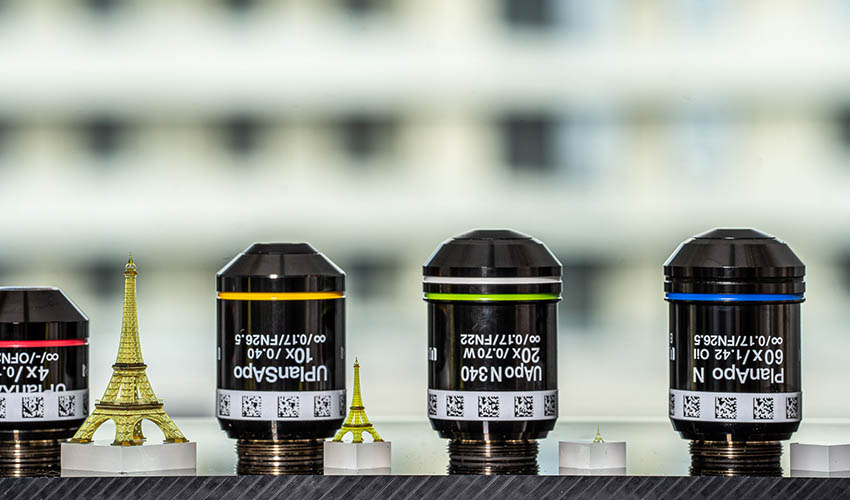
UpNano is a young company based in Vienna that has recently developed a high-resolution microscale 3D printing technology. Based on the 2-photon polymerization process (2PP), the new technique is capable of producing plastic parts with a volume ranging from 100 to 1012 cubic micrometers in just a few minutes, showcasing nanoscale resolution. The company is a spin-off of TU Wien, and is putting its technology at the service of R&D and applications in several sectors. We met with Denisa Mandt to learn more about the capabilities of their technology and plans for the future!
3DN: Can you present yourself and your relationship with 3D printing?
My name is Denise Mandt, I am co-founder of UpNano and responsible for marketing and sales. With a background in materials technology and biology, my first experiences with 3D printing were very early on. In my master thesis I worked with high-resolution 3D printing for the production of customized microfluidic chips. Today, together with Peter Gruber and Bernhard Küenburg, we are the founders of a young high-tech company, UpNano.
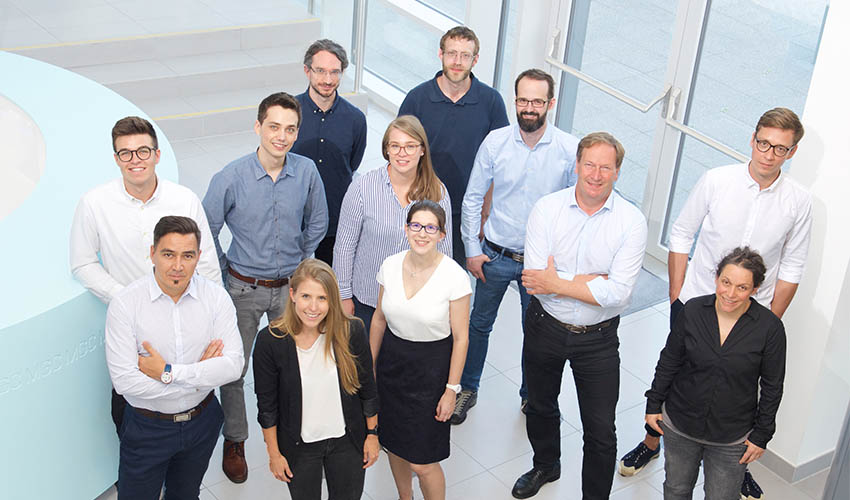
The UpNano team
3DN: Why is nano/micro-scale 3D printing a disruptive technology? What are the main benefits?
High-resolution 3D printing enables the production of parts that previously seemed impossible. The process is based on the principle of two-photon polymerization and, unlike classic SLA processes, is independent of the layer thickness. Once and for all, we put an end to the prejudice that “2PP printing is meant to be slow”. The trend of miniaturization has accompanied us for years, across all industries! The technology is on the pulse of time and meets the requirements of ever smaller and more precise components. With our process, we offer customers unmatched speed, the ability to produce to centimeter scale and biological applications. And all this in a compact desktop system.
More from the desk
Six other notes from the rest of the bench.
 NewsWho are the AM Manufacturers in China?In recent years, we have seen a real growth in the number of Chinese additive manufacturing players, particularly with the arrival of manufacturers offering small, highly accessible FDM machines or, on the contrary, more industrial machines compatible with more demanding…
 MaterialsDesktop Metal Acquires Aerosint and Launches Into Multi-material 3D PrintingFor several months, Desktop Metal has been making acquisitions. After buying EnvisionTEC this past January, the American firm announced a few months later the acquisition of Forust Corporation, a company specializing in wood additive manufacturing. Now the list continues to&helli
 SoftwareLink3D releases 3D printing post-production management appLink3D, one of the leading additive manufacturing workflow software providers, has recently announced the launch of a mobile application designed to help manufacturers manage post-production workflow. Aiming to give companies more control over their manufacturing processes, the n
 Guides#3DStartup: Replique on 3D Printing Secure Spare PartsAs 3D printing becomes more and more popular, large companies are trying to find ways to test the technologies. However, investing in machines can be expensive, especially when your workforce is not trained in additive manufacturing. Luckily, there are other…
 NewsResearchers use gold to detect defects in 3D printingResearchers at Vanderbilt University in the United States have developed a technique to detect anomalies that may occur in 3D printed parts. The gold particles are used for their ability to start shining as soon as an error appears. Simply put…
 NewsTop 5 Videos: Experience Formnext 2024!We’re back with this week’s selection of the Top 5 videos on additive manufacturing. First, watch our Formnext 2024 teaser to get excited for the world’s largest additive manufacturing event. Then, see how a car shop 3D prints parts for…