Materials
Fortify combining magnetics and DLP technology for 3D printing
Fortify is a young company that seeks to revolutionise the long delivery cycle and the often poor material quality of traditional manufacturing processes.The company was founded on research on composite 3D printing by Randall Erb and Joshua Martin at Northeastern…
- 3 min read
- Materials
- Six more stories
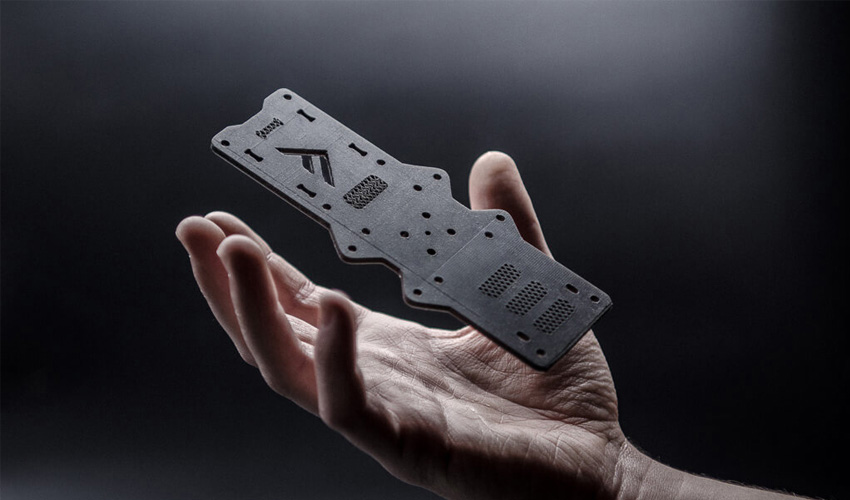
Fortify is a young company that seeks to revolutionise the long delivery cycle and the often poor material quality of traditional manufacturing processes.The company was founded on research on composite 3D printing by Randall Erb and Joshua Martin at Northeastern University. Its objective is to enable fast and transparent manufacturing of composites with optimised microstructures. Therefore, it has invented a 3D magnetic printing process called Fluxprint. It is a process that combines DLP technology and magnetics, offering a fast, fluid and high quality production. The technology is mainly intended for applications in automotive and aerospace industries. To learn more about Fortify’s process and future developments, we met Joshua Martin, CEO and co-founder of one of the most recognised startups in additive manufacturing today.
3DN: Can you introduce yourself and tell us more about Fortify?
My name is Josh Martin and I am the co-founder and CEO of Fortify. I have a PhD in materials’ science that focused on understanding the relationship between structure and ownership of biological compounds. In other words, biocomposites such as bones are made of relatively weak materials, but are designed to offer impressive mechanical properties. Fortify focuses on applying these principles to create robust composite materials.

3DN: Can you tell us more about Fluxprint technology?
Digital Composite Manufacturing™ (DCM) is an additive manufacturing platform that uses technical resins reinforced with special additives to produce high resolution parts. Fluxprint™ is our patented technology that controls the microstructure of printed parts by means of magnetic fields. It allows the printing of objects with reinforced and optimised structures for each geometry and each application.
More from the desk
Six other notes from the rest of the bench.
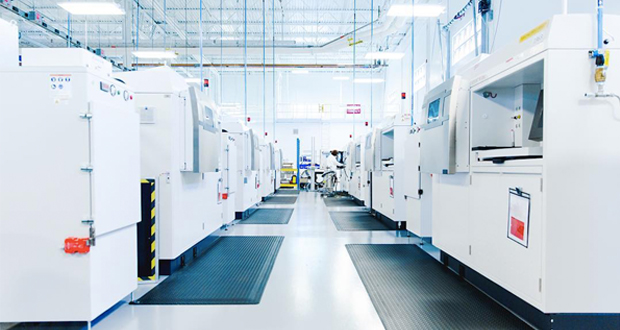 NewsECO 3D: The latest economic news in 3D printing for MayProgress towards the future of 3D printing continues to grow, whether it be in the introduction of new, promising technologies, or within the production chain of a company who has implemented additive manufacturing to propel their production even further. In…
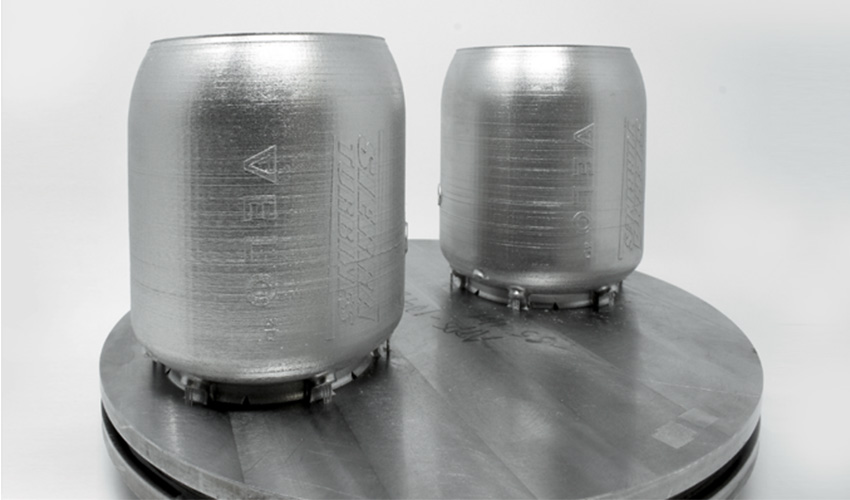 NewsAdvanced metal AM enables microturbines to be 40X more efficientA microturbine has historically been a simplified version of a gas turbine, suitable for a variety of applications: they are used in unmanned aerial vehicles (UAVs), to charge the batteries that drive motors, as range extenders, or in hybrid UAVs…
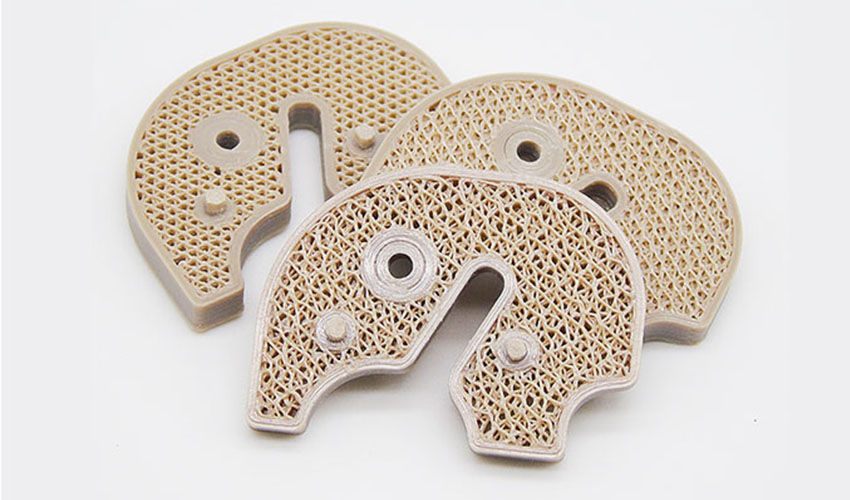 Guides3D printed porous scaffold structures can promote bone growth in patientsThe startup FossiLabs, based in the U.S., develops FDM 3D printers capable of producing medical implants made from PEEK. These high-performance implants resemble bone-like structures and can promote bone growth in patients with musculoskeletal disorders. Combining the properties
  ApplicationsCarbon and Lamborghini expand partnership to manufacture parts for the Sián FKP 37The collaboration between Carbon and Lamborghini made quite a bit of noise in the industry when it was announced in February. Carbon had created some parts for Urus, Lamborghini’s first SUV model. Since, the companies have been working on how…
 GuidesBoston Micro Fabrication Talks Micro-Scale Printing Using StereolithographyAdditive manufacturing continues to evolve, though rather than getting bigger, this time it’s getting smaller, microscopic even. Boston Micro Fabrication (BMF), based as the name suggests in Massachusetts in the United States, is known for their high precision micro 3D&hell
 ApplicationsWake Forest researchers create lab model of the human bodyUsing bioprinting techniques, researchers at the Wake Forest Institute for Regenerative Medicine have developed a miniature lab model of the human body. This model contains miniaturized human organs such as the heart, lungs and liver, and will be used to…