Guides
3D printed porous scaffold structures can promote bone growth in patients
The startup FossiLabs, based in the U.S., develops FDM 3D printers capable of producing medical implants made from PEEK. These high-performance implants resemble bone-like structures and can promote bone growth in patients with musculoskeletal disorders. Combining the properties
- 3 min read
- Guides
- Six more stories
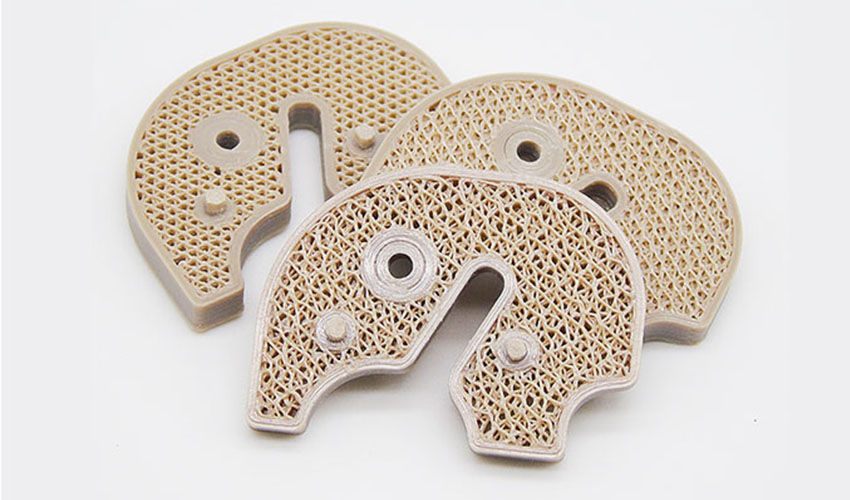
The startup FossiLabs, based in the U.S., develops FDM 3D printers capable of producing medical implants made from PEEK. These high-performance implants resemble bone-like structures and can promote bone growth in patients with musculoskeletal disorders. Combining the properties of PEEK with a 3D printing solution that can engineer porous structures is the innovative idea behind FossiLabs. In order to learn more about the company and how it is aiming to offer new solutions for the medical sector, we met Todd Reith, the Founder of the company. So, can 3D printed porous scaffold be a viable solution for musculoskeletal disorders?
3DN: Can you tell us more about yourself and your relationship with 3D printing?
I am a true entrepreneur who, over time, has become an expert in multiple disciplines. I started out in software development, creating some of the first online web banking applications, pharmaceutical database applications, and early artificial intelligence (AI) logic for target marketing applications. I then focused on designing headless guitars with high-tech carbon fiber components and custom electronics, including piezo sensors. The guitar business evolved to designing and manufacturing custom mother of peal inlay designs for other guitar manufactures and their respective artist instruments. My manufacturing path lead me to developing metal components and eventually machining fuel and shock components for Team Penske’s Indy Car Racing Team. Eventually I became involved with medical device implants.
I initially had no interest with 3D printing. It was just a toy that made useless plastic trinkets. By random chance, a co-worker asked me to help him troubleshoot and fix his 3D printer. Frustrated with the poorly made piece of equipment and software interface, I stated to my co-worker, I could make a better machine. I was sucked into the craze of additive machining. I obsessively researched and absorbed all the information I could find. Three months later, I built my first high-temperature 3D printer. After 3 distinctly different businesses, FossiLabs, ties in all my past acquired skills. It is very exciting to be able to use all the disciplines I have perfected over the past 20+ years.
More from the desk
Six other notes from the rest of the bench.
 NewsTop 5 Videos: ‘Airless’ – Wilson’s 3D Printed Basketball Is a Slam Dunk in InnovationGet ready for the top 5 videos of the week that will take you on an exhilarating journey through the world of 3D printing! First up, we learn about the fascinating story behind the world’s first 3D printed basketball and…
 NewsTop 5 Videos: SLM Solutions launches NXG XII 600 and more!This week we found the top 5 videos about 3D printing and the way additive manufacturing is changing production. The technology has infiltrated many sectors, from medical to automotive: check our selection of the week to keep up with the innovations! If you enjoy these, you&helli
 NewsRoyal Caribbean and Snapchat bring 3D printing underwaterSnapchat, the video and photo-sharing app, is the cornerstone of many people’s vacations; used as a key form to show off your latest foodie endeavor or the latest beach you’ll be laying on for the next week. Now, thanks to…
 NewsHow Is 3D Printing Changing the Wind Energy Sector?The growing use of 3D printing is spreading across a variety of sectors, with more and more companies recognizing its benefits in manufacturing processes. The energy sector is no exception. According to a report from Additive Manufacturing Research, the 3D…
 PrintersTop 3D Scanner Apps for Android and iOSObtaining a 3D file for printing can be done in many ways: free or paid download from a dedicated platform, modeling from an adapted CAD software or 3D scanning via a 3D scanner. Today there are a multitude of solutions…
 NewsTop 5 Videos: How is 3D Printing Done in Space?For this week’s installment of Top 5, we’re including our #3DInterview with Ahmed Mahil, CEO and Global President of the 3D printing company Luyten. He dives into how 3D printing is done in space, the origins of his company’s name,…