Materials
Could Flame-Retardant Bioplastics Soon Be Used in AM?
Materials used in electrical engineering or electronics must conform to high demands. This is especially the case since these materials must have properties such as flame resistance. It is well known that in this case plastics meet the necessary flame…
- 3 min read
- Materials
- Six more stories
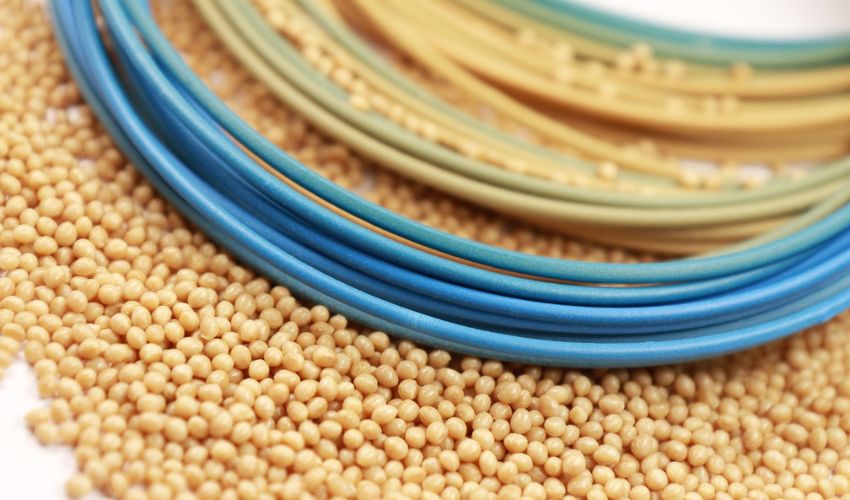
Materials used in electrical engineering or electronics must conform to high demands. This is especially the case since these materials must have properties such as flame resistance. It is well known that in this case plastics meet the necessary flame retardancy requirements needed for use in electrical engineering and electronics, but what about flame-retardant bioplastics? Researchers at the Fraunhofer WKI and the Fraunhofer IAP have asked themselves this question in joint collaboration with industrial partners and have already been able to celebrate initial successes in the course of their research not only developing flame-retardant bioplastics but also showing that the materials are compatible with additive manufacturing.
Before the research results of the Fraunhofer Institutes, there was no known bio-based flame-retardant that would be suitable for the development of bioplastics. With this challenge in mind, the focus was therefore on a halogen-free flame retardant that would be extremely cost-effective to use, since it is needed primarily in extremely small quantities. At the beginning of the research project for the development of bio-composite materials suitable for both electrical engineering and electronics, the focus was on the production of new, bio-based flame retardants. For this purpose, syntheses based on bio-based alcohols and phosphorus-containing compounds were carried out.
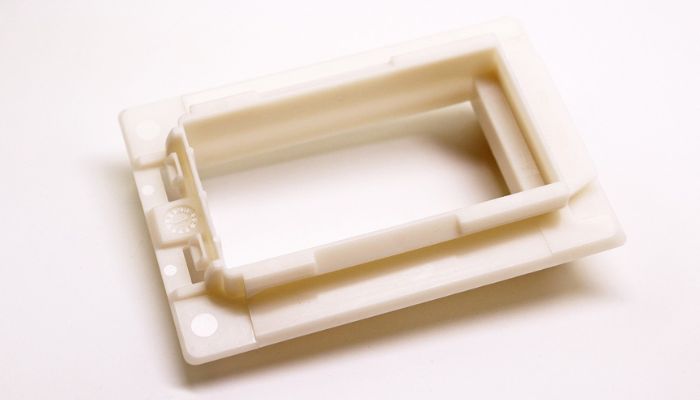
Together with Hager Electro, for example, they produced a tunnel slide made of flame-retardant polybutylene succinate (PBS) (photo credits: Fraunhofer WKI | Manuela Lingnau)
A New Flame-Retardant Bioplastic Innovation
However, in order for the flame retardant factor to be given in the first place, it is important to understand that the uniform distribution of the flame retardant within the matrix of the PLA biopolymer is required. To achieve this bonding of the flame retardant to this matrix, electron beam crosslinking was used, which is a non-thermal process. While this process is extremely common when it comes to plastics, it is not yet very proven with bioplastics. To change this, however, the properties of the polymers must be modified.
More from the desk
Six other notes from the rest of the bench.
 NewsA New Technology Can Create 3D Models Using SoundAdditive manufacturing can be used in a wide range of fields and applications. Bioprinting in particular has shown real promise in the medical field. In this process, cellular structures are produced from a bio-ink to create skin, tissue and organs.…
 NewsInfographic: 3D Printing in Fashion3D printing is a tool that is gaining great popularity among the most recognized designers in the fashion world. For example, we can point notably towards the jewelry sector where, according to a report by SmarTech Analysis, the 3D printing…
 GuidesKicmed Turns to 3D Printing to Develop an Innovative Cryotherapy SolutionThe medical industry in France is constantly innovating to improve healthcare, enhance patient comfort, and make practitioners’ daily lives easier. One of the latest gems we’ve discovered is Kicmed, a startup based in the Nantes region. The company has developed…
 NewsNC State Researchers Develop Novel 3D Printable JellyOver the years, researchers have combined 3D printing and hydrogels for a variety of different innovative projects including a lifelike model of a human heart, cancer treatment, artificial muscle tissue able to adapt its color and shape according to light,…
 NewsEuropean Hyperloop Week, Innovative 3D Prototypes for the Transport of the FutureHave you heard of the Hyperloop project? The construction of this mode of transport consists of large tubes close to the vacuum through which capsules move. The initiative proposed by Tesla and SpaceX aims to transport people or goods at speeds…
 Guides#3DStartup: One Click Metal Wants to Make Metal Additive Manufacturing Accessible to AllWe first met German startup One Click Metal at Formnext 2019. Its goal is clear: it wants to democratize access to metal additive manufacturing by offering a printing solution that is easier to use, a powder system that is less…