Materials
A filament based on boron carbide, one of the hardest materials on the market
Additive Composite and Add North are two Swedish companies that have worked together to develop a composite filament based on boron carbide, one of the hardest materials on the market after diamond and cubic boron nitride. Marketed under the name…
- 3 min read
- Materials
- Six more stories
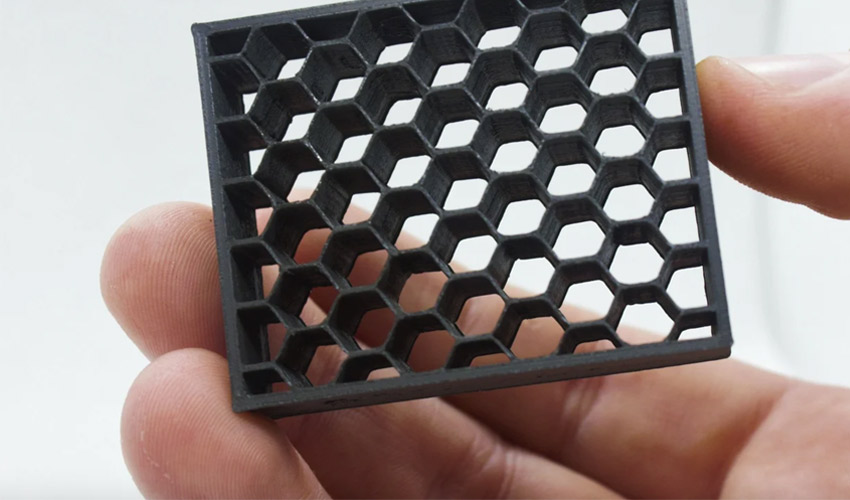
Additive Composite and Add North are two Swedish companies that have worked together to develop a composite filament based on boron carbide, one of the hardest materials on the market after diamond and cubic boron nitride. Marketed under the name Addbor N25, it is made of nylon to which boron carbide has been added: the aim of the two companies is to offer a filament capable of resisting radiation.
Last week, we spoke to you about composite 3D printing, its advantages and the technologies available on the market. It was explained that most composite materials are made of carbon fibre, but also glass or aramid. It therefore appears that boron carbide is quite innovative in the additive manufacturing market. It is a mineral material with very high hardness, low density and extremely high temperature resistance, ideal for shielding and nuclear applications for example. Due to its properties, Additive Composite and Add North have chosen it as a component of their new 3D printing filament.
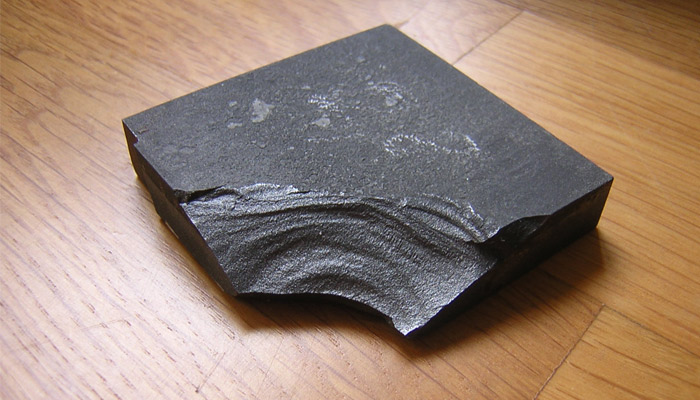
Boron Carbide is one of the hardest materials on the market.
Addbor N25 would be made of 25% boron carbide, the rest being nylon: Add North points out that this technical polyamide already has interesting characteristics for the industry such as its strength and low shrinkage. It is therefore reinforced by boron carbide which ensures effective absorption against neutrons and therefore shielding capabilities against radiation. Adam Engberg, CEO of Additive Composite, adds: “Additive manufacturing changes the number of products designed and manufactured. We believe that Addbor N25 contributes to this development and helps both industry and large research facilities to replace toxic materials that could eventually contaminate the environment. Our new product is the first in a range of radiation shielding materials that we are currently developing.” Indeed, the composite replaces certain metals such as cadmium, a material banned from the market because of its high toxicity.
More from the desk
Six other notes from the rest of the bench.
 NewsTop 5 Videos: Ford Motor Co. and Carbon discuss 3D printingThis week we found the top 5 videos about 3D printing and the way additive manufacturing is changing production. The technology has infiltrated many sectors, from medical to automotive – check our selection of the week to keep up with the innovations! If you enjoy these, you&hell
 NewsCoachella Valley to have World’s First Neighborhood of Zero-Net Energy 3D Printed HomesA few months ago we interviewed Mighty Buildings, a company dedicated to the construction and delivery of residences built using concrete additive manufacturing. A few days ago the company announced a partnership with Palari Group, a builder specializing in sustainable…
 GuidesVIP TIE and its 3D printed luxury tiesThe search for personalisation is a key issue in the fashion industry and 3D printing could well answer it more effectively. There are many examples, from Iris van Herpen’s collection to Julia Daviy’s skirt: 3D technologies offer a unique look…
 NewsTOP 5 VIDEOS: Failure is key to 3D printing successThis week we found the top 5 videos about 3D printing and the way additive manufacturing is shaping our society. The technology has infiltrated many sectors, from medical to space! Check out our selection of the week to keep up with the innovations! This week we…
 ApplicationsSingapore Launches 3D Printed Component Into Space for the First TimeWe often hear of the major 3D printing projects in space from companies like SpaceX and NASA, but the space race does not just include the USA. Singapore has proved itself part of the industry, with the launch of its…
 ApplicationsResearch Begins On 3D Printed Drugs For Pediatric CareIn 2022, the global pharmaceutical industry was valued at $1.4 trillion, but it has only been in the past few years that more buzz has surfaced about 3D printed medications and how their production could revolutionize the way we take…