Materials
Everything You Need To Know About Silicon Nitride in 3D Printing
One of the strengths of additive manufacturing is its compatibility with a wide range of materials, from polymers to metals, including concrete and even food pastes. The technology is also increasingly being used with ceramics, especially in their technical variants.…
- 3 min read
- Materials
- Six more stories
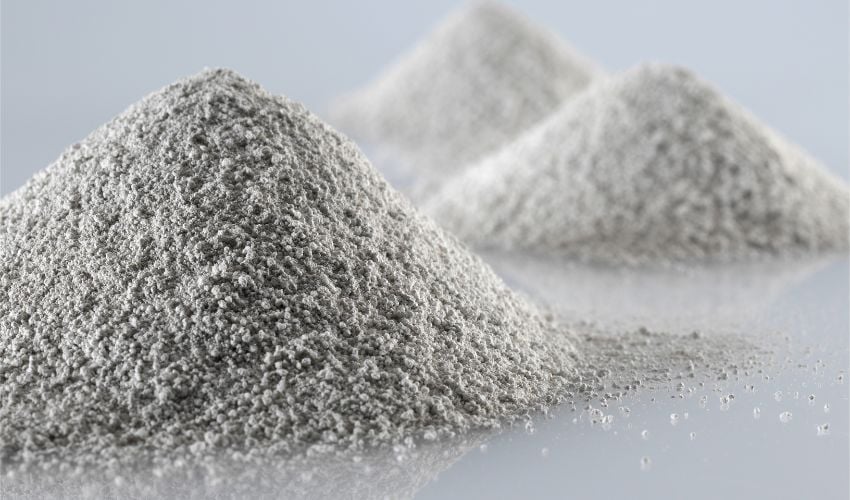
One of the strengths of additive manufacturing is its compatibility with a wide range of materials, from polymers to metals, including concrete and even food pastes. The technology is also increasingly being used with ceramics, especially in their technical variants. Ceramic 3D printing offers numerous advantages across various sectors. While zirconia and alumina are the most common on the market, another technical ceramic is increasingly in the spotlight: silicon nitride, a non-oxide ceramic that offers extremely interesting thermomechanical properties. But what are the properties of silicon nitride in 3D printing? Let’s take a closer look!
Silicon nitride (Si₃N₄) is produced by heating silicon powder in a nitrogen atmosphere. It is one of the hardest and most durable technical ceramics available on the market. With a low density, it exhibits good resistance to thermal shock as well as excellent wear and corrosion resistance. Silicon nitride can withstand very high heating followed by rapid cooling without cracking. It is therefore a particularly interesting ceramic for all brazing and welding applications.
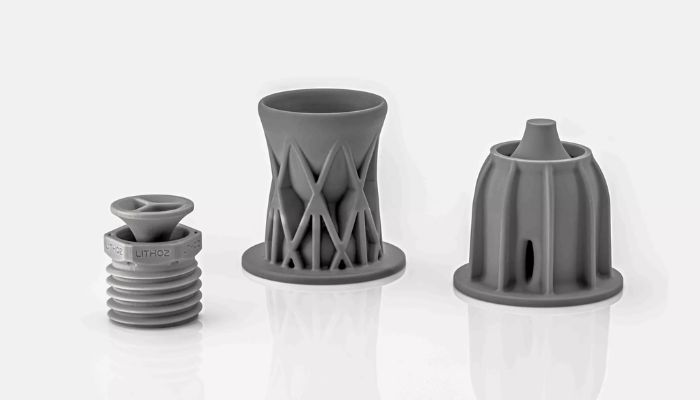
Parts made with LithaNit 780, Lithoz’s silicon nitride solution. (Photo Credit: Lithoz)
How is silicon nitride used in 3D printing?
Like most technical ceramics on the market, silicon nitride comes in various forms, allowing the use of different 3D printing processes to design complex parts. First of all, material extrusion can be used—more specifically, a pellet-based 3D printer. As for filament usage, manufacturers are rarer, but some thermoplastics exist, such as those from Spectrum Filaments. According to their website, “the organic content of the filament is approximately 21.5%.”
More from the desk
Six other notes from the rest of the bench.
 NewsThe Biggest Formnext Trends of 2019Held in Frankfurt every year, Formnext is undoubtedly the largest professional additive manufacturing event in the world. During the fifth edition of Formnext in 2019, the 3Dnatives team had the opportunity to see first-hand the most important trends in the…
 ApplicationsAM-IMATE Project Researches Fungus-Based Biological Building Materials for Aerospace applicationsBuilding on the moon and distant planets may sound like a distant dream (although we have seen a few projects already), but research is already well underway. As part of the five-year AM-IMATE project, researchers at Delft University of Technology…
 Printers3Dnatives Lab: Testing the Artec Ray 3D ScannerLuxembourg-based manufacturer Artec 3D has specialized over the years in the development of portable 3D scanners such as the Eva, the Space Spider and the Leo. More recently, the company has also broadened its spectrum of applications by unveiling 3D…
 NewsTop 5 Videos: FDM Technology ExplainedAnother week is over and like every Sunday, we have put together a top 5 list of videos related to additive manufacturing for you to enjoy! Our weekly top 5 starts off with a closer look at FDM technology, the…
 ApplicationsFluorescent 3D Printed Rings, a Promise for Tomorrow’s Implants?The term for discoveries made by chance is “serendipity”. Some of the most remarkable scientific breakthroughs include radioactivity, X-rays and the discovery of penicillin. Recently, this same serendipity led to a new breakthrough in additive manufacturing. Two researchers from
  ApplicationsFord Motor Company purchases new Production System P-1 from Desktop MetalAlready a leader in additive manufacturing in the automotive sector, Ford does not intend to stop here. The American firm has confirmed that it has already ordered the P-1, Desktop Metal‘s latest 3D printer, and will be one of the…