Applications
Fluorescent 3D Printed Rings, a Promise for Tomorrow’s Implants?
The term for discoveries made by chance is “serendipity”. Some of the most remarkable scientific breakthroughs include radioactivity, X-rays and the discovery of penicillin. Recently, this same serendipity led to a new breakthrough in additive manufacturing. Two researchers from
- 3 min read
- Applications
- Six more stories
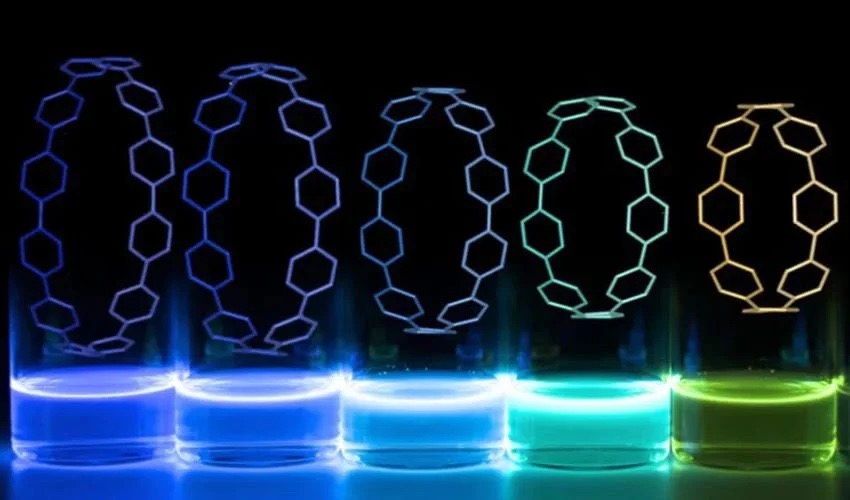
The term for discoveries made by chance is “serendipity”. Some of the most remarkable scientific breakthroughs include radioactivity, X-rays and the discovery of penicillin. Recently, this same serendipity led to a new breakthrough in additive manufacturing. Two researchers from the University of Oregon, chatting informally, came up with the idea of merging their skills to create fluorescent 3D printed rings for medical applications. These rings could pave the way for the development of a new type of luminous implant, facilitating tracking and monitoring once inserted into the body.
The researchers involved in this study are Paul Dalton, from the Phil and Penny Knight Campus for Accelerating Scientific Impact, and Ramesh Jasti, from the Department of Chemistry and Biochemistry at the University of Oregon. Paul Dalton’s lab has been interested for some time in a printing technique called “Melt Electrowriting”, which can be used to create 3D parts for medical applications. Meanwhile, Ramesh Jasti’s laboratory is renowned for its work on “nanohoops”, carbon cylinders that emit light when exposed to ultraviolet light. Together, the researchers have succeeded in incorporating the ideal amount of fluorescent nanohoops into 3D printing material, producing long-lasting, biocompatible luminous structures.
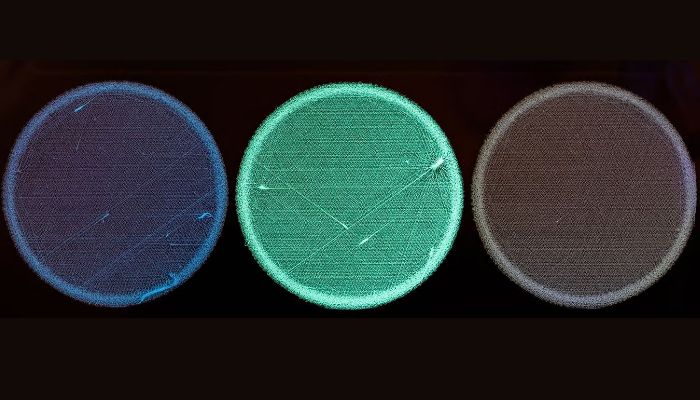
The rings glow in ultraviolet light, emitting different colors depending on their size and structure.
What You Need to Know About the Fluorescent 3D Printed Rings
According to the researchers, similar structures with luminescent properties have been considered before, but never realized. In addition to requiring a specific 3D printing technique, most fluorescent molecules decompose after prolonged exposure to heat. This is where Jasti’s work stands out, as his “nanohoops” are stable, even at high temperatures. After conducting tests to verify that the nanohoops retain their properties when integrated into the 3D printing material, the researchers found that they lost neither strength nor stability. In addition, they confirmed that the addition of fluorescent molecules did not affect the material’s toxicity to cells, which is crucial for its use in biomedicine.
More from the desk
Six other notes from the rest of the bench.
 MaterialsWhat Are the Material Trends in Additive Manufacturing?Research firm IDTechX recently published a new report examining micro-trends in additive manufacturing materials for 2022. Materials are a key component of the AM market, which has been heavily impacted by the pandemic, though, the market continues on a growth…
 NewsHow is Formlabs strengthening its presence in Europe?The American manufacturer Formlabs is one of the historical players in the 3D printing market, particularly in the stereolithography segment. Today, the company employs more than 500 people in 7 offices worldwide and has already produced more than 40 million…
 NewsTop 5 Videos: 3D Printing for Formula SAE Race Cars!We’re back with another Top 5 Videos related to the 3D printing industry, and as always, we have videos you don’t want to miss. First up, watch our exclusive interview with Kilometro Rosso and Polimarche Racing to learn how they’re…
 NewsCleanr Is Creating Microplastic Filters for Washing Machines Using 3D PrintingCurrently, the world is facing a number of different climate crises. For example, scientists are looking for solutions not only for global warming but also extinction of species, water shortages and food security. Throughout all of these, one of the…
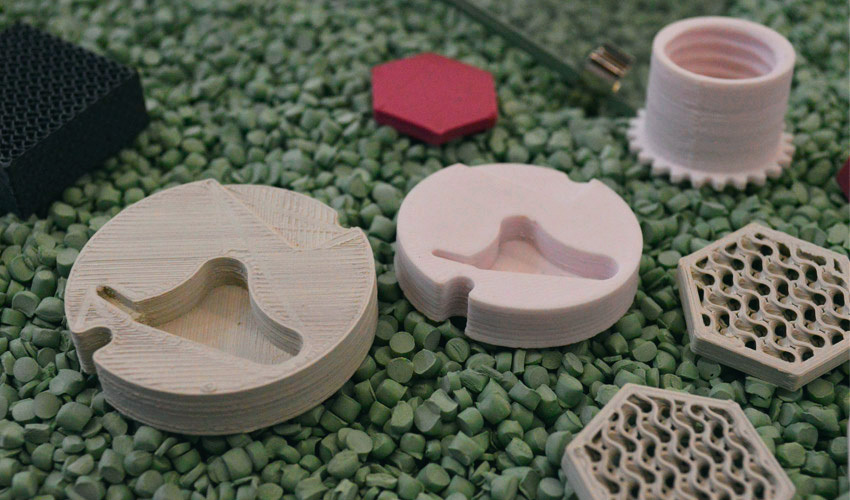 MaterialsTechnical Ceramics in Additive ManufacturingTechnical ceramics, as opposed to artisanal or artistic ceramics, are materials that have been used for centuries in many industrial sectors. They are renowned for their temperature resistance, hardness and mechanical properties. In the additive manufacturing sector, ceramics are
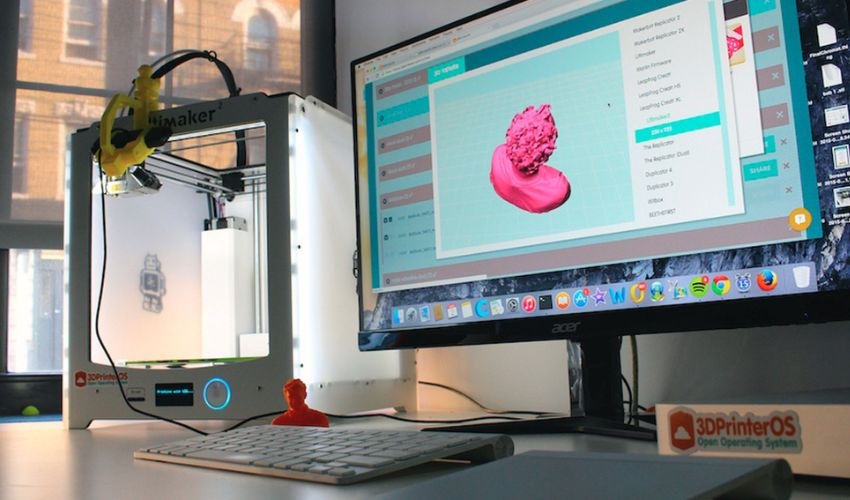 Software3DPrinterOS: A Set of Software Solutions for 3D PrintingToday, let’s take a close look into 3DPrinterOS—a user-friendly software solutions platform tailored for 3D printing enthusiasts. Serving as an open-source operating system for 3D printers, 3DPrinterOS streamlines tasks by eliminating the need to juggle multiple programs an