News
The Complete Guide to Electron Beam Melting (EBM) in 3D Printing
Electron Beam Melting (EBM) is part of the powder bed fusion family. Unlike Laser Powder Bed Fusion (LPBF), it uses, as its name suggests, an electron beam to fuse metal particles and create, layer by layer, the desired part. Marketed…
- 3 min read
- News
- Six more stories
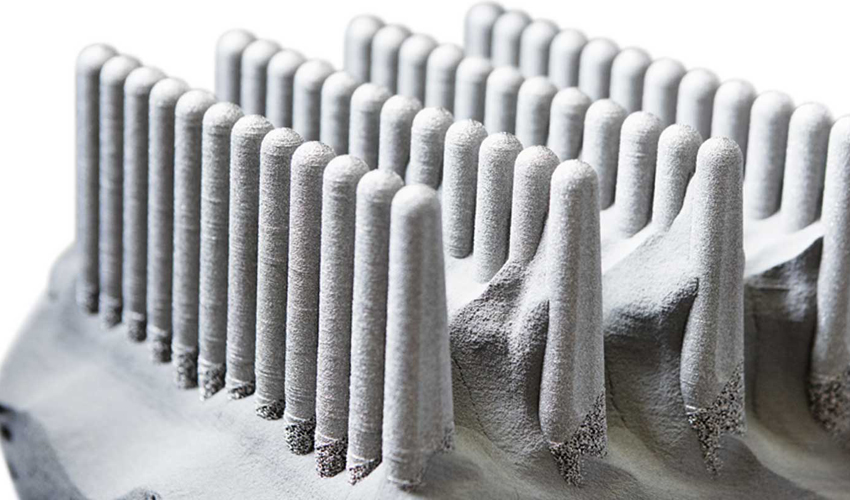
Electron Beam Melting (EBM) is part of the powder bed fusion family. Unlike Laser Powder Bed Fusion (LPBF), it uses, as its name suggests, an electron beam to fuse metal particles and create, layer by layer, the desired part. Marketed by the Swedish company Arcam in 2002, this process enables the creation of complex and highly resistant structures. Note that Arcam was acquired by GE Additive in 2016 and is the only one to market machines based on this process as of today.
The main difference with LPBF technology is therefore the heat source used. Here, EBM technology uses an electron beam produced by an electron gun. The latter extracts the electrons from a tungsten filament under vacuum and projects them in an accelerated way on the layer of metallic powder deposited on the building plate of the 3D printer. These electrons will then be able to selectively fuse the powder and thus produce the part.
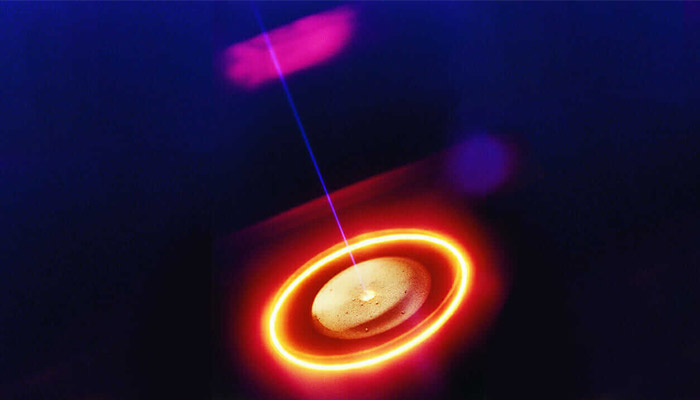
The EBM technology uses an electron beam | Credits: Arcam
The Electron Beam Melting process
Everything starts with the 3D modeling of the part you wish to create. You can model it using CAD software, obtain it by 3D scanning or download a model of your choice. The 3D model is then sent to a slicing software, also called slicer, which will cut it according to the successive physical layers of deposited material. The slicer will then send all this information directly to the 3D printer, which can then start its manufacturing process. The metal powder can be loaded into the tank within the machine. It will be deposited in thin layers that will be preheated before being fused by the electron beam. In particular, this step provides more support to the cantilever areas of the part being 3D printed. The machine then repeats these steps as many times as necessary to obtain the entire part.
More from the desk
Six other notes from the rest of the bench.
 NewsTop 5 Videos: Emirates, GE & More!This week’s Top 5 Videos contains a variety of interesting videos from companies, and researchers. These range from new printing processes, to plans to build 3D-printing drone armies that can build shelters for those affected by natural disasters. Remember, a…
 NewsReproducing caves from China’s Yungang Grottoes with AM3D printing technologies can bring art and cultural heritage closer to people. Through exact replicas, experiencing artwork, buildings and artefacts has become easier. These replicas can be modeled from 3D scanning data, and then produced using additive manufacturing technologies
 NewsHow Boom Supersonic 3D printed parts for the XB-1Just a few months ago Boom Supersonic launched their XB-1 aircraft. The XB-1 is a high speed jet that has often been compared to the now extinct Concorde. The company have now released a detailed study into how the aircraft…
 NewsSolo 8, an affordable robot dog?More often than not robotics and 3D printing are a combination that guarantees success. The capabilities provided by robotics together with the reduced production time and costs of additive manufacturing make it an efficient solution for many application areas. This…
 MaterialsWhat Technical Ceramics Are Compatible With Additive Manufacturing?Though the first thing that comes to mind for many when you mention ceramics is pottery or porcelain, technical ceramics are actually some of the strongest and toughest materials on Earth. Broken into two categories, oxides and non-oxides, the main…
 NewsSIEMENS announces plans for a new online platform to bring additive manufacturing to a global scale3D printing is quickly becoming the go to technology for many companies and manufacturers around that world. That’s why it’s no surprise to hear that the Germany based company, Siemens has made an announcement at Hannover Messe 2017 of their plans…