News
Reproducing caves from China’s Yungang Grottoes with AM
3D printing technologies can bring art and cultural heritage closer to people. Through exact replicas, experiencing artwork, buildings and artefacts has become easier. These replicas can be modeled from 3D scanning data, and then produced using additive manufacturing technologies
- 3 min read
- News
- Six more stories
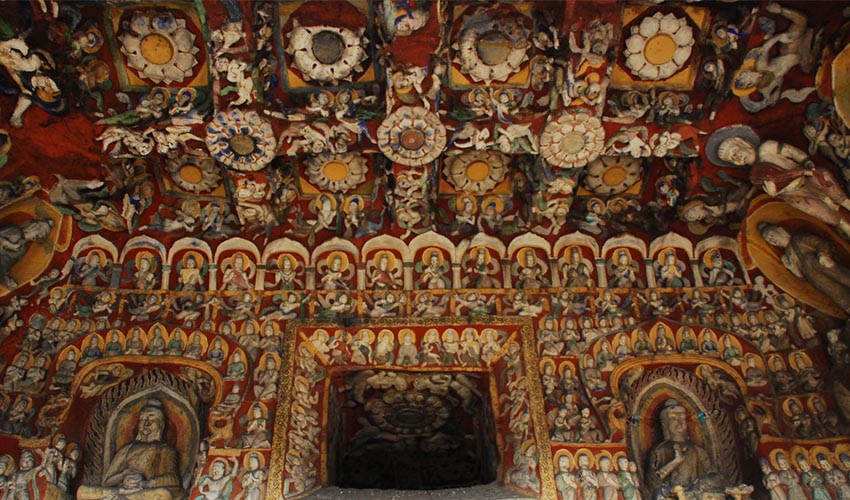
3D printing technologies can bring art and cultural heritage closer to people. Through exact replicas, experiencing artwork, buildings and artefacts has become easier. These replicas can be modeled from 3D scanning data, and then produced using additive manufacturing technologies. People getting closer to these reproductions does not damage the real life objects, and their reconstruction can enhance research, documentation and preservation.
For the last five years, the Yungang Grottoes Research Institute in the city of Datong (in the Shanxi province of China) has been using 3D printing technology to replicate some of the famous caves from the 1,500-year-old Yungang Grottoes, a UNESCO World Heritage Site. Recently, the institute announced that it had successfully made a full-size replica of one of the caves in the Yungang Grottoes. This replica is expected to debut soon in one of the museums of the Zhejiang province. According to the official state-run Chinese press agency, Xinhua News, the replicated grotto is based on the original Cave Number 12 (known as the Cave of Music).
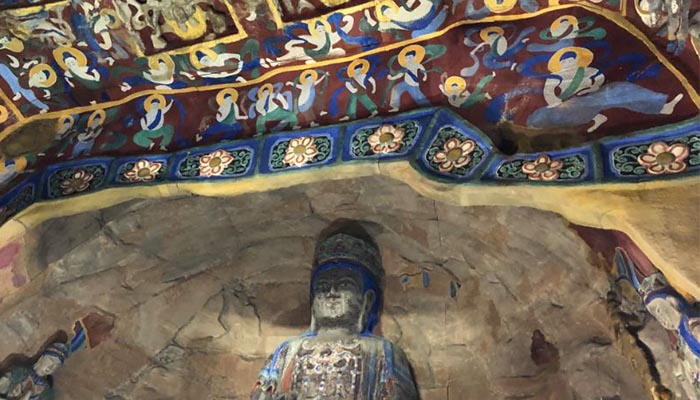
The sandstone of the cave is bathed in hues of red and yellow that make each piece of carving stand out from the rest.
The Chinese press agency explains that reconstructing Cave Number 12 involved more than 1,300 3D printed modules. The replica stands at nine meters tall, 12 meters wide and 14 meters long. The original Cave of Music’s intricate designs displays row upon row of carved musical instruments, statues, and references to the Buddhist faith. The sandstone of the cave is bathed in hues of red and yellow that make each piece of carving stand out from the rest. No wonder this project took some time to flourish. In fact, the Yungang Grottoes Research Institute took 3 years to complete the replica. Steps involved data collection and processing, 3D printing of the modules and post-processing steps such as colouring.
More from the desk
Six other notes from the rest of the bench.
 NewsWEBINAR SERIES – Beyond Prototyping: Innovative AM Applications & MaterialsAdditive manufacturing is advancing at an incredible pace, with new innovations emerging all the time. Yet, one of the biggest challenges can simply be knowing what’s possible. That’s why we partnered with Stratasys to bring you a webinar series you…
 NewsBCN3D’s successful year reflects on a larger trend of growth in the 3D printing sectorFor the additive manufacturing industry, 2020 has been a year of great change, both positive and negative. Many companies have taken advantage of their capabilities to grow in the sector, while others have not been able to withstand the impact…
 Printers#3DStartup: AMFREE Overcomes the Constraints of XXL Metal 3D PrintingWhile metal additive manufacturing seems to be ever-expanding, the market still faces a number of challenges, particularly when it comes to producing and repairing large-format parts. The solutions available on the market are often unreliable, and the parts produced are…
 GuidesThe Top Applications of 3D Printing in the Movie IndustrySpecial effects have become a major attraction for moviegoers, and it’s no surprise that additive manufacturing is gaining ground in the film industry. 3D technologies are being widely employed on diverse film sets, ranging from animated movies to Marvel blockbusters&hellip
 ApplicationsChina 3D Prints First PEEK Clavicle ImplantThe medical team at Kunming Medical University Hospital in China, in collaboration with the company IEMAI 3D successfully transplants the first clavicle printed in 3D with PEEK. What does this milestone mean for the medical sector? How important is the…
 NewsStratasys Enters the Powder Bed Fusion Market with its SAF ProcessStratasys, a historical player in additive manufacturing, has announced that it is officially entering the powder bed fusion market with a new patented process called Selective Absorption Fusion (SAF). This is a first for the Israeli-American giant, which until now…