Software
DyeMansion and Stratasys Jointly Create Reference Architecture for Production-Scale Additive Manufacturing
The additive manufacturing industry never sleeps. This has been proven again by Stratasys and DyeMansion, who, after unveiling new machines and solutions within the last two months, have now announced that they are working together on a new project. Leading…
- 3 min read
- Software
- Six more stories
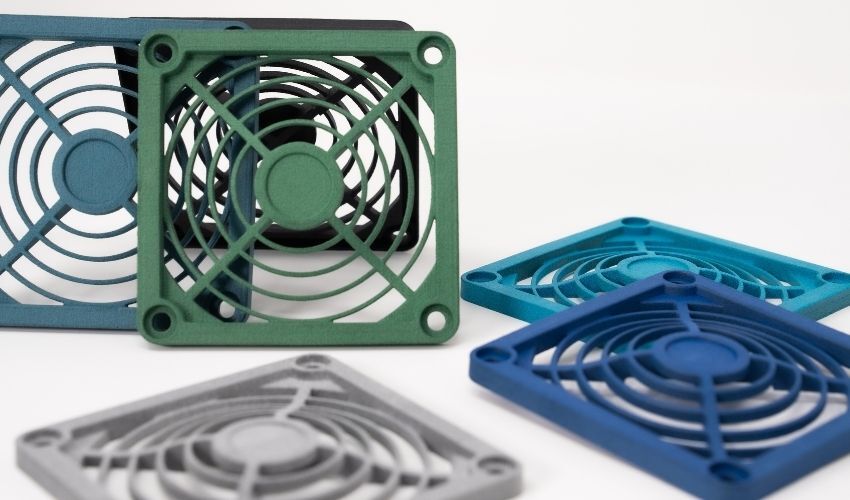
The additive manufacturing industry never sleeps. This has been proven again by Stratasys and DyeMansion, who, after unveiling new machines and solutions within the last two months, have now announced that they are working together on a new project. Leading provider of post-processing solutions for industrial polymer 3D printing DyeMansion unveiled its new Powershot Performance Series with three new machines during a live stream in March. Stratasys, on the other hand, shined just last week when it presented three new high-end polymer 3D printing solutions – the Stratasys H350™ 3D printer, the Stratasys Origin One and the Stratasys F770™ 3D printer. Together, the two established companies aim to create a reference architecture for production-scale additive manufacturing. To find out more about this exciting news, DyeMansion co-founder and CEO Felix Ewald agreed to sit down for an interview with us for quite an insightful conversation.
Stratasys had already started planning the move last spring and thus started looking for a partner in the post-processing sector. In the fall of 2021, after successful joint tests with various processes, the partnership between Stratasys and DyeMansion was agreed upon. Since an important point is global sales, DyeMansion was also able to convince a branch in East India and worldwide partners as well as resellers to work with them. The jointly created reference architecture is intended to show concrete possibilities for additive series production of end-use parts and thus make purchasing decisions easier for those interested in 3D printing. After all, the choice is enormous these days: Which 3D printer do I decide on? Which processes are possible? Which material is compatible with which printer? Which post-processing methods do I need for which 3D printing technologies? The questions are endless, and companies and individuals faced with a purchasing decision are often at a loss. This is precisely why Stratasys and DyeMansion have made it their goal to provide clarity for users through their reference architecture. Felix Ewald comments, “It’s about creating transparency. It’s about the customer knowing, ‘What do I get and what does it cost me?’ – Without having to show 100,000 options.” The aim is to clearly show the customer which workflow will produce which result and at what price.
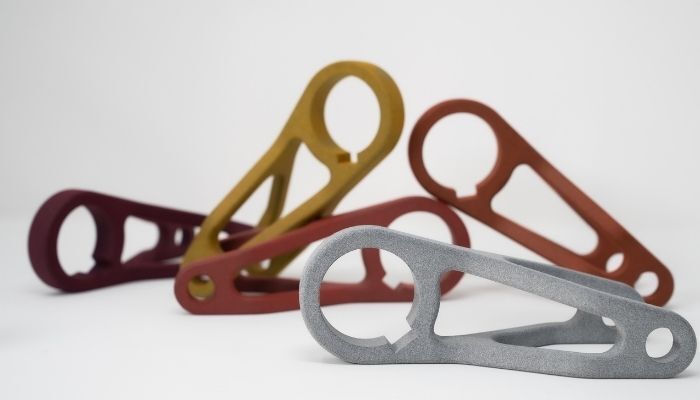
However, this is not the only special feature of the reference architecture. Of course, in the long run, additive manufacturing can save costs by eliminating the need for supply chains and enabling rapid manufacturing. There are also complex structures, such as shoe soles, that simply could not be produced using conventional manufacturing methods. It becomes even more impressive when it comes to individualized series production – because the 3D printing solutions from Stratasys and DyeMansion create reproducibility at affordable prices. As a prime example, Felix Ewald cites the Swiss eyewear manufacturer Götti, which “now offers well over 50 models in 12 different colors in 3 different standard sizes [as well as] the option to customize the whole thing.” Additive manufacturing, he says, allows a pair of glasses to be ordered individualized and ready to be produced within a week. This creates such a wide range of variants that would not be possible with traditional processes.
More from the desk
Six other notes from the rest of the bench.
 NewsHow Veterinary Medicine Benefits From Additive ManufacturingThey are considered man’s best friend and occupy a large place in our hearts and sometimes on our sofa: we are talking of course about animals, specifically pets. Since the beginning of time, humans have lived together with animals and…
 MaterialsThe Top Hybrid Materials to Replace Classic Filaments for your 3D PrinterThe process of 3D printing by extrusion, also known as deposition of molten material, is one of the most popular and commonly used methods in the additive manufacturing market. This is due to its ability to offer a wide range…
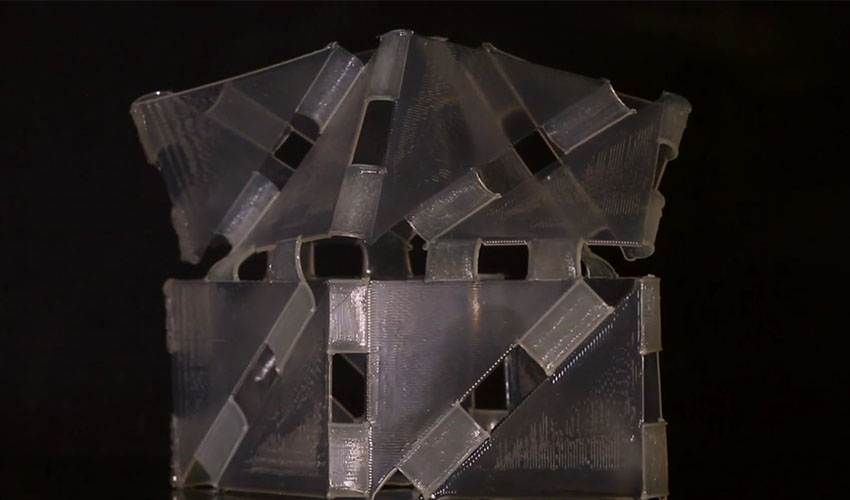 Materials3D printed soft robots can fold like origamiSoft robotics is one of the subfields of robotics dealing with constructing robots from highly compliant materials, similar to those found in living organisms. This field looks at the way in which living organisms move and adapt to their surroundings…
 ApplicationsAdditive Manufacturing Market Resumes Growth, Driven by the Defense SectorAMPOWER is an additive manufacturing consultancy dedicated to accelerating the adoption of 3D technologies worldwide. The company regularly publishes market studies and reports that shed light on the 3D printing industry. It has just unveiled its latest project, which analyzes&he
 NewsTCT Asia 2025: China Consolidates Its Position in the Additive Manufacturing MarketOn March 19, the eleventh edition of TCT Asia 2025 closed its doors at the National Exhibition and Convention Center in Shanghai. With more than 450 exhibitors and after three days of intense activity in halls 7.1 and 8.1, the…
 NewsHollywood, Ghost in the Shell and 3D printing3D printing has captured industries such construction, automotive, and medical. Giving us things from homes to skyscrapers. The limits of 3D printing are being broken and pushed to the next level with each passing day. So with all these developments,…