Software
Digital Twins in 3D Printing: All You Need to Know
Have you heard of digital twins? The idea was first developed in the 1960s as a way to create a living model of the Apollo mission in order to help evaluate its failure through a physical model of the vehicle…
- 3 min read
- Software
- Six more stories
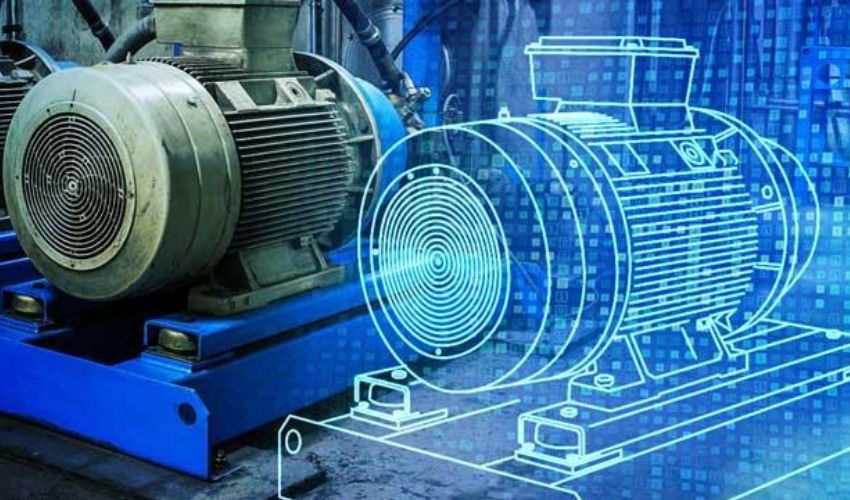
Have you heard of digital twins? The idea was first developed in the 1960s as a way to create a living model of the Apollo mission in order to help evaluate its failure through a physical model of the vehicle with digital components. The concept has understandably grown since then, but the core stays the same. In essence, a digital twin is a virtual model that has been designed specifically to accurately reflect a physical object. Not only that, but according to IBM, a digital twin could be considered as “a virtual representation of an object or system that spans its lifecycle, is updated from real-time data, and uses simulation, machine learning and reasoning to help decision-making.” Though it is often confused with just modeling, digital twins go beyond that. The use of algorithms and mathematical workings in digital twins are an important part of allowing users to predict behavior of the parts, such as those made with 3D printing.
They have found their place in a variety of applications from manufacturing to medical to even interior design. Furthermore, they are increasingly being used in additive manufacturing. Though that is perhaps unsurprising when considering the fact that the digital twin market was already estimated to be worth $6.9B in 2022 and grow to about $73.5B by 2027 according to Markets and Markets. But why exactly would you use digital twins in 3D printing? What do you need to know before doing so? We took a closer look.
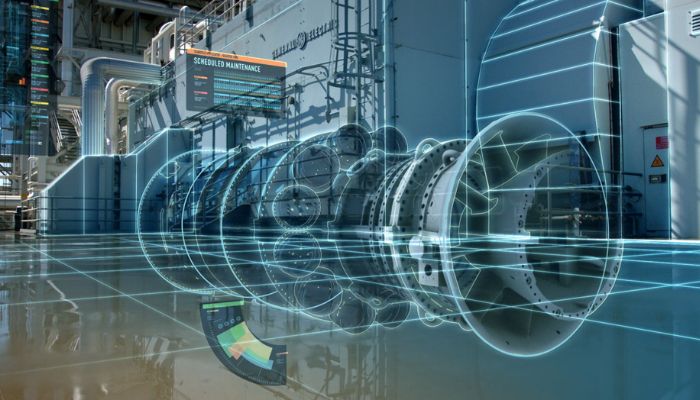
Digital twins are increasingly used as part of Industry 4.0 (photo credits: GE)
Using Digital Twins in 3D Printing
Digital twins and additive manufacturing are both considered to play a key role in Industry 4.0. However, it has only been in recent years that the two have started to be combined. Still it is important to note that many different studies have found that 3D printing in general is well-suited to the use of digital twins. Why? Because by its very nature, additive manufacturing is digital. From online design to software for slicing to programs that monitor throughout the printing process, automation and AI have already found a home in AM for this very reason. Digital twins would just be another tool to add.
More from the desk
Six other notes from the rest of the bench.
 MaterialsA juice bar transforms orange peels into 3D printed cupsWould you like an orange juice squeezed into a 3D printed cup? This is the project imagined by the architect Carlo Ratti who developed a rather special juice bar, this one allows for orange peels to be transformed into 3D…
 Guides3D Printing Applications for People with DisabilitiesThanks to 3D printing, the daily lives of many people with disabilities have been improved. The technology enables the creation of objects and services that are easy to use and adapted to disability such as personalised wheelchairs, prostheses, orthoses, etc.…
 NewsThe Women of 3Dnatives in the Spotlight!In honor of International Women’s Rights Day 2024, once again, we wanted to put the women in 3D printing in the spotlight. Though this year, we are taking a look inwards and talking to those at 3Dnatives! Whether they’re content…
 News3D Daily Show #2: Industrial 3D Printing MaterialsFor the 3D Daily Show #2, we took a look at industrial 3D printing materials and tried to understand how they can improve production performance. We walked the aisles of the show to find out which materials were the most…
 GuidesStartup of the Month: 3D MicroPrintA well-known German company in the 3D printing industry is EOS. EOS have been in the 3D printing industry for more than 25 years, and pioneered laser sintering technologies. EOS recently cooperated with another company to create a new innovative…
 Guides#3DStartup: Think3DDD on Using AM to Make Orthotics for Animals3D printing is increasingly finding its way into the medical field with an ever-increasing focus on orthotic and prosthetic manufacturing. This is notably because additive manufacturing allows each one to be fully adapted to the morphology of an individual patient…