Applications
Composite 3D Printing Unlocks Applications in Aerospace and Robotics in China
Though much focus has been put on 3D printing with polymers and metals in recent years, there is one material family that has shown immense growth in the additive manufacturing sphere: composites. As strong as metal and as light as…
- 3 min read
- Applications
- Six more stories
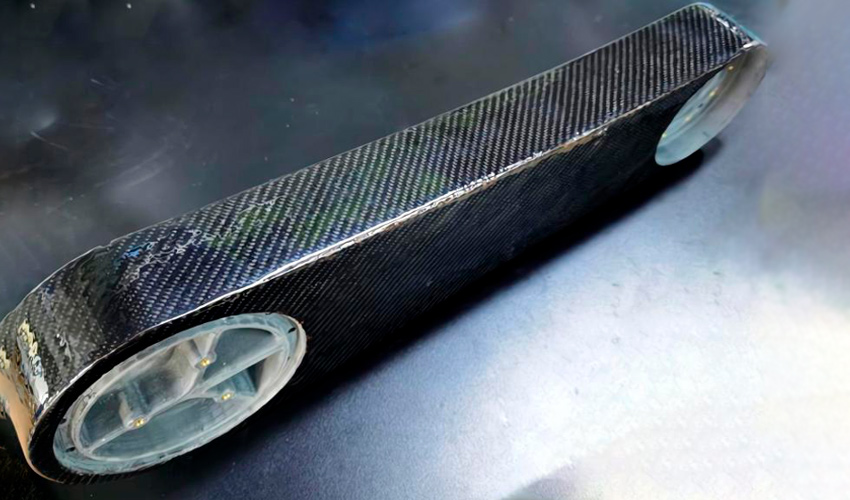
Though much focus has been put on 3D printing with polymers and metals in recent years, there is one material family that has shown immense growth in the additive manufacturing sphere: composites. As strong as metal and as light as many polymers, composites for FFF 3D printing often include a polymer matrix and infill such as glass fiber or carbon fiber. They have become so prevalent that the global composite 3D printing market is expected to reach $490.47 million by 2030, having already achieved a value of $198.31 million in 2023. And the importance of composites for 3D printing has also been recognized by the Institute of Industrial New Materials in Dezhou, China.
Founded in January 2021, the institute is dedicated to research, developing and commercializing composite materials for applications in sectors like maritime, 5G communication, advanced manufacturing processes and high-end equipment. A provincial “new-style R&D institution” in China, it has also seen the advantage of turning to 3D printing. In partnership with INTAMSYS, the institute is spearheading two initiatives to apply 3D printing in the development of composite product parts.
Replacing Traditional Material Molding
It is hardly new that 3D printing has been put forth as a replacement or even supplement to many traditional production processes. The reason for this is because with 3D printing, complex geometries are more easily achieved. Additionally, the design can be optimized even further to reduce costs and lead times.
More from the desk
Six other notes from the rest of the bench.
 NewsWEBINAR: HP’s Production-Ready Industrial Filament: High-Performance 3D Printing Without CompromiseIndustrial filament printing has long forced a choice: the affordability of desktop systems or the performance of locked-down industrial platforms. On Tuesday, September 15th, 3Dnatives and HP Additive Manufacturing Solutions showed how the HP IF 600 HT eliminates that trade-off,
 Applications3D Printing Impossible-to-Machine Parts for HexapodsMore than ever, the way we are manufacturing is changing. In particular, due to increased issues such as the Global Supply Chain Crisis of 2022 or even the COVID-19 pandemic itself, we are seeing the benefits of local manufacturing. For…
 Applications#3DExpress: Materialise Gets EN 9100 Certification for Metal AMIn this week’s #3DExpress, certification is in the spotlight. First, Materialise announced that it had gained EN 9100 certification for its metal AM processes. Now, the Belgian company is looking to help the aerospace sector identify and source flight-ready 3D…
 GuidesSomanity Develops 3D Printed Exoskeletons for People with Disabilities3D printing is steadily transforming the medical field, offering innovative solutions that enhance the quality of life for people with disabilities. From customized prostheses to adapted keyboards, this technology is opening new possibilities. Yet, one of the biggest challenges f
 PrintersSHINING 3D on the Importance of Digital Dentistry3D scanners have found their way into many different sectors. One industry that has especially embraced them is dentistry. Thanks to 3D scanning, dentists can create fully customizable retainers and prosthetics for their patients. This can be done with either…
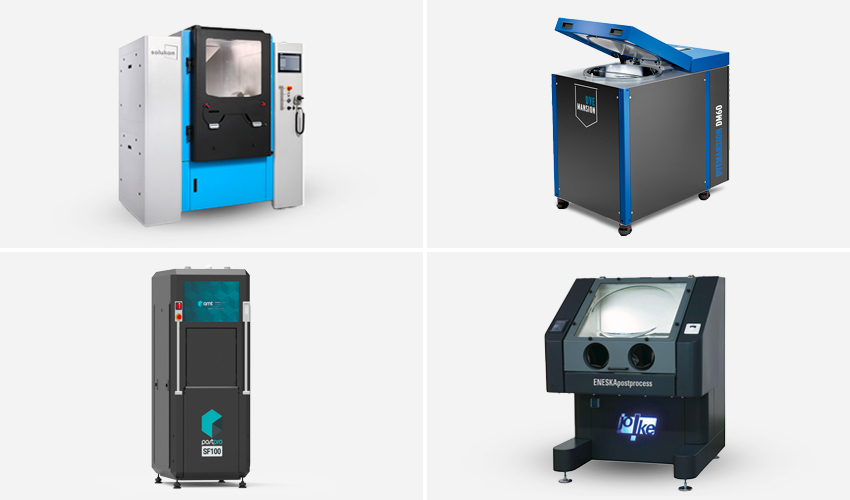 GuidesWhat Are the Available Post-processing Solutions for 3D Printing?The additive manufacturing process rarely stops once your 3D printer has completed the part. Often, it takes varying amounts of time to complete post-processing steps, depending on the printing technology used. In fact, a recent study showed that the biggest…