Applications
TU Graz Achieves Breakthrough in 3D Printed Optically Active Nanostructures
Researchers Harald Plank, Verena Reisecker, and David Kuhness from Graz University of Technology have achieved a significant breakthrough in the production of 3D nanostructures, ensuring their precise shape and size to attain desired optical properties. The key to this success&he
- 3 min read
- Applications
- Six more stories
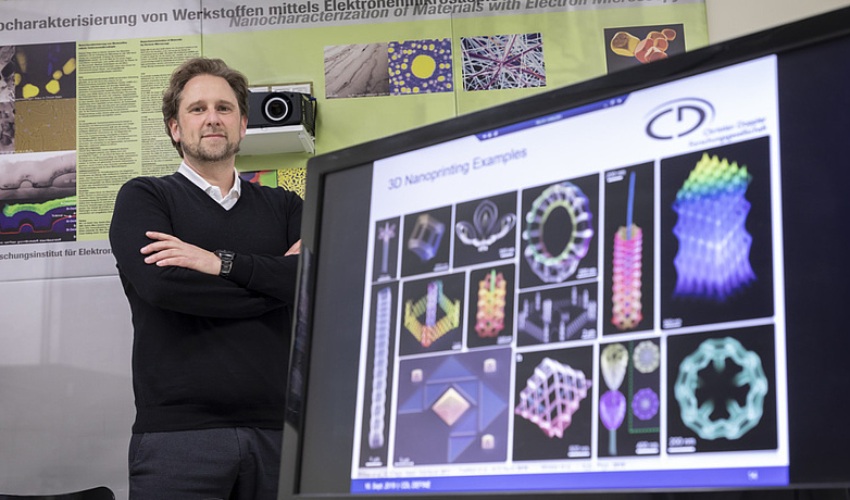
Researchers Harald Plank, Verena Reisecker, and David Kuhness from Graz University of Technology have achieved a significant breakthrough in the production of 3D nanostructures, ensuring their precise shape and size to attain desired optical properties. The key to this success was the meticulous simulation of nanostructures (or nanoarchitectures), serving as a foundation for their fabrication. Additionally, the team effectively eliminated chemical impurities that commonly occur during the manufacturing process without compromising the integrity of the structures. These optically active nanostructures play a crucial role in applications such as solar cells, as well as chemical and biological sensors.
The objective behind nanoparticle production is to strategically apply them to surfaces, enabling the concentration, manipulation, or initiation of specific reactions of light. Although this practice has been in existence for two decades, the ongoing goal is to broaden the potential applications of this methodology.
A Decade of 3D Nanoarchitectures
Over the past ten years, researchers at the Institute of Electron Microscopy and Nanoanalytics at Graz University of Technology and the Center for Electron Microscopy (ZFE) have been dedicated to advancing this vision. Their focus has centered on pioneering the development of intricate, self-supporting 3D architectures at the nanoscale, distinct from the conventional flat structures developed thus far.
More from the desk
Six other notes from the rest of the bench.
 NewsRedwire acquires Made In Space to transform global space economyMade In Space is a pioneer in in-space manufacturing and assembly technologies. Last October, we covered its announcement to send the first commercially-developed plastic recycling facility to the International Space Station (ISS). Named the Braskem Recycler, this machine convert
 Guides#Working3D: Six Questions for a Footwear EngineerWe have seen in numerous projects how 3D printing is being used to make shoes. This is especially the case for the consumer goods sector, where we are seeing particularly fashionable examples, but also sports shoes, which enable greater performance…
 MaterialsAll About Lattice Structures in 3D PrintingIn automotive parts, medical implants, running shoes, and hiking backpacks, we’re seeing more and more 3D-printed components featuring lattice or honeycomb patterns. You might think these lattice structures are the latest innovation in 3D printing and design for additive manufact
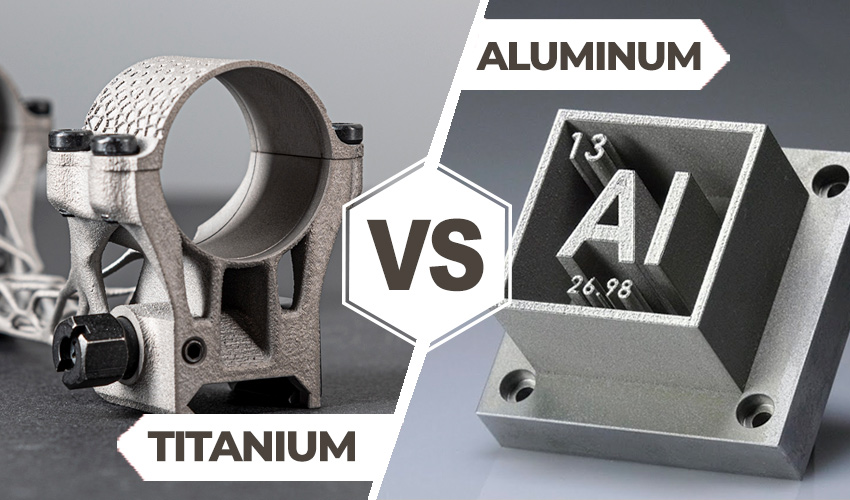 MaterialsTitanium vs Aluminum: Which Metal Should You Choose for 3D Printing?Metal is currently one of the most sought-after materials in additive manufacturing processes. Not surprisingly, its excellent properties make it the ideal choice for the most demanding applications in terms of performance and strength. In this article, we will focus…
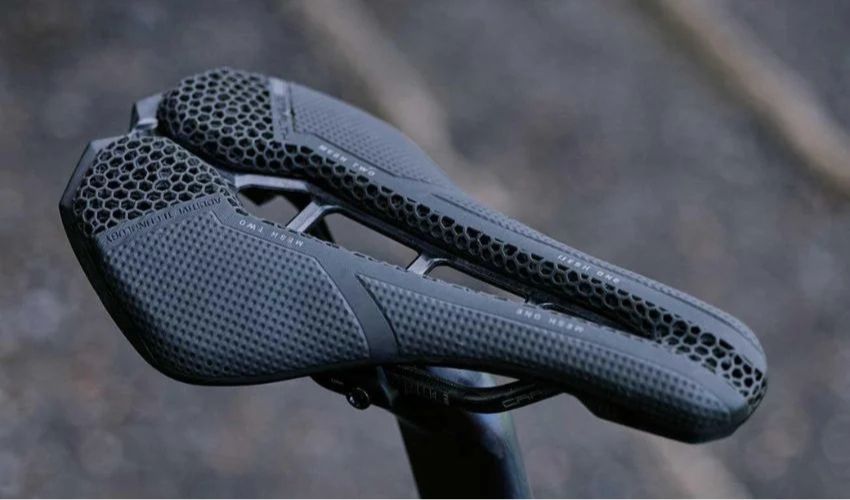 ApplicationsPRO Stealth 3D: A 3D-Printed Saddle for Improved Comfort and Performance3D printing is gaining momentum in the sports equipment sector, particularly in cycling. The Dutch brand PRO unveiled its first saddle featuring 3D-printed components: the Stealth 3D. This model uses additive manufacturing to improve rider comfort, optimize pressure distribution,
 Printers#3DExpress: Formlabs its ‘Fastest’ Resin 3D Printer, the Form 4It is once again time for #3DEXPRESS, where we give you some of the most interesting tidbits from the 3D printing news of the week. We start off today with Formlabs’ new resin 3D printer, the Form 4, which the…