News
CyBe Construction’s 3D-Printed Housing Venture on the Island of Curaçao
The global housing crisis, coupled with the labor and raw materials shortage in the construction industry has opened a huge opportunity for 3D printing to be leveraged as a solution to provide housing for people across the globe. Companies have…
- 3 min read
- News
- Six more stories

The global housing crisis, coupled with the labor and raw materials shortage in the construction industry has opened a huge opportunity for 3D printing to be leveraged as a solution to provide housing for people across the globe. Companies have been using 3D printing more frequently to construct all sorts of buildings—whether it’s schools, a sustainable village, or even a parkour ground. Recently, CyBe Construction, specializing in 3D concrete printing, partnered with concrete experts Betonindustrie Brievengat (BIB) to build the first 3D-printed buildings in the Caribbean.
The first 3D-printed buildings in the Caribbean will be built on the island of Curaçao, located off the coast of Venezuela. According to the builders, the future housing structures will be luxuriously finished and will benefit from open open-space as well as a patio. Berry Hendriks, CEO and Founder of CyBe Construction, explains: “It is increasingly difficult to build affordably. Thanks to concrete 3D printing, combined with the design of ‘Lyve by CyBe’ housing, we can solve this problem. ” Before adding: ” As an experienced knowledge leader and technology provider, with concrete 3D printers on all continents, we have been able to add BiB as a strong and progressive partner for the Caribbean.”
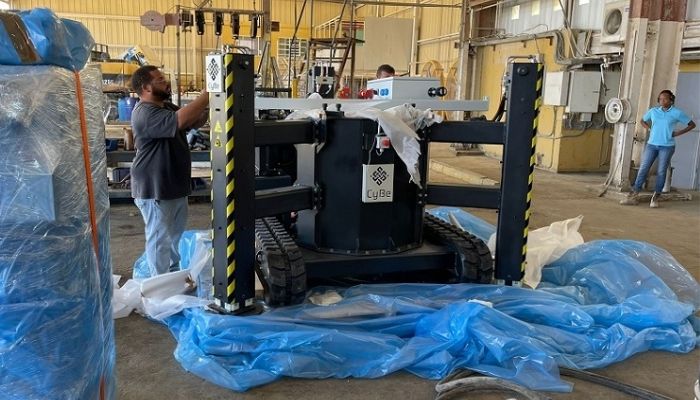
The “RC 3Dp” concrete 3D printer from CyBe Construction. (Photo Credit: CyBe Construction).
Cybe Construction’s 3D-Printed Houses
As you can imagine, this is not the first time that the Dutch company has embarked on such a project. In Dubai, CyBe Construction notably designed the first 3D printed research laboratory before participating in the construction of houses in the North of France. For constructing these houses, the company uses its own concrete 3D printers called R 3Dp and RC 3Dp. The second is placed on tracks, which allows it to be mobile, and therefore it is possible to deploy it to any location. Regarding the materials used, CyBe Construction usually uses its own cement called “CyBe MORTAR”, which according to the manufacturers contains 30% less CO2 than Portland cement, the most widely used material in the construction industry. construction.
More from the desk
Six other notes from the rest of the bench.
 PrintersIndustrial 3D Printing With High Performance Polymers Can Replace Traditionally Made Metal PartsIt is certainly no secret that 3D printing is being integrated into more and more sectors. This includes more traditional manufacturing industries, where additive manufacturing is increasingly being adopted as a complementary technology to produce more lightweight yet still stron
 ApplicationsAre 3D printed drugs the future of personalized medicine?Personalized medicine tailors treatment to the individual characteristics of each patient. One of the technologies that enables tailor-made treatments is additive manufacturing. In the medical sector, 3D printing technologies have already been used to create custom-made prostheti
 Guides3D Printing Projects for AdvertisingWe all have advertisements that have made a lasting impression on us: that music that sticks in our head, that slogan that caught our attention, those characters we associate with a brand. In short, advertising can be very powerful, and…
 NewsCan Chitosan Improve the Sustainability of 3D Printing Plastics?Why not use natural resources to design new 3D printing materials? That’s the thinking behind a team of researchers from Malaysia, Singapore, Thailand and India. They sought to understand how they could use chitosan, a natural polymer found in certain…
 GuidesAkira Science on 3D Printing Biomaterials for Tissue RegenerationAs 3D printing continues to revolutionize the healthcare field, more and more companies are exploring its applications in the development of innovative medical solutions. This technology, which excels in customization and precision, is transforming the way devices and materials a
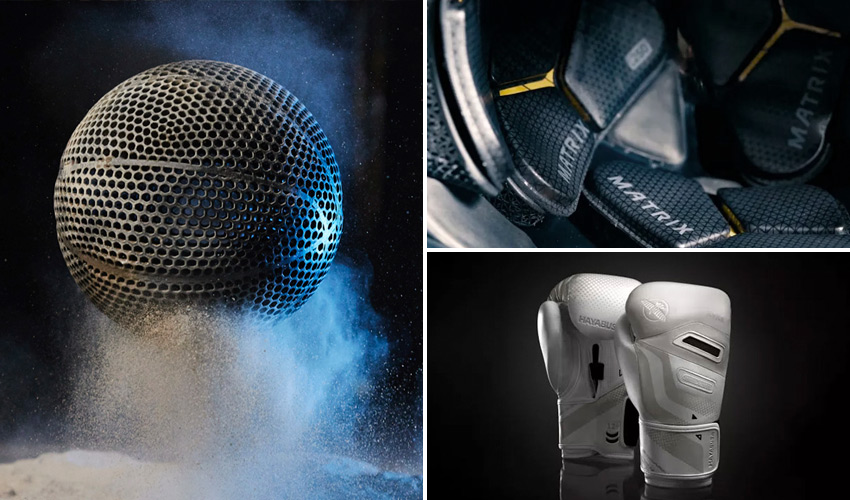 GuidesThe Top 3D Printing Applications in Sports3D technologies are ever increasingly being used in the consumer goods sector. In particular, we have seen a growing role for additive manufacturing in the sports industry over recent years. Not only that but 3D printing in sports is not…