Printers
Continuous 3D Printing: What Are the Solutions on the Market?
In additive manufacturing and the industrial world at large, automation and continuous production are becoming increasingly important. Numerous companies are developing approaches and solutions to automate their workflows and work with powerful printers that can print continuousl
- 3 min read
- Printers
- Six more stories
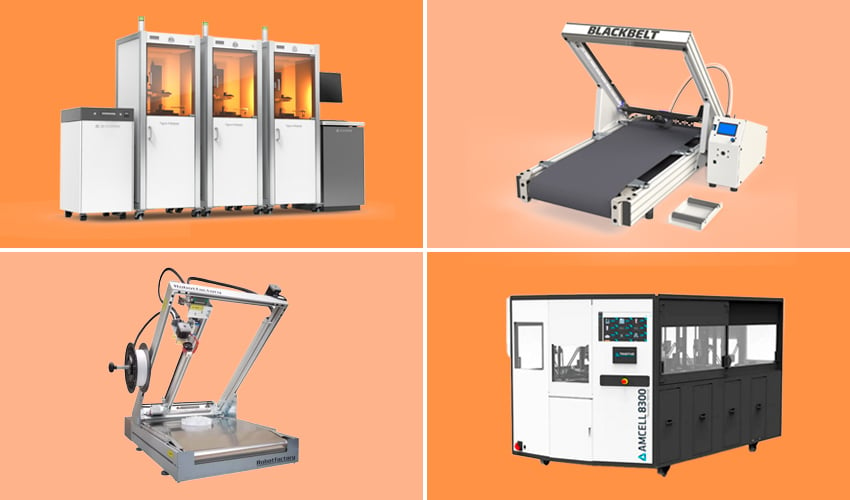
In additive manufacturing and the industrial world at large, automation and continuous production are becoming increasingly important. Numerous companies are developing approaches and solutions to automate their workflows and work with powerful printers that can print continuously for shift operations. One of the main ideas in this context is the integration of an assembly line as a printing platform to produce pieces of great length or smaller parts in series production. In addition, there are other solutions to ensure continuous 3D printing. Automated manufacturing systems, where printing and post-processing take place, enable manufacturing without having to interrupt the process. The list below gives you an insight into which technologies and systems can currently be found on the market and enable continuous 3D printing. Follow along as we list them in alphabetical order of manufacturer.
3D Systems – DP Polar
A previous entrant on our list of continuous 3D printers, the German startup DP Polar has since been acquired by 3D Systems in fall 2022. The company’s designs have not been wasted, however, as the latest printer to bear their name and technology is still in the early access stages. Under the 3D Systems mantle, it seems that DP Polar’s remarkable High-Speed Rotative AM (HSR AM) technology has undergone further development. The main premise is a high-speed, continually rotating build platform with separable, interchangeable segments to allow for constant output. In addition, integrated technologies allow for seamless interaction with ERP systems for greater quality assurance. In addition, pre- and post-processing elements are automated within the system. From the material acquisition, orientation, slicing and part removal, the DP Polar is designed to run with minimal human interaction needed. With an inkjet-based 3D printing system, the build speed allows for a true mass production of complex or specialized parts made of a variety of materials and colors. Further information including steps for early access requests are available from 3D System’s website.
3D Systems – Figure 4
The Figure 4 from industry giant 3D Systems is more of a production platform than a 3D printer. It is a modular solution that allows the combination of several machines or “configurable units” as explained by the manufacturer, both 3D printers or post-processing solutions. From a dedicated control cell, the user can combine up to 16 resin printers creating a semi-automated system and increasing the volume of parts created. Designed wit modularization in mind, the concept allows for greater customization and affordability by the user, who is able to scale up their printer volume as needed with additional printer modules. The printers are able to utilize a wide range of resin materials including thermoplastic- and rubber-like materials, and even biocompatible material.
More from the desk
Six other notes from the rest of the bench.
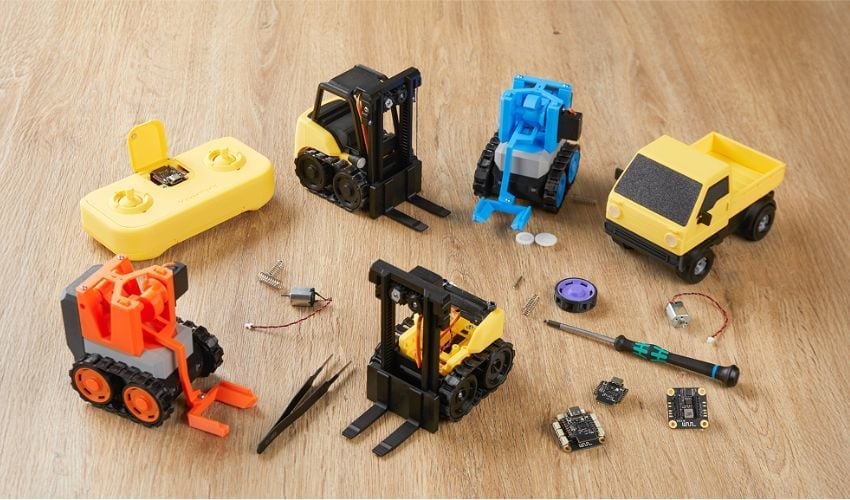 NewsBambu Lab Breaks Into the World of Toys With CyberBrick™Toy cars, tractors, fire trucks or radio-controlled airplanes—these toys are enjoyed worldwide. But what if you want to turn play into an enjoyable learning time to spend with the family? This is the idea that prompted MakerWorld, the community platform…
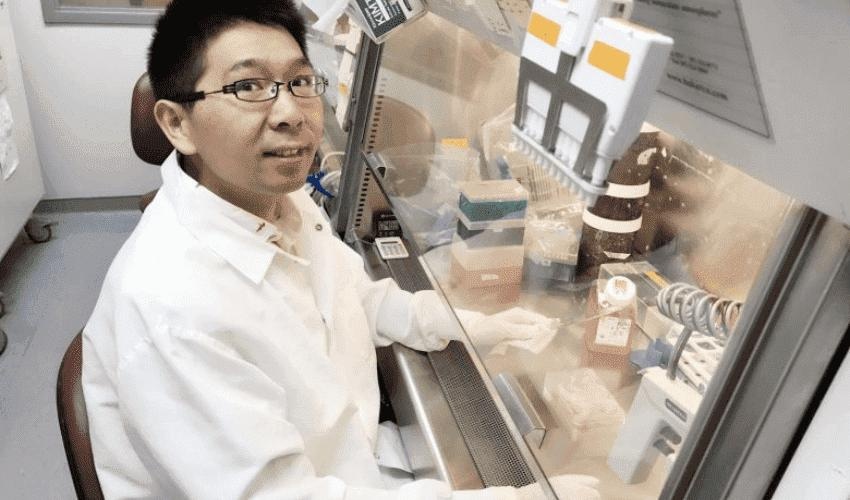 ApplicationsUniversity of Wisconsin-Madison Develops First-Ever Functional 3D Printed Human Brain TissueResearchers at the University of Wisconsin-Madison recently achieved a major milestone by creating the first-ever functional 3D printed human brain tissue. This synthetic tissue, capable of growing and functioning similarly to natural brain tissue, offers new perspectives for und
 ApplicationsGeneral Motors Uses 3D Printing for New Concept Chevrolet CorvetteAdditive manufacturing is widely used in the automotive industry, from the exterior and interior design of a vehicle to improvements in production processes. This is because complex components can often be produced more easily with additive technologies than with conventional&hel
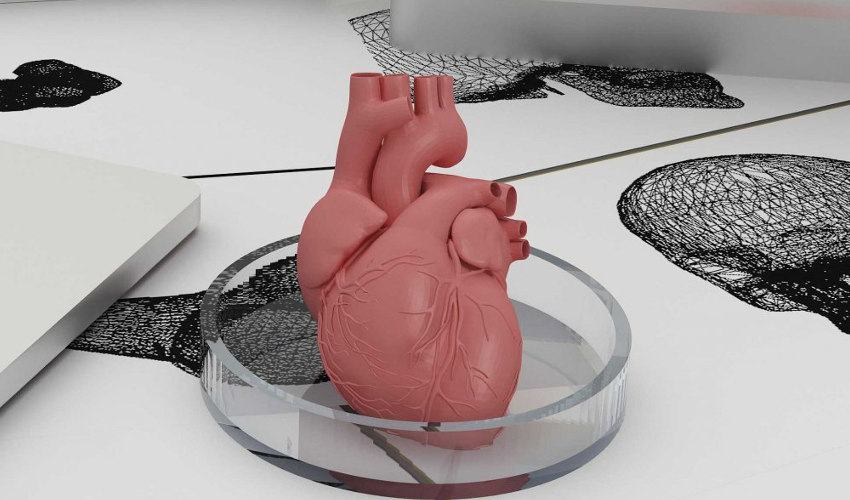 Applications£21M 3D Printed Model Installation in Bristol Biomedical CentreThe National Institute for Health Research (NIHR) launched at the Bristol Biomedical Research Centre (BRC) on February 1st 2018. This big UK event marks the opening of the £21m centre, which is to be used to trial and develop innovative…
 ApplicationsBreaking the Mold: Exploiting the Potential of Open-Source Large-Format Material Extrusion SolutionsLarge-Format Material Extrusion Solutions have carved their legitimate place among traditional manufacturing methods. In the ever-evolving landscape of manufacturing, large-format material extrusion solutions have emerged as formidable contenders, confidently asserting their plac
 SoftwareNewly Developed Algorithm Can Correct 3D Printing Errors in Real TimeScientists from the University of Cambridge have developed what they claim are intelligent 3D printers capable of quickly detecting and correcting errors, no matter the design nor material. More specifically, the engineers were able to develop a machine learning algorithm…