News
How to Combine Additive and Subtractive Manufacturing in Production? Experts Give Their Advice!
In recent years, the combination of additive and subtractive manufacturing has gained in popularity, making a significant impact worldwide. Thanks to a number of technological advances, there are a wide variety of industries already benefiting from so-called “hybrid manufac
- 3 min read
- News
- Six more stories
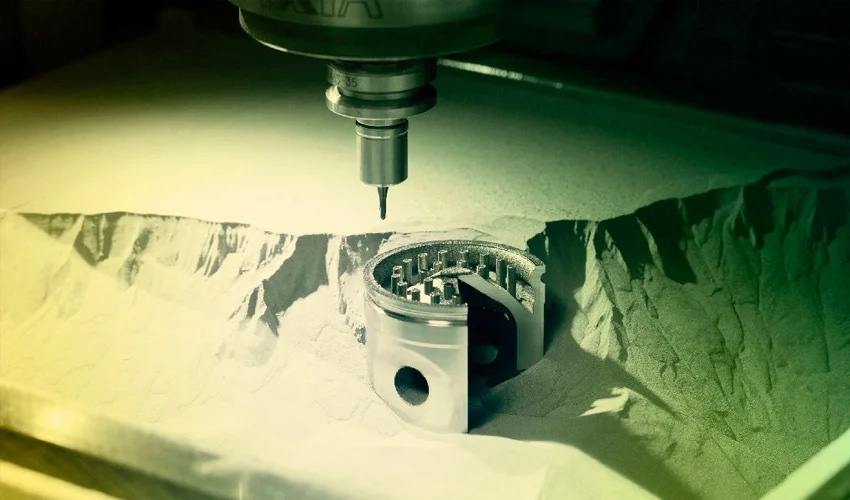
In recent years, the combination of additive and subtractive manufacturing has gained in popularity, making a significant impact worldwide. Thanks to a number of technological advances, there are a wide variety of industries already benefiting from so-called “hybrid manufacturing” for the creation of final parts. Indeed, although there are differences between the two production methods, they can be used in a complementary way to get the most out of them. However, it is important to know exactly what these technologies consist of in order to be able to implement them in a company. To address this, we spoke to three experts from the manufacturing industry. They gave us their opinion and advice on how to implement additive and subtractive manufacturing optimally in the production chain.
First up is Peter Genovese, 3D printing applications engineer for SolidCAM Additive. He has been working with additive technologies for nearly a decade and draws on his professional experience to determine how additive technologies best fit into various manufacturing environments. Next, Elena Lopez works as head of the additive manufacturing department at Fraunhofer IWS. She is also an adjunct professor of additive manufacturing and is part of Women in 3D Printing as the Regional Director for Europe. Finally, Brian Kristaponis, is the General Manager of the Hybrid Division within Phillips, a leading provider of manufacturing solutions and new technologies for a wide variety of markets.



Characteristics of Additive and Subtractive Manufacturing
Before discussing how to implement hybrid production, it is important to understand the significant differences between the two methods. Additive manufacturing consists of layering material, layer by layer, until the desired part is created. Within the family of 3D printing technologies we can find: material extrusion, material jetting, binder jetting, vat photopolymerization, powder bed fusion, Directed Energy Deposition (DED) and sheet lamination. Meanwhile, subtractive manufacturing consists of the manufacturing of parts by extracting material from a block or larger part. These subtractive processes include CNC machining (milling, turning, drilling, boring, boring, grinding), laser cutting, electrical discharge machining and water jet cutting.
More from the desk
Six other notes from the rest of the bench.
 NewsThe Printed Origami That Can Form 3D Objects in Mere Moments3D printing can be a process that requires patience. Large, complex builds often take a number of hours before completion while industrial 3D printing may take even longer still. That said, the convenience and automation of 3D printing often make…
 NewsWhat Is the Current State of 3D Printing in India?When we talk about countries where 3D printing is present, what most comes to mind is the USA, Western Europe and China. These are where we see the largest established base of 3D printers as well as the biggest number…
 NewsThe First 3D-Printed Plastic House in the Southern HemisphereA house made of plastic? We’ll admit, it’s a rather surprising concept, especially at a time when society is trying to reduce plastic consumption. But in this case, the material being used is recycled plastic. So what exactly is this…
 SoftwareEverything You Need to Know About Elegoo’s SatelLite SlicerThe slicer plays a key role in the 3D printing process, and many companies have developed their own software solutions to support this essential step. One of them is Elegoo, a company founded in 2015 that continues to grow in…
 NewsTop 5 Videos: NASA Integrates A.I With 3D Printing to Design Space PartsToday is Sunday, meaning it is time for the week’s top 5 3D printing videos! First up, don’t miss this video on NBC discussing the Artemis II moon launch, which will see humans on the moon for the first time…
 PrintersThe Top Cheap 3D Printers on the MarketBetween purchasing printers, filaments and post-processing solutions, 3D printing can be an expensive hobby. Because the additive manufacturing market is so large, it is often difficult to choose which 3D printer to rely on. This is true not only for…