Applications
NASA Studies Laser Beam Welding for In-Space Manufacturing
NASA has been exploring the power of additive manufacturing since the late 1990s. Initially, they were 3D printing with plastics, and in the early 2000s, they began using metal for prototypes. By the 2010s, NASA was 3D printing rocket engines.…
- 3 min read
- Applications
- Six more stories
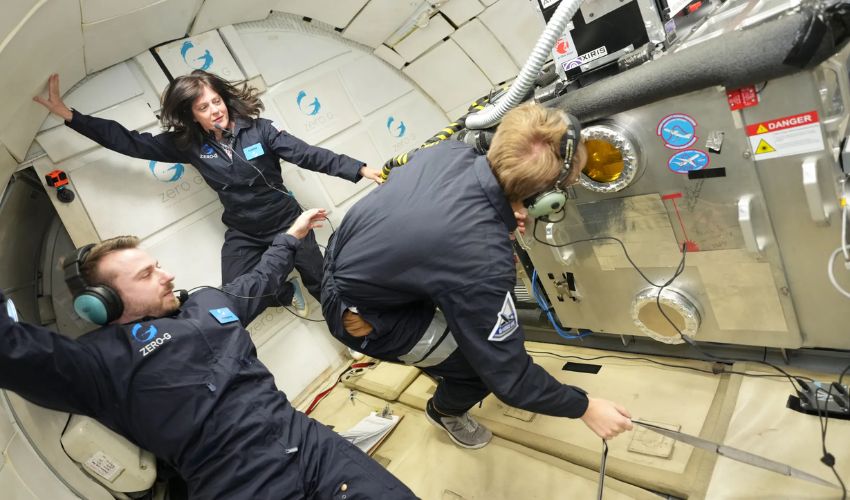
NASA has been exploring the power of additive manufacturing since the late 1990s. Initially, they were 3D printing with plastics, and in the early 2000s, they began using metal for prototypes. By the 2010s, NASA was 3D printing rocket engines. Now, they are testing the viability of using laser beam welding—a technology that can achieve additive manufacturing—in space.
NASA has done welding in space before, but not since the 1973 Skylab mission. With the demand for space manufacturing on the rise, NASA is turning to welding in space again, but this time using laser beam welding. Specifically, NASA’s Marshall Space Flight Center in Huntsville, Alabama, and the Ohio State University in Columbus aim to simulate in-space manufacturing with a laser beam welding collaboration. The initiative is funded partially by Marhsall and has spanned over two years, involving students and professors from Ohio State and engineers across NASA centers.
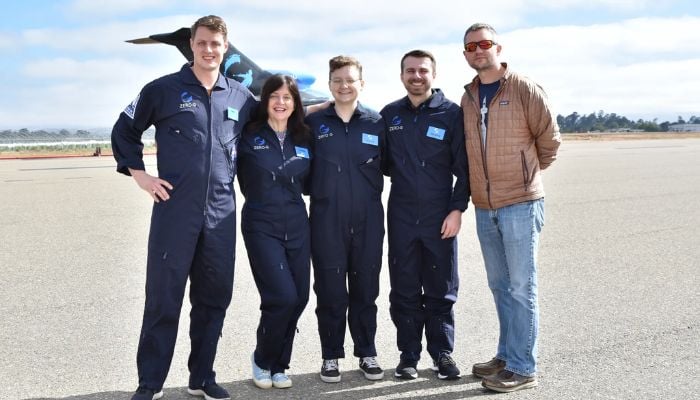
Scientists and engineers from NASA’s Marshall Space Flight Center, participating in the laser beam welding study in August, stand in front of the parabolic plane used for testing. From left, Will Evans, Louise Littles, Emma Jaynes, Andrew O’Connor, and Jeffrey Sowards. Not pictured: Zachary Courtright. (Photo credits: NASA, Casey Coughlin)
Laser beam welding is a type of directed energy deposition, often used for repairs or creating parts from scratch. The process involves a laser melting material, typically metal, while it is deposited by the nozzle. For space manufacturing, laser beam welding and other allied processes can be used for repairs but could also build structures too large to fit current launch payload volumes. Welding in space could accelerate the building of large habitats in low Earth orbit, spacecraft structures for astronaut safety, and more.
More from the desk
Six other notes from the rest of the bench.
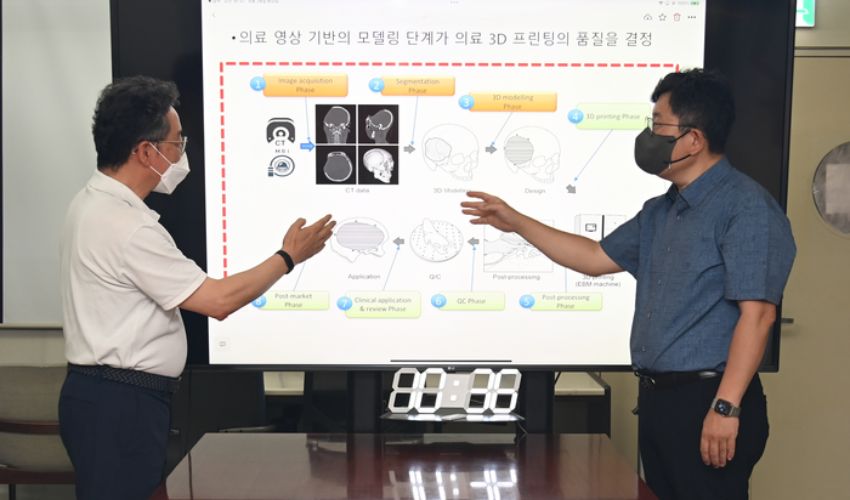 ApplicationsKorean Researchers Are Leading the Charge for International Standardization for Medical 3D PrintingIncreasingly, we have seen that 3D printing is becoming more and more commonplace in the healthcare sector. From surgical guides to prostheses and more, additive manufacturing’s flexibility and ability to customize are highly valued in the industry. That being said,…
 MaterialsThe Common Kitchen Spice That Could Neutralize Light Scattering During Ceramic 3D PrintingYou might not be familiar with curcumin, but you certainly know turmeric: the vibrant spice native to Southeast Asia. Curcumin is the active chemical compound within turmeric responsible for giving it that iconic bright yellow hue. Extracted from the Curcuma…
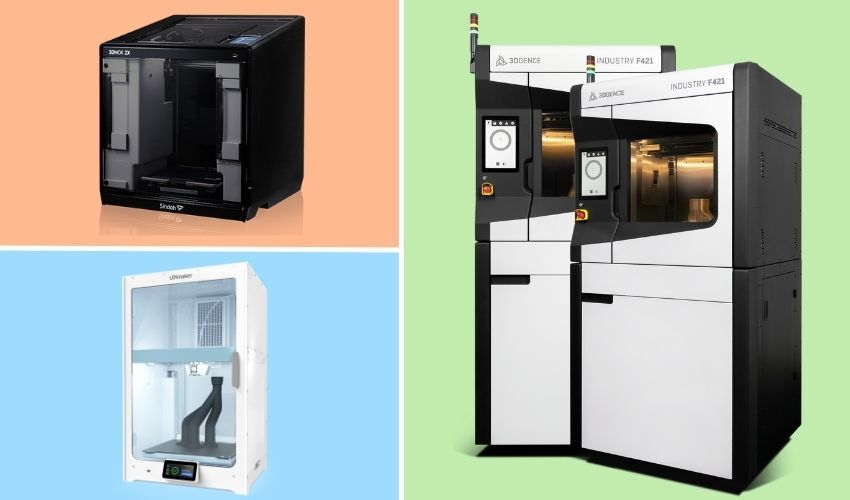 PrintersThe Top Dual Extruder 3D Printers on the MarketOften FDM 3D printers are associated with a single extrusion head, also called an extruder, which melts and then deposits the filament on the printing plate layer-by-layer. However, increasingly, it is possible to find FDM machines that come equipped with two…
 PrintersObsidian: Kodama’s latest 3D printer for only $99The Kodama Kickstarter campaign, which ends in less than 24 hours, is already a huge success. After exceeding its initial target of $100,000 in less than 3 minutes, the company has so far managed to raise a total of $1.48…
 NewsWEBINAR: “Progress & Current Challenges in Online Process Control for L-PBF”Process control in Laser Powder bed Fusion (L-PBF) is often referred to as the holy grail for for industrial metal 3D printing. Though only offered by certain companies and machines, process control significantly reduces errors in printing which in turn…
 ApplicationsSintavia Awarded DoD Contract to Develop 3D Printed Hypersonic Propulsion SystemsIt has long been clear that with additive manufacturing, not even the sky is the limit. And once again that has been proven. Sintavia, a company which claims to be the world’s first all-digital aerospace component manufacturer, has announced that…