Software
Cinema 4D for 3D Printing: What Do You Need to Know?
Starting the journey to get a 3D printed part usually means creating a 3D model, which is the essential first step in the process. While pre-made models are readily accessible on platforms such as Thingiverse, Yeggi, Printables, MyMiniFactory, and others,…
- 3 min read
- Software
- Six more stories
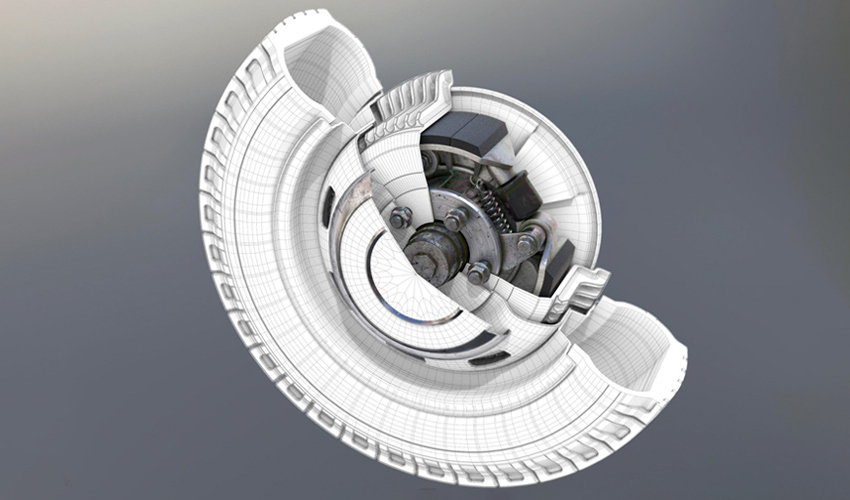
Starting the journey to get a 3D printed part usually means creating a 3D model, which is the essential first step in the process. While pre-made models are readily accessible on platforms such as Thingiverse, Yeggi, Printables, MyMiniFactory, and others, the necessity for customized or specifically tailored parts often demands the creation of a unique model. This task relies heavily on 3D modeling software, making the choice of software paramount. However, the abundance of options available can make the decision-making process daunting. Today, we’ll delve into one of these many software solutions: Cinema 4D
Cinema 4D is one of these 3D software suites offered by the German company Maxon. Since its launch in 1990, this professional tool for 3D modeling, animation, simulation, and rendering has risen in popularity, rivaling the likes of Blender, Maya, and Autodesk 3ds Max. Particularly renowned for motion graphics and game development, Cinema 4D earns praise for its speed, power, flexibility, and, notably, its user-friendly interface. Yet, what might surprise you is its applicability in 3D printing. We took a closer look at the advantages of the software, as well as how you can use it for additive manufacturing below.
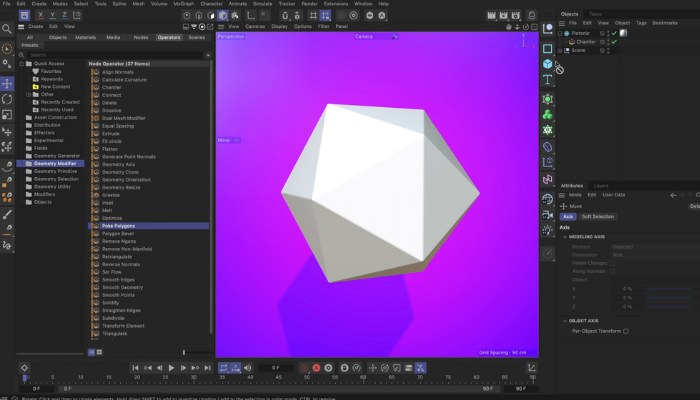
Cinema 4D is well known for its ease of use.
Using Cinema 4D For 3D Printing
Cinema 4D is a popular choice among 3D modeling software users, and for good reason. With its intuitive interface, even beginners can find themselves navigating its extensive features with efficiency. Furthermore, it boasts a variety of interesting and helpful tools, including a diverse range of texturing options, an expansive content browser, seamless ZBrush integration, and more. Despite these strengths, Cinema 4D might not immediately spring to mind when considering software for 3D printing. However, this doesn’t discount its viability nor its distinct advantages in the realm of additive manufacturing
More from the desk
Six other notes from the rest of the bench.
 ApplicationsPOLARIS Spaceplanes Tests a 3D Printed Aerospike Rocket EngineGerman aerospace start-up POLARIS Spaceplanes, based in Bremen, has achieved a key milestone by successfully testing a 3D printed Aerospike rocket engine. This achievement highlights the growing importance of 3D printing technology in the aerospace sector. During the tests, the&h
 NewsCornell University Has Purchased A 3D Printing Robot for More Sustainable ConstructionThe Bovay Civil Infrastructure Laboratory Complex, located in the basement of the Thurston Hall at the Cornell University in New York, recently purchased an industrial 3D printing robot. The roughly 6000 lbs heavy machine has the ability to 3D print…
 NewsWhat to Expect at ADDITIV Polymers World 2025Polymers remain at the heart of additive manufacturing, and their role is rapidly expanding. Once used mainly for prototyping, they’re now powering end-use parts and large-scale industrial applications. That’s why we’re bringing them back into focus at the third edition…
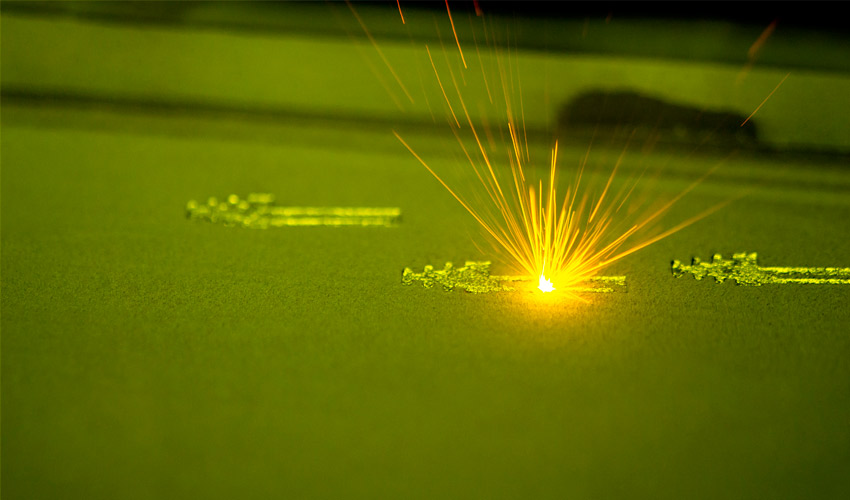 NewsDetecting Defects in Metal 3D Printing Using SoundAt the École Polytechnique Fédérale de Lausanne (EPFL), a team of scientists has been studhing the issue of defects in metal 3D printing, particularly when using a laser process. Their aim is to develop a method based on the analysis…
 NewsNew Cafe Features 3D Printed Furniture from Coffee GroundsIn recent years, global efforts to implement the circular economy have significantly increased. A key component of this model is circular design, which focuses on developing products that are environmentally friendly and have a sustainable life cycle. A notable example…
 NewsCustomised and 3D Printed Insoles from ECCOThe Danish shoe manufacturer, ECCO showcased its customised shoes at Bon Marché Rive Gauche in Paris. For the first time in Europe, visitors will be able to test QUANT-U, a project in collaboration with Dassault Systèmes, which aims to create…